Dumpster Rental Round Rock: 10-Yard vs 20-Yard for Heavy Debris Projects
Choosing the right dumpster rental Round Rock option for heavy debris is not just a matter of ordering the biggest container available. For concrete, dirt, brick, shingles, and other dense materials, the better choice often comes down to weight, loading safety, driveway space, and how the debris will actually be hauled away. A 10-yard dumpster can be the smarter fit for one job, while a 20-yard container may be more efficient for another.
This guide is built for homeowners, roofers, contractors, remodelers, and property managers in Round Rock who need practical size selection guidance instead of vague rules of thumb. If you are comparing a Round Rock dumpster rental for a driveway tear-out, patio demolition, roofing project, or mixed construction cleanup, this article will help you decide which size is safer, more cost-effective, and more realistic for the material you have.
At Grime Time Dumpster Rentals, that means looking beyond container volume alone. Heavy debris projects are won or lost on the details: what the material is, how dense it is, whether it can be mixed with lighter waste, how much room you have on site, and whether the load can stay within safe hauling limits. Those are the questions this page answers.
Why 10-Yard vs 20-Yard Matters for Heavy Debris Projects
On a cleanout or light demolition job, a larger dumpster often makes life easier. More volume means more room for bulky material like wood, cardboard, trim, furniture, and general junk. But heavy debris changes the equation. A 20-yard dumpster may look like the obvious choice until you remember that concrete, dirt, brick, and shingles can add weight far faster than they fill visible space.
That is why the 10-yard vs 20-yard question matters so much for heavy debris jobs in Round Rock. The issue is not just how much debris you see on the ground. The issue is how much that debris will weigh once it is loaded into a roll-off.
- Dense materials hit weight limits quickly. A container can be only partially full by volume and still be too heavy if the debris is concrete, wet soil, brick, or shingles.
- Safe haul-off matters. Overloaded or unevenly loaded containers can create pickup problems, require material to be removed, or delay the job.
- Smaller dumpsters can be safer for dense waste. A 10-yard container naturally limits how much heavy material can be loaded at once.
- Round Rock properties vary. Some neighborhoods have narrower driveways, shorter approach areas, HOA-sensitive parking situations, or tighter site access where the smaller footprint of a 10-yard dumpster is easier to manage.
- Cost efficiency depends on usable capacity. A larger container is not automatically the better value if you cannot realistically load it very full because of weight.
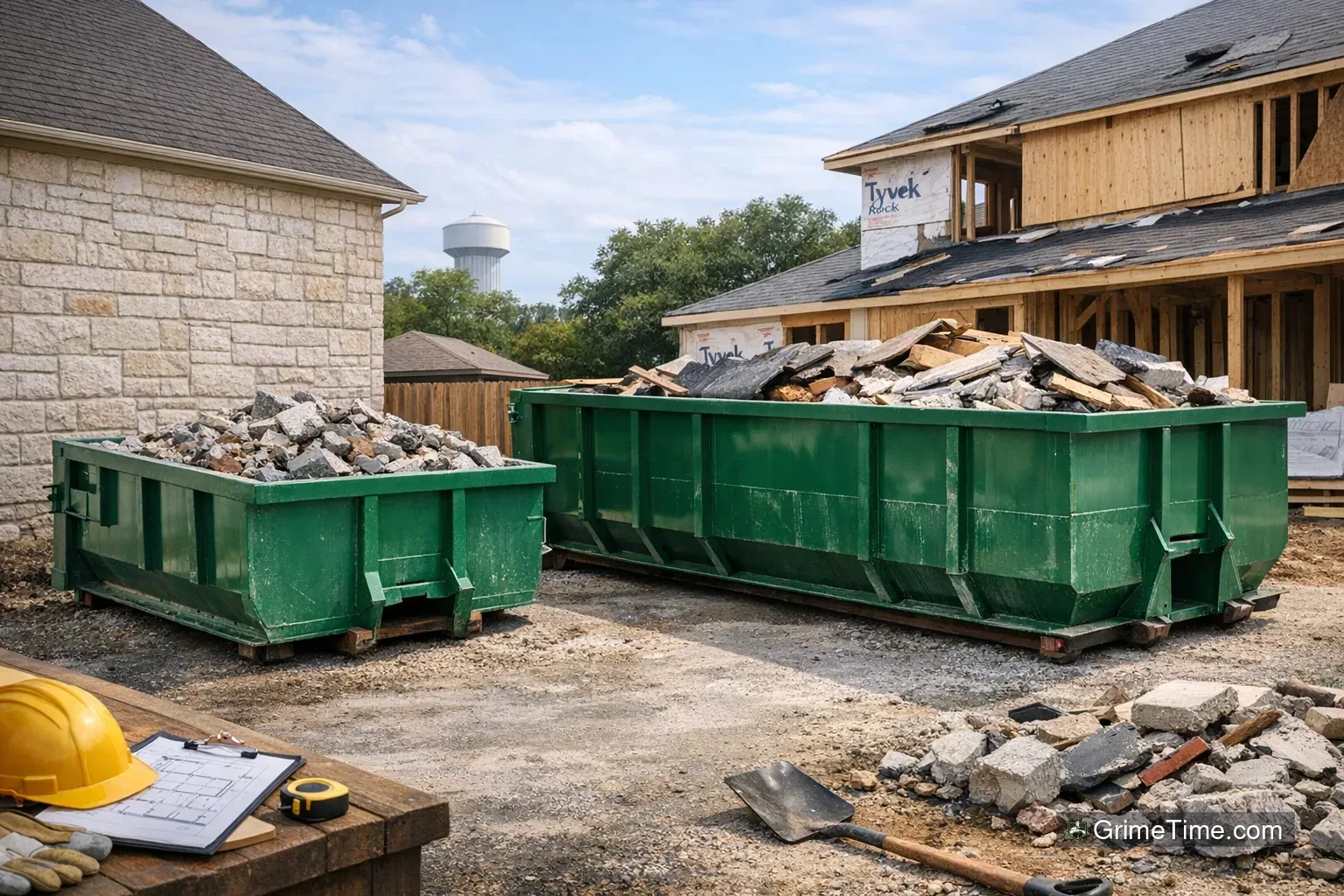
Think of it this way: if you are removing an old section of concrete driveway near a Round Rock home in an established neighborhood, a 10-yard dumpster may be the right answer even if the project sounds substantial. On the other hand, if a roofing crew is tearing off shingles and underlayment from a larger house and the material mix is manageable, a 20-yard dumpster may reduce stops and keep the project moving. The volume question matters, but only after the weight question is answered.
This is one of the biggest points customers miss when comparing roll-off dumpster sizes. Container names describe volume, not permission to fill that entire volume with any material you want. That is especially important with heavy debris. A container full of drywall scraps is not the same as a container full of brick fragments. The second load may weigh dramatically more, even if it looks smaller.
For Round Rock projects, choosing the right container is really about matching four things at once:
- The type of debris
- The likely weight of that debris
- The space available for delivery and loading
- The most practical haul-off plan for the job
Once you look at the decision through that lens, the 10-yard vs 20-yard choice gets much clearer.
What Counts as Heavy Debris in Round Rock
Not all construction or demolition waste is heavy debris. Heavy debris means dense material that adds a lot of weight in a small amount of space. This distinction matters because it affects both size selection and disposal planning.
Common heavy debris materials
For projects in Round Rock, heavy debris commonly includes:
- Concrete
- Dirt and soil
- Brick
- Rock and stone
- Asphalt
- Roofing shingles
- Tile
- Mortar and mud bed materials
- Sand and gravel
- Masonry debris
These are very different from lighter materials such as dimensional lumber, drywall offcuts, cardboard, cabinets, trim, plastic wrapping, insulation, or household clutter. A surprisingly small amount of dense debris can create a heavy load fast.
Round Rock-specific examples of heavy debris jobs
Heavy debris shows up on many local residential and commercial projects, including:
- Breaking out a driveway apron or sidewalk panels
- Removing an aging backyard patio or slab
- Tearing out a masonry mailbox base, planter, or retaining wall
- Cleaning up excavation spoil from drainage or utility work
- Removing landscape rock, gravel, or compacted fill
- Roof tear-offs with one or more layers of shingles
- Tile flooring demolition where thick mortar is involved
- Commercial tenant improvements that include masonry or concrete cutting
Round Rock jobs also come with site-specific concerns. In newer subdivisions, driveway layouts may allow cleaner placement, but street parking and HOA expectations can still affect where a dumpster can go. In older neighborhoods, trees, grade changes, shorter driveways, and tighter access can make a smaller container more practical. On contractor sites near active traffic or commercial entrances, placement needs to support workflow without disrupting access.
Why roofing debris needs its own discussion
Shingles are a common source of confusion. Many customers do not think of shingles as “heavy debris” the way they think of concrete or dirt, but roofing tear-offs can be dense enough to change the container recommendation quickly. A larger roof, older roofing system, or multiple layers can produce significant weight even when the material does not look as dense as masonry.
That is why roofing debris dumpster rental planning should include more than just roof square footage. The number of layers, presence of damaged decking, whether flashing and felt are included, and whether rain is expected all matter. Wet shingles weigh more than dry shingles, and that can affect what is realistic.
Why material separation matters
One of the biggest trust-building parts of a smooth rental is being clear about what is going in the container before it arrives. Concrete by itself is one conversation. Concrete mixed with dirt and brush is another. Shingles mixed with plywood and general junk create a different loading profile than shingles alone.
Some materials also require extra discussion because disposal rules may differ. It is smart to ask in advance if your load includes:
- Mixed concrete and general construction trash
- Dirt with roots, brush, or treated lumber
- Concrete with rebar or embedded metal
- Wet soil or clay-heavy excavation spoil
- Roofing loads that may include non-roof junk from a broader cleanup
And just as important, some items should not go in a standard roll-off dumpster at all. Hazardous waste, liquid chemicals, fuels, paints, solvents, batteries, certain electronics, tires, and similar restricted items need separate handling. Local and state rules can change, so it is smart to review official disposal guidance when needed, including City of Round Rock waste information and Texas Commission on Environmental Quality resources for restricted materials and proper handling context.
10-Yard Dumpster: Best Uses, Capacity, and Limits
For many heavy debris projects, a 10-yard dumpster is not the smaller compromise option. It is the correct option. When the material is dense, a smaller container often provides a better balance of safety, loading control, and cost efficiency.
Why a 10-yard dumpster is often the better heavy debris dumpster
With concrete, dirt, brick, asphalt, and similar materials, the main risk is overloading by weight. A 10-yard dumpster helps control that risk because there is less room to keep adding dense debris. That makes it easier to stay within practical hauling expectations and easier to avoid the common mistake of assuming “it still has room, so keep loading it.”
In other words, the smaller size acts as a built-in limit. For many heavy material jobs, that is an advantage.

This is especially true for:
- Concrete chunks from a sidewalk or walkway removal
- Brick and masonry from a short wall demolition
- Dirt from trenching or small excavation work
- Tile and mortar from a concentrated flooring demo
- Stone or rock from a limited hardscape tear-out
Round Rock projects that often fit a 10-yard dumpster
A 10-yard dumpster is often the right answer for these Round Rock jobs:
- A homeowner removing a cracked front walkway and a small driveway section
- A patio contractor replacing an older concrete pad behind a house
- A landscaper hauling out heavy soil, gravel, or rock from a compact backyard area
- A mason demolishing a brick planter, mailbox structure, or short retaining wall
- A remodeling crew removing tile and mortar from a limited part of the property
- A roofing job where the tear-off area is modest and weight control is the priority
These are the kinds of jobs where a 20-yard dumpster can look appealing on paper but may not give much extra usable space once weight is considered.
Driveway and placement advantages in Round Rock
Local specificity matters here. A lot of Round Rock residential customers are not working from wide-open commercial lots. They are loading from driveways, side-access areas, or job sites where every foot of placement room matters. A 10-yard container can be easier to place on a driveway without taking over the entire usable area, and it may leave crews or homeowners with a more workable setup for vehicles, foot traffic, and loading access.
That can be important in neighborhoods where:
- The driveway is shorter and daily parking still matters
- The street is active and you want to avoid extra curbside complications
- The approach has a slope and a more compact container is easier to stage
- The work zone is close to landscaping, fences, or garage access
This is part of the practical side of Dumpster size selection guidance in Round Rock. The right dumpster should fit the debris and the property.
When a 10-yard container is more cost-effective
People naturally ask about price, but the cheapest-looking option is not always the most economical once the material is loaded. For dense debris, paying for extra volume that you cannot fully use is not a bargain. A properly matched 10-yard dumpster can be more cost-efficient because it matches the debris profile better.
If you are planning a heavy-material job, it helps to review pricing with the specific material list in mind. The best value is the container that handles the waste safely and realistically, not the one that sounds biggest for the money.
Limits of a 10-yard dumpster
A 10-yard dumpster is not perfect for every project. It may be too limited when:
- The job produces a large amount of mixed debris in addition to the heavy material
- The crew needs more open volume to keep pace with the work
- The load includes substantial bulky debris that is light but takes up room fast
- You are trying to avoid multiple hauls on a broad demolition project
This is where the comparison gets more nuanced. A 10-yard dumpster is often better for pure heavy debris, but not always better for mixed heavy-and-light project waste. The real question is whether the project is dense, bulky, or both.
20-Yard Dumpster: Best Uses, Capacity, and Limits
A 20-yard dumpster gives you more volume, which can be extremely useful when the project creates a wider mix of debris or a lot of material that is not all highly dense. For many construction and roofing jobs, that extra room improves workflow and reduces the chance of the container filling too quickly by space alone.
When a 20-yard dumpster makes sense
A 20-yard container often works well when:
- You have a substantial volume of mixed demolition debris
- The project includes shingles plus lighter roofing materials
- You are handling a broader remodel or construction cleanup
- You need more room for wood, drywall, packaging, trim, and tear-out waste
- You want fewer haul-offs on a project with manageable weight density
This is why the 20-yard size is popular for mixed construction and remodeling jobs. If the debris is not dominated by concrete, soil, or masonry, the extra volume can be genuinely useful.
Round Rock projects that often fit a 20-yard dumpster
In Round Rock, a 20-yard dumpster may be the better fit for:
- A larger roof replacement with shingles and related tear-off debris
- A whole-property refresh where fencing, decking, light framing debris, and cleanup waste are all involved
- A commercial or residential demo phase producing mostly mixed construction material rather than pure masonry
- A larger property cleanout that includes bulky items plus some renovation debris
- A contractor site where crew efficiency depends on more open loading room
For these jobs, the extra capacity may save labor and reduce the need to stop work because the container filled too soon.
Where a 20-yard dumpster causes problems
The biggest mistake is assuming that because a 20-yard dumpster is larger, it should be filled to the top with any heavy material on hand. That is not how dense loads work. A 20-yard container can still become impractical if it is packed with concrete, dirt, brick, asphalt, or a very heavy shingle load.
That is why a larger box is not automatically better for concrete disposal Round Rock jobs. If the project is mostly concrete or dirt, a 10-yard dumpster may still be the safer recommendation even when the job itself feels large.
Another issue is footprint. A 20-yard container needs more placement room. On some Round Rock properties, that is no problem. On others, it can crowd the driveway, make maneuvering harder, or interfere with loading flow. Site fit still matters.
Realistic use of the extra volume
A 20-yard dumpster creates value only if you can use the space realistically. If the debris type means the container will reach its practical weight threshold well before it is visually full, the extra volume may not help much. But when the debris includes a good amount of lighter material, that extra volume can reduce labor and improve cleanup efficiency.
That is why the better comparison is not “Which size holds more?” but “Which size gives me more usable capacity for the specific debris I have?”
Key Decision Factors: Weight, Space, and Project Type
If you are trying to decide between a 10-yard and 20-yard dumpster, focus on three major factors first: weight, placement space, and the actual project type. Those factors will usually steer you to the correct answer faster than guessing from container names alone.

1. Weight matters more than volume for dense materials
This is the most important point in the article. For heavy debris, dumpster weight limits are not a fine-print detail. They are central to choosing the right container.
Here is the plain-language explanation customers need:
- Volume tells you how much physical space the dumpster has.
- Weight limits determine how much material can realistically be hauled when that space is used.
With light debris, you usually run out of room first. With heavy debris, you often run out of allowed weight first. That is why a smaller container can be the smarter choice for dense material even if the project feels big.
This trust detail matters because customers often think a half-full dumpster means they are under the limit. For concrete, dirt, or shingles, that is not necessarily true. The container can look only partly used and still be carrying a very heavy load.
2. Driveway and site space can change the recommendation
Round Rock dumpster size selection is not only about debris. It is also about where the container will sit.
Ask these questions:
- Will the dumpster go on a driveway, private lot, or approved work area?
- Is the driveway long enough without blocking garage access too severely?
- Is the placement surface level and suitable for a roll-off?
- Do you need room for wheelbarrows, hand loading, or equipment?
- Will a larger container interfere with vehicles or neighboring access?
A 10-yard dumpster often works better on tighter residential driveways where homeowners still need some daily access. A 20-yard may be more appropriate where a longer driveway, larger staging area, or active contractor zone can comfortably support it. If you want to visualize whether a dumpster fits your property layout, the Grime Time map calculator is a useful planning tool.
3. Project type should be broken down by material, not just name
Do not stop at broad labels like “remodel,” “tear-out,” or “cleanup.” Those labels hide the details that matter.
For example:
- Concrete removal: Usually favors a 10-yard heavy debris container.
- Dirt removal: Often better in a smaller dumpster, especially if soil is wet or compacted.
- Brick or masonry tear-out: Commonly points toward the smaller size.
- Roof tear-off: Could fit a 10-yard or 20-yard depending on roof size, layers, and whether the load is mostly shingles or mixed roofing debris.
- Mixed construction cleanup: A 20-yard may be more practical if a lot of the load is light demolition material.
This is also where the phrase best dumpster size for remodeling debris needs context. If the remodeling debris is mostly drywall, wood, and trim, the answer may differ from a project with large amounts of tile, mud bed, brick, or concrete.
4. Loading method affects real-world success
How the dumpster will be loaded matters more than many customers expect. Heavy debris should be placed carefully and distributed as evenly as possible. Loading all of the dense material into one corner or piling material above the top rail can create hauling and safety issues.
If a crew is using wheelbarrows, hand loading may be slower but more controlled. If equipment is involved, placement and access become even more important. A dumpster that is theoretically correct on paper can still be inconvenient if the loading approach does not match the site.
5. Cost efficiency is about the whole job, not just one container
Sometimes one larger container is the most efficient answer. Sometimes a smaller heavy-debris-focused container is smarter, even if it means a more controlled plan. The right comparison is not simply “Which dumpster costs less?” but “Which option lets the job finish without avoidable pickup issues, material removal, or poor use of space?”
For broader planning information beyond this specific comparison, Grime Time’s big trash container guide is another helpful resource.
Common Mistakes When Renting for Concrete, Dirt, or Roofing Debris
Heavy debris rentals usually go smoothly when the load is described honestly and the size is matched correctly. Problems tend to come from a handful of avoidable mistakes.
Mistake 1: Choosing a bigger dumpster just because the project sounds large
A large-sounding project does not always require a larger dumpster. A long concrete walkway, several broken patio sections, or a moderate excavation cleanup can still point to a 10-yard container because the debris is dense. The job scope may be large, but the right hauling unit may still be the smaller size.
Mistake 2: Ignoring how heavy shingles can be
Roofing debris often surprises people. Shingles add up quickly, especially if there are multiple layers or moisture in the material. This is one reason a roofing contractor or homeowner should discuss the tear-off details rather than just saying “roof debris.” The difference between one layer and two, or dry material versus wet material, can affect whether a 10-yard or 20-yard plan makes more sense.
Mistake 3: Trying to maximize every inch of space with mixed loads
People often want to put heavy material on the bottom and lighter trash on top to “use the whole dumpster.” Sometimes that works. Sometimes the heavy material alone already pushes the load close to a practical weight limit, meaning the top space is not really available the way it would be with a lighter debris load.
If you plan to mix loads, say so upfront. A little brick in a mostly light demolition load is different from a mostly concrete load with a few bags and boards tossed on top.
Mistake 4: Loading above the top edge
Overloading is not just about weight. Material sticking up above the top rail can create transport and safety problems. Broken concrete, jagged brick, and roofing debris should not be mounded in a way that prevents safe pickup. Clear notes on overloading risks are part of any trustworthy dumpster recommendation because they affect whether the haul-off can happen as planned.
Mistake 5: Forgetting how moisture changes debris weight
Wet dirt, soaked shingles, muddy soil, and saturated demolition debris can weigh much more than customers expect. In Round Rock, weather shifts can matter. If rain is in the forecast during excavation or roof tear-off work, that should be part of the planning conversation.

Mistake 6: Treating prohibited materials like an afterthought
Not everything from a project site can go in a standard dumpster. Restricted or prohibited materials may include:
- Paints and solvents
- Fuel and oil products
- Batteries
- Hazardous chemicals
- Certain electronics
- Tires
- Some appliances or items with regulated components
These materials should be separated and discussed before loading. Clear notes on prohibited materials help customers avoid disposal problems and keep the rental straightforward.
Mistake 7: Guessing instead of describing the job clearly
The fastest way to get the right recommendation is to explain the debris in plain terms. “I have a driveway section and some brick” is more useful than “I need a dumpster for demo.” “It is a two-layer shingle tear-off on a larger house” is more useful than “roofing debris.” Specific information leads to a better size recommendation and a smoother rental.
How to Choose the Right Dumpster Size for Your Round Rock Job
If you are still deciding between a 10-yard and 20-yard container, use this step-by-step process.
Step 1: List the actual materials
Break the project into real debris categories:
- Concrete only
- Dirt and soil
- Brick or masonry
- Shingles and roofing material
- Tile and mortar
- Mixed light construction debris
The more accurate your material list is, the better the recommendation will be.
Step 2: Decide whether the load is mostly dense, mostly bulky, or mixed
If the debris is mostly dense, a 10-yard dumpster often makes sense first. If the debris is mixed and includes a lot of bulky but lighter material, a 20-yard may be the better fit. This is the core of the 10-yard vs 20-yard dumpster decision.
Step 3: Think through the placement area
Measure or at least visually assess the site. In Round Rock, driveway placement is common, but not every driveway has the same working room.
- Is there enough straight, usable space?
- Will the container block garage access completely?
- Is the slope manageable?
- Does the crew need room to move around it?
- Would a smaller footprint make daily property use easier?
These practical site details are often the deciding factor when both sizes could technically handle the debris.
Step 4: Consider whether multiple controlled heavy loads are smarter
For dense material like concrete or dirt, one very large box is not always the best answer. A controlled load in a smaller dumpster can be safer and more predictable than trying to fit every piece into a larger container that may become too heavy.
Step 5: Be upfront about mixing materials
If you know the job will include heavy debris plus lighter junk, explain that before delivery. This is one of the best ways to avoid ordering the wrong container. Mixed loads are not unusual, but they need to be planned with weight and disposal rules in mind.
Step 6: Compare realistic cost, not just sticker cost
Price matters, but so does whether the dumpster actually fits the debris. A container that appears cheaper or larger on the surface may not be the best value if it leads to underused space, loading problems, or the need to rework the load. For local planning help, customers can compare the main city page with Grime Time’s dumpster rental Round Rock resources.
10-Yard vs 20-Yard Dumpster for Heavy Debris: Practical Comparison
Choose a 10-yard dumpster when:
- The material is mostly concrete, dirt, brick, rock, asphalt, or tile
- You want to reduce overloading risk with dense debris
- The project is compact but heavy
- Your Round Rock driveway or loading area is tighter
- You need a controlled heavy debris dumpster setup
Choose a 20-yard dumpster when:
- The load includes a substantial amount of lighter construction debris
- You are handling a larger roofing or mixed demolition project
- You need more volume and the material mix supports it
- You want fewer haul-offs on a broader cleanup
- Your property or job site has room for a larger roll-off container
Use extra caution either way when:
- You are mixing dense debris with lighter junk
- You are unsure how many roofing layers are coming off
- The material may be wet and heavier than expected
- You plan to stack debris above the top rail
- You are not certain whether some items are prohibited
FAQ: Heavy Debris Dumpster Rental in Round Rock
Is a 20-yard dumpster always better for heavy debris projects in Round Rock?
No. For dense material like concrete, dirt, brick, and some masonry debris, a 10-yard dumpster is often the better fit. A 20-yard dumpster gives you more volume, but heavy loads often max out practical weight expectations before the larger box is visually full. Bigger is not automatically better when the material is dense.
What heavy materials usually require a 10-yard dumpster instead of a larger one?
Concrete, dirt, brick, rock, sand, gravel, asphalt, tile, and similar dense materials often point toward a 10-yard container. The reason is simple: those materials add weight quickly, so a smaller dumpster can be safer and more realistic for haul-off.
How do weight limits affect dumpster pricing for concrete, dirt, or shingles?
Weight affects which size is practical and how much usable capacity you really have. Dense materials can reach expected hauling thresholds before the container looks full, which is why a smaller container may be the better value. The most useful way to compare options is to review pricing along with the actual debris type and loading plan, not just the container name.
Can I mix heavy debris with lighter junk in the same roll-off dumpster?
Sometimes, but it is best to ask first. A small amount of heavy material in a mostly light load is different from a mostly heavy load with some light debris added on top. Mixing materials can affect both weight and disposal rules, so it should be discussed before the dumpster is loaded.
What is the best dumpster size for remodeling debris if some of it is heavy?
The answer depends on what “heavy” means in the project. If the remodel includes a lot of tile, mortar, brick, or concrete, a 10-yard dumpster may still be the right choice. If the project is mostly drywall, wood, trim, packaging, and lighter demolition debris with only a limited amount of dense material, a 20-yard container may be more practical.
What is the smartest next step if I am still unsure which size to rent?
The smartest next step is to talk through the debris type, estimated amount, driveway space, and whether you expect to mix heavy and light materials. That is usually faster and more accurate than guessing from size names alone. It also helps you avoid paying for volume you cannot use or ordering a container that is too small for the way the job will be loaded.
Final Take: The Right Round Rock Dumpster Is the One That Fits the Material, Weight, and Site
For heavy debris jobs, the best container is not automatically the largest one. A 10-yard dumpster is often the smarter fit for concrete, dirt, brick, tile, and similar dense materials because it helps control load weight and reduces the risk of overfilling a container with material that is too heavy to haul efficiently. A 20-yard dumpster can be the better option when the project includes more volume, more mixed debris, or a roofing or demolition load where the material blend supports the larger size.
The key is to choose based on the real job, not just the project label. What exactly are you throwing away? How dense is it? Will you mix materials? How much room do you have on your Round Rock driveway or job site? Those are the questions that lead to the right container.
If you want help narrowing it down, the best next step is to talk through your debris type, likely weight, available driveway or placement space, and haul-off needs with Grime Time Dumpster Rentals. That conversation will usually tell you quickly whether a 10-yard or 20-yard option makes more sense for your Round Rock project. You can review local pricing, use the map calculator to think through placement, or call 512-387-5802 to get a practical size recommendation for your Round Rock dumpster rental.