
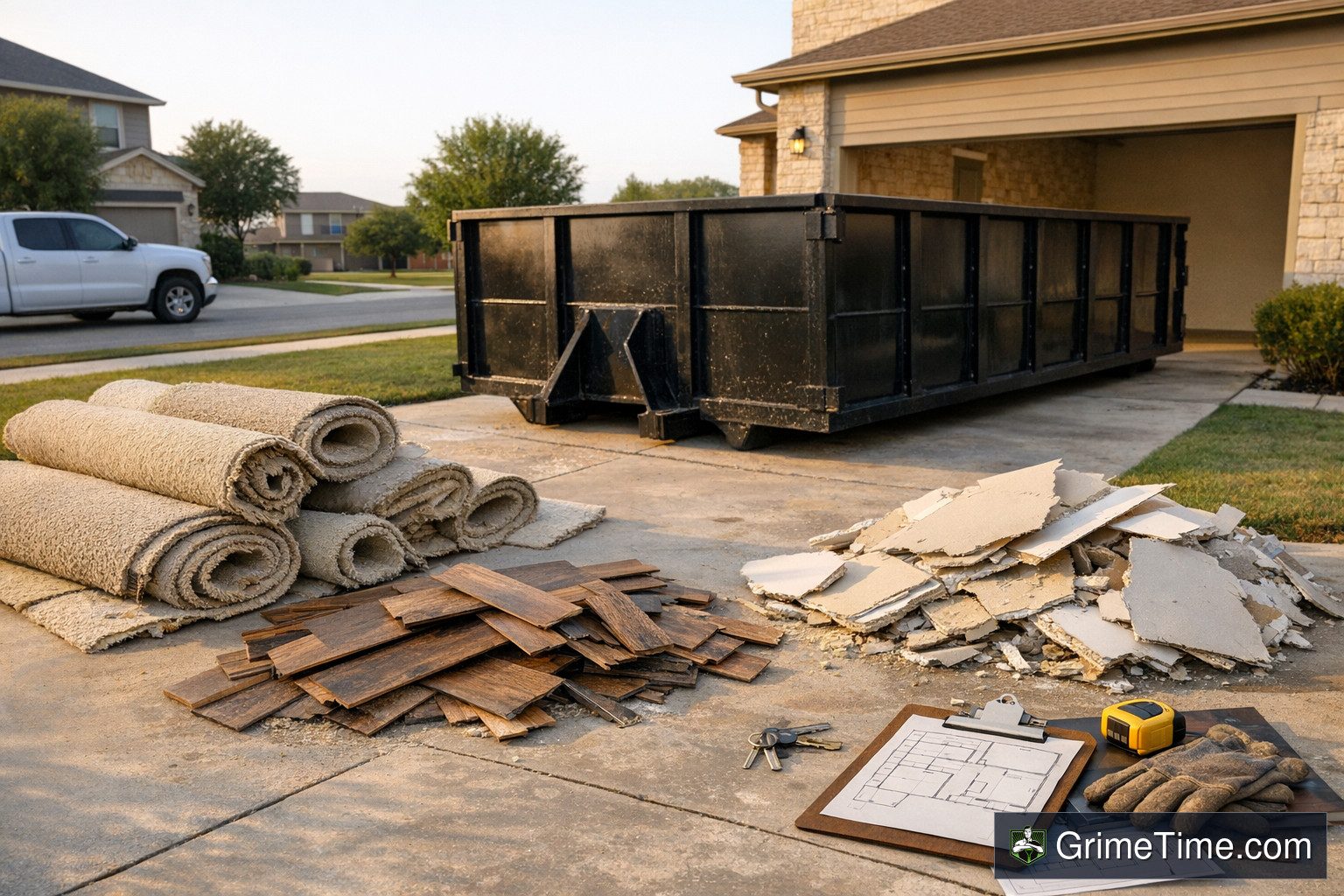
If you are planning a flooring tear-out, a room remodel, or a larger home renovation in Kyle, the short version is this: yes, carpet, most flooring, and drywall can usually go in a residential dumpster rental, but the details matter. Material type, weight, moisture, and how much of each material you are loading can affect what size dumpster you need, whether materials should be separated, and whether the load can be hauled without problems.
This is where many people get stuck. They know they need a dumpster, but they are not sure whether carpet padding, tile, laminate, vinyl plank, hardwood, or drywall are all accepted together, or whether one heavy material will make the container too full or too heavy. For homeowners and contractors in Kyle, the practical answer is not just what is allowed, but how to load it the right way.
Below is a clear local guide to what can go in a dumpster in Kyle, with a focus on common renovation debris and the real-world issues that come up during flooring and drywall removal.
Short answer: Can carpet, flooring, and drywall go in a dumpster in Kyle?
In most residential renovation situations, old carpet, carpet padding, laminate flooring, vinyl flooring, hardwood, tile, and drywall can usually go into a roll-off dumpster in Kyle. That is the direct answer to the common question: can you throw away carpet in dumpster Kyle? Usually yes. The same is often true for drywall and many common flooring materials.
But “yes” does not mean “throw in anything without checking.” A few things can change the answer:
- Weight: Tile, mortar, wet carpet, and large amounts of drywall can add up fast.
- Material mix: Some loads are easier to accept when they are mostly standard renovation debris, not mixed with restricted items.
- Condition of the debris: Wet or moldy material may need special confirmation.
- Amount: A few sheets of drywall is different from a full gut remodel.
- Hidden restricted waste: Paint, chemicals, solvents, asbestos-containing material, and certain electronics do not belong in a standard dumpster load.
For most home projects in Kyle, a Dumpster Rental in Kyle, TX works well for carpet removal, floor replacement, garage cleanouts tied to a remodel, and basic drywall tear-out. If you are comparing container types or just want a better sense of what a larger container can handle, Grime Time also has a useful overview of choosing a big trash container for cleanup jobs.
What types of carpet and flooring are usually accepted?
For a typical residential dumpster rental Kyle TX project, these materials are commonly accepted as standard renovation debris:
- Wall-to-wall carpet
- Carpet padding
- Area rugs from renovation cleanout work
- Laminate flooring
- Vinyl plank flooring
- Sheet vinyl
- Engineered wood flooring
- Hardwood flooring
- Tile flooring
- Underlayment and trim
Carpet and carpet padding
If you are asking, can old carpet and carpet padding go in a residential dumpster in Kyle? the answer is usually yes. Carpet from bedrooms, living rooms, stairs, and hallways is standard cleanup material. Padding is also commonly accepted.
The practical issue with carpet is not usually whether it is allowed. It is whether it is loaded efficiently. Carpet takes up space, especially if it is left in bulky rolls. Padding can also fluff up and fill the container faster than people expect.
Best practices:
- Cut carpet into manageable strips.
- Roll and stack it tightly.
- Keep padding bagged or bundled when possible.
- Do not leave long carpet rolls sticking above the top rail of the dumpster.
If the carpet is wet from a leak, flood event, or long-term moisture problem, say that before delivery. Wet carpet is much heavier than dry carpet and can change the size recommendation.
Laminate, vinyl plank, hardwood, and sheet flooring
These materials are usually straightforward for a dumpster rental for home renovation Kyle project. Laminate, vinyl plank, engineered wood, and hardwood tear-out debris are all common dumpster materials.
The smart loading approach is to:
- Stack pieces flat when possible
- Keep nails and sharp fasteners contained
- Bag up loose scraps so they do not blow around the driveway or jobsite
- Place denser materials on the bottom of the container
In most cases, can you throw away flooring in a dumpster Kyle is answered with yes. The bigger question is what kind of flooring it is and how much of it you are removing.

Tile and attached mortar
Tile is also commonly accepted, but it is one of the materials most likely to cause weight issues. Ceramic and porcelain tile may not look like much once broken up, but a pile from even one room can become very dense. If you are also disposing of mortar, cement backer board, or thick mud-set material, the load gets heavy quickly.
That means one important caution for Kyle remodels: just because tile fits in the dumpster does not mean you want to fill the whole dumpster with it. Heavy debris often needs a different loading plan or a smaller volume container used more strategically.
When drywall is allowed and when extra rules may apply
Another common question is can you throw away drywall in a dumpster Kyle? In many cases, yes. Drywall from normal demolition, patching, room updates, and remodeling projects is usually allowed in a residential roll-off dumpster.
Still, drywall is one of those materials where approval can depend on the exact situation.
When drywall is usually fine
- Small to medium remodeling jobs
- Room-by-room tear-outs
- Removing damaged drywall after a renovation phase
- Drywall scraps from installation or repair
When extra confirmation makes sense
- Very large drywall volumes from a full interior demo
- Wet or mold-affected drywall
- Older materials where composition is uncertain
- Projects mixing drywall with other unusually heavy debris
Drywall itself is not always the problem. The issue is often the total tonnage of the load once drywall, flooring, studs, trim, and other construction waste are all combined. A partially filled dumpster with dense drywall can weigh more than a fuller-looking load of light household junk.
This is why it helps to describe the project clearly when you book. “Replacing drywall in one bedroom” is different from “stripping drywall throughout a two-story house.” If you are local and want project-specific guidance, Grime Time’s dumpster rental kyle resources page is a good starting point for common local rental questions.
Common disposal mistakes that can cause weight or pickup issues
Most problems with renovation debris do not come from obviously prohibited items. They come from loading mistakes that seem minor at first but create hauling, safety, or weight-limit issues later.
1. Mixing heavy flooring debris with everything else without a plan
Tile, mortar, drywall, hardwood bundles, and old wet carpet can all be loaded together in some cases, but the combined weight matters. If you are removing flooring from multiple rooms, do not assume a larger dumpster automatically solves the problem. A bigger box can still hit weight limits if you pack it with dense debris.
2. Overfilling above the top edge
Dumpsters must be loaded level enough for safe transport. Carpet rolls, trim pieces, drywall sheets, and long flooring scraps sticking above the top rail can delay pickup or require on-site reloading.
A simple rule: if debris is rising above the container walls, the driver may not be able to haul it safely.
3. Throwing in moisture-heavy material without mentioning it
Wet carpet, soaked padding, water-damaged subfloor, and damp drywall all weigh more than dry debris. If the material came from a leak, storm event, plumbing problem, or long-term moisture issue, mention that before delivery. That helps avoid choosing a dumpster that looks right on paper but ends up overloaded.
4. Hiding restricted items in a renovation load
A common mistake is tossing prohibited items into an otherwise normal construction debris dumpster Kyle load. Standard examples include:
- Paint cans with liquid paint inside
- Solvents or chemicals
- Batteries
- Tires
- Propane tanks
- Certain appliances
- Electronics
Even if your main load is carpet and drywall, one or two restricted items can create disposal problems. The best time to ask is before the dumpster arrives, not after loading has started.
5. Loading loose debris inefficiently
Small scraps of laminate, broken tile, tack strips, trim, and drywall chunks can create a messy, unstable load if they are scattered randomly. Bagging or boxing small pieces where appropriate, and stacking flatter materials tightly, makes better use of space and usually keeps the site cleaner.

How to choose the right dumpster size for flooring or remodel debris
One of the most useful questions in Kyle is not just what can go in a dumpster, but what size makes sense for the job. Flooring and drywall jobs can be deceptively bulky or deceptively heavy.
Single-room flooring removal
If you are removing carpet or laminate from one bedroom, office, or a small living area, a smaller container is often enough. These jobs create moderate volume, and the main goal is making sure rolled carpet, padding, and trim fit without wasting money on more container space than you need.
Several rooms of mixed flooring
If you are replacing flooring in multiple bedrooms, hallways, or a combination of carpet and hard flooring, move up in size. Mixed materials add up fast, especially once underlayment, baseboards, and packaging from new materials enter the picture.
Whole-home flooring replacement
For full-house flooring tear-out in Kyle, especially when tile is involved, size selection should account for both volume and weight. This is where many homeowners underestimate the project. A container may have enough physical space, but if much of the load is tile, mortar, or thick hardwood, the smarter plan may be a size adjustment or a specific loading cap.
Drywall plus flooring remodels
If the job includes both floor removal and drywall demolition, describe both clearly when booking. Combined material types often change the recommendation. In many cases, that means choosing a dumpster that gives enough room for bulky debris while still respecting load limits for heavier materials.
If you are comparing options, Grime Time’s pricing page can help you look at size and budget together instead of guessing based on volume alone.
What to check before loading heavy material in Kyle
Before you start filling a dumpster with renovation debris, run through a quick checklist. This is especially important for tile, drywall, plaster-like materials, wet carpet, and any project with dense flooring removal.
Confirm the material list
Make a simple list of what is actually being removed:
- Carpet
- Padding
- Laminate or vinyl plank
- Hardwood
- Tile
- Thinset or mortar
- Drywall
- Trim and baseboards
- Subfloor or underlayment
This is the easiest way to get a better size recommendation and avoid surprises.
Estimate whether the material is dry or wet
Moisture matters. Dry carpet and drywall are easier to estimate. Wet demolition debris is heavier and sometimes messier to handle. If there has been water damage, say so upfront.
Check whether the debris will be mixed or separated
Sometimes mixing standard renovation debris is fine. Sometimes separating especially dense material is the better move. If your load includes a large amount of tile or drywall, ask whether that should be loaded differently than lighter flooring waste.
Plan the load order
For better balance and space use:
- Load flat, heavy debris first
- Stack carpet rolls and lighter materials on top
- Keep the load level
- Do not block safe tarp coverage or hauling clearance
Think about driveway and placement conditions
In Kyle neighborhoods, placement can matter almost as much as dumpster size. If you are loading heavy material, make sure the drop spot is accessible and stable. A level surface makes loading safer and reduces the chance of shifting as weight builds.
When it makes sense to ask for a direct material approval
There are plenty of projects where the answer is simple. Standard carpet tear-out? Usually yes. Laminate and vinyl plank? Usually yes. Basic drywall removal? Usually yes.

But there are also times when a quick direct approval is the smartest next step.
Ask before delivery if:
- You are removing a large amount of tile or mortar
- You have water-damaged carpet or drywall
- You want to mix several dense renovation materials in one container
- You are not sure whether an old material needs special handling
- You have leftover non-renovation items you also want to toss
This is honest guidance, not red tape. Approval often depends on the exact material and quantity, and that is normal in dumpster rental. It is better to describe the load clearly than to assume every renovation job fits the same disposal rules.
For general waste-handling guidance, state and local rules can also influence what transfer stations and disposal sites accept. The Texas Commission on Environmental Quality and local disposal facility guidance can be helpful references, but for most homeowners the practical move is simpler: tell the rental company what materials you have before the box is dropped off.
FAQ: What can go in a dumpster in Kyle for renovation debris?
Can old carpet and carpet padding go in a residential dumpster in Kyle?
Yes, in most cases they can. Carpet and padding are common renovation materials for a residential dumpster rental in Kyle. Cut carpet into shorter strips and stack or bundle it so it does not waste space.
Can tile, laminate, vinyl plank, and hardwood flooring all go in the same dumpster?
Often yes, but the amount matters. Mixing flooring types is common, but tile and mortar are much heavier than laminate or vinyl plank. If the project includes a lot of tile, mention that when booking so the load can be planned correctly.
Is drywall allowed in a dumpster, and does the amount matter?
Drywall is usually allowed for standard remodeling debris, and yes, the amount matters. A few sheets or a room tear-out is different from a major gut remodel. Large drywall loads, wet drywall, or uncertain older material should be discussed before delivery.
Will carpet, flooring, or drywall make the dumpster too heavy?
They can. Carpet by itself is usually more of a space issue, but wet carpet gets heavy. Tile, mortar, and drywall are the bigger weight concerns. A load can look half full and still be very heavy if it contains dense demolition debris.
What is the best dumpster size for a single-room or whole-home flooring removal project?
It depends on the flooring type, the square footage, and whether the material is bulky, dense, dry, or wet. Single-room carpet jobs need less capacity than whole-home flooring removal with tile and underlayment. The fastest way to choose correctly is to list the rooms and materials before booking.
What should you check before you book a dumpster in Kyle?
If you came here asking can you throw away carpet in dumpster Kyle, the next useful step is to match your material list to the right container before delivery. In many cases, carpet, carpet padding, laminate, vinyl plank, hardwood, tile, and even drywall can go in a residential dumpster rental Kyle TX customers use for remodels and cleanouts. The part that matters most is not just what is going in, but how much of it there is, how heavy it will be, and whether any item needs separate approval because of dust, moisture, or disposal rules.
Before you reserve a dumpster, it helps to answer three practical questions:
- What are you loading? Make a simple list by room: carpet and pad, tile, laminate, vinyl, hardwood, drywall, trim, underlayment, or mixed renovation debris.
- How heavy is the load likely to be? Tile, wet carpet, and large amounts of drywall can change the right container choice fast, even if the pile does not look very big.
- Are you mixing materials? A mixed construction debris dumpster Kyle load is often fine, but some jobs need confirmation first depending on the exact material and quantity.
If you want a local starting point, you can review Dumpster Rental in Kyle, TX for service details or check current pricing if you already know your project scope.
If you are still deciding between a single-room tear-out and a whole-home remodel, call 512-387-5802 and be ready with your room count and debris list. You can get a direct answer on questions like can you throw away drywall in a dumpster Kyle, can you throw away flooring in a dumpster Kyle, whether your carpet and padding can go together, and what dumpster rental for home renovation Kyle size makes the most sense for your job.
If you already know the materials and approximate volume, the fastest next step is to ask for a size recommendation and price based on your exact load. If you do not, the easiest next step is to walk through the project room by room with someone who can tell you what can go in a dumpster Kyle jobs typically allow, where weight limits may matter, and when approval depends on the exact material you plan to toss.