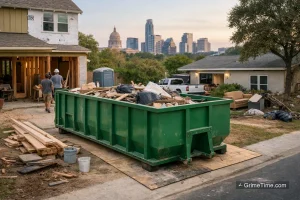

Grime Time Dumpster Rentals: A Practical Guide to Roll-Off Dumpster Rental in Austin and Nearby Cities
If you are planning a cleanout, remodel, roofing job, landscaping project, or active construction site, a roll-off dumpster rental can make the work faster, safer, and easier to manage. The challenge for many homeowners and contractors is not whether they need a dumpster. It is choosing the right size, placing it legally, loading it correctly, and avoiding disposal mistakes that cause delays or added fees.
This guide is built to answer those questions in plain language for Austin-area projects. It covers how roll-off dumpster rental works, what size may fit your job, what can and cannot go inside, when permits may matter, and what affects pricing and scheduling across Austin, South Austin, Buda, Georgetown, Hutto, Dripping Springs, Kyle, Elgin, Pflugerville, San Marcos, and Round Rock.
If you want service details while you read, see Grime Time roll-off dumpster rental services or the local Austin roll off dumpster page.
What a Roll-Off Dumpster Rental Is and Who Usually Needs One
A roll-off dumpster is a large open-top waste container delivered by truck, placed at your project site, and picked up when you are done. It is called “roll-off” because the container rolls off the delivery truck onto the driveway, jobsite, or other approved surface.
Unlike small residential trash carts, a roll-off container is built for larger volumes of debris. That makes it useful for temporary projects that create more waste than normal weekly collection can handle. In practice, that includes everything from garage cleanouts in South Austin to roofing tear-offs in Round Rock, renovation debris in Georgetown, and contractor waste on building sites in Buda or Kyle.
Who usually rents a roll-off dumpster?
In the Austin area, the most common customers include:
- Homeowners clearing out garages, attics, sheds, rental properties, or inherited homes
- Remodeling customers dealing with cabinets, drywall, flooring, tile, fixtures, and demolition debris
- Roofing crews removing shingles, underlayment, flashing, and related materials
- Contractors and construction crews managing framing scraps, concrete, packaging, wood, metal, and jobsite cleanup
- Property managers handling tenant turnover, evictions, storm cleanup, or multi-unit cleanouts
- Commercial project managers coordinating temporary waste removal during build-outs and site work
Why not just haul debris yourself?
Some smaller jobs can be handled with a pickup truck or trailer, but many people underestimate the time involved. Self-hauling usually means repeated trips, fuel costs, disposal fees, loading and unloading labor, and schedule disruptions. For a bigger project, a dumpster keeps debris in one place and removes the need to stop work for dump runs.
For contractors, a roll-off often improves site organization and safety. For homeowners, it reduces the mess of debris piles building up along the side yard or garage. For cleanouts, it gives you a visible limit and a practical way to keep work moving.
What makes roll-off dumpster rental especially useful in the Austin area?
The Austin region has a wide mix of project types: older home renovations in central neighborhoods, suburban move-out cleanups in Pflugerville and Hutto, new construction in Kyle and San Marcos, and rural or semi-rural property projects near Dripping Springs and Elgin. A roll-off dumpster works well across those settings because it can serve temporary waste needs without requiring permanent commercial waste service changes.
That flexibility is why both residential roll-off dumpster rental and construction roll-off dumpster rental are common choices for Austin-area jobs.
Common Austin-Area Projects That Call for a Roll-Off Dumpster
Not every project needs the same container, but many jobs benefit from having one on site from day one. Below are the most common situations where a roll-off dumpster rental Austin customers often need makes sense.
Home cleanouts and property cleanups
If you are clearing out a home before a move, sale, renovation, or estate transition, a dumpster is often easier than trying to sort debris into weekly trash pickup. Common materials include old furniture, shelving, toys, general clutter, carpet, broken storage bins, and non-hazardous household junk.
This is especially common in neighborhoods across Austin, South Austin, Round Rock, Georgetown, and Pflugerville where homeowners want to clear a garage, spare room, or whole property on a set timeline.
Kitchen and bathroom remodels
Even smaller remodels create bulky debris fast. Cabinets, countertops, sinks, tile, drywall, flooring, vanities, mirrors, and packaging material add up quickly. A temporary dumpster keeps demolition waste from spreading through the garage, driveway, or lawn.
For remodeling customers, one of the most important decisions is choosing a size that fits both the material volume and the weight. Tile, mortar, and countertop materials can be heavier than they look, so sizing is not just about how much space debris takes up.
Roofing projects
Roof tear-offs are one of the clearest examples of when a dumpster saves time. Shingles are dense, messy, and hard to stack neatly. Crews often need a nearby container that can be loaded efficiently as material comes off the roof. For homes in Austin, Buda, Hutto, Georgetown, or San Marcos, this is often more practical than staging torn-off material on tarps for later pickup.
Roofing also highlights why weight limits matter. Shingle debris can reach weight allowances faster than general household junk.
Construction and contractor jobs
For builders and trade crews, a dumpster helps keep the site workable. Common debris includes wood offcuts, drywall, insulation, siding, pallets, packaging, trim, and mixed jobsite waste. New construction and renovation projects in Kyle, Round Rock, Hutto, and surrounding growth areas often need dependable haul-away timing to avoid cluttered staging areas and slowed work.
For these jobs, construction dumpster rental Austin customers look for usually depends on matching the container to the phase of work. Demo, framing, roofing, and final cleanup can all produce different kinds of waste.
Landscaping and yard overhauls
Major yard projects can generate stumps, brush, fencing, soil, sod, pavers, and decking materials. A roll-off container can work well for some of this debris, but the right choice depends on what the material is and how heavy it will be. Dirt, concrete, brick, and stone often need extra planning because they can exceed weight limits quickly.
Projects around Dripping Springs, Elgin, Buda, and other areas with larger lots may create more outdoor debris than standard city projects.
Commercial cleanouts and tenant improvements
Office cleanouts, retail renovations, restaurant updates, warehouse clear-outs, and tenant build-outs commonly use roll-off dumpsters for temporary debris control. Property managers often need a container delivered on a specific date, placed where vendors can access it, and removed promptly to keep parking and operations moving.

How to Choose the Right Dumpster Size Without Overpaying
One of the most common questions people ask is: What size dumpster do I actually need? This is also where many renters either overspend on more capacity than they use or underestimate the job and end up needing a second haul.
The best way to think about dumpster sizes for home cleanouts or construction work is to balance three things:
- Volume — how much space the debris will take up
- Weight — how dense or heavy the materials are
- Loading shape — whether items stack efficiently or awkwardly
Think in debris categories, not just room count
A “small bathroom remodel” and a “one-room cleanout” may sound similar in size, but they create different waste. Bathroom debris often includes tile, mortar, cement board, and fixtures, which are heavier than bags of household clutter. A one-car garage cleanout may look large, but if the contents are lightweight cardboard, toys, and old shelving, the weight profile is very different.
Typical sizing approach for common jobs
Exact container dimensions and available sizes can vary by provider, but these general guidelines help Austin-area renters think through the choice:
- Smaller cleanouts or minor remodels often fit a smaller roll-off if debris is limited to one room, a small garage, or a focused project area.
- Medium cleanouts and larger remodels often need a mid-size container for multiple rooms, flooring replacement, deck removal, or moderate demo waste.
- Large renovations, contractor work, and whole-home cleanouts often need a larger container, especially when bulky materials or sustained debris volume are involved.
- Heavy materials such as shingles, concrete, brick, dirt, and tile may require a smaller container than you expect because weight becomes the limiting factor before volume does.
Questions that help narrow the right size
Before booking, it helps to answer a few practical questions:
- Is this mostly household junk, demolition debris, or construction material?
- Will the debris be light and bulky, or heavy and dense?
- Are you throwing away furniture and long materials that do not stack neatly?
- Will the project happen all at once, or over several days?
- Do you have room on site for a larger container if that avoids a second haul?
How to avoid overpaying
Overpaying usually happens in one of four ways:
- Choosing a container much larger than the actual debris volume
- Ignoring weight and paying overage charges on dense materials
- Booking too short a rental period and rushing the project
- Underestimating debris, then needing another container or haul
The cheapest-looking option is not always the most cost-effective. For example, a slightly larger dumpster may save money if it prevents a second delivery. On the other hand, a heavy debris job may need a smaller container with the correct weight allowance rather than the biggest box available.
Why local guidance matters
Size recommendations are more useful when they come from someone who regularly handles Austin-area home remodels, roofing jobs, and contractor loads. A hilly driveway in Dripping Springs, a tighter street in South Austin, or a suburban driveway in Round Rock can all affect what size is practical to place and load.
If you want a local service overview before choosing, review the Austin roll off dumpster page. If pricing is your next question, the pricing information page is the natural next stop.
What Can and Cannot Go in a Roll-Off Dumpster
Another major question behind what can go in a roll-off dumpster is whether disposal rules are based on convenience, landfill policy, or regulation. The answer is usually all three. Most general project debris can go in a roll-off dumpster, but certain materials are restricted because they are hazardous, regulated, flammable, or require special handling.
Common items that usually can go in a roll-off dumpster
Allowed items vary by load type and facility, but many standard project materials are commonly accepted, such as:
- Household junk and non-hazardous clutter
- Furniture and general cleanout debris
- Wood, drywall, and trim
- Flooring, carpet, and padding
- Cabinets, doors, and shelving
- Yard debris like branches and brush, depending on load type
- Construction debris and remodeling waste
- Roofing materials, depending on weight and local disposal rules
Common items that are often not allowed
These items are frequently prohibited or require special arrangements:
- Paint, stains, solvents, and chemicals
- Motor oil, fuel, antifreeze, and other automotive fluids
- Pesticides and herbicides
- Batteries
- Tires
- Propane tanks and pressurized containers
- Asbestos-containing materials
- Medical waste and biohazards
- Fire extinguishers
- Certain electronics or appliances containing regulated components
Items that may be accepted only with prior approval
Some materials are not automatically prohibited but still need advance confirmation because disposal depends on type, quantity, or facility rules. Examples may include:
- Mattresses
- Appliances
- Televisions and electronics
- Concrete, dirt, brick, and asphalt
- Large volumes of green waste
- Mixed loads containing both general debris and heavy inert material
Why prohibited items matter
Throwing restricted materials into a roll-off can create disposal problems at the landfill or transfer station, delay pickup, and lead to added charges for sorting or rejected loads. It can also create safety issues for the driver and anyone loading the container.
The Texas Commission on Environmental Quality provides state-level guidance on waste handling, household hazardous waste, and regulated materials, which is one reason dumpster companies ask questions about what you plan to load. Local household hazardous waste programs may also provide separate drop-off options for materials that cannot go in a standard dumpster.
Practical loading rules that people overlook
Even when materials are allowed, how you load them matters:
- Do not fill debris above the top rim of the container.
- Spread heavy material evenly rather than piling it all at one end.
- Keep prohibited items out from the beginning instead of trying to sort later.
- Do not block the door, if the container style includes one, with unstable heavy debris.
- Ask in advance if you are disposing of dense materials like tile, dirt, or concrete.
That simple planning step often prevents the most common pickup problems.
Where to Place a Dumpster and When Permits May Matter in Austin-Area Cities
Placement is one of the biggest practical issues in residential dumpster rental Austin and commercial project planning. The best location is usually a private surface that allows safe delivery, convenient loading, and clear access for pickup.
Preferred placement areas
In most cases, the easiest and most predictable place to put a dumpster is:
- A private driveway
- A paved jobsite area
- A designated construction staging area
- A parking lot section approved by the property owner or site manager
What the placement surface needs
The area should be reasonably level, accessible to a large truck, and free of low branches, wires, parked vehicles, and gate restrictions. Customers sometimes focus on whether the container itself fits, but truck access is just as important. The driver needs space to approach, unload, and later retrieve the container safely.
Driveway placement basics
Driveway placement is often ideal for homeowners in Austin, South Austin, Buda, Georgetown, Hutto, Kyle, and Round Rock because it avoids many public right-of-way issues. Still, customers should think about:

- Whether vehicles need to be moved for the full rental period
- Whether HOA rules affect temporary container placement
- Whether the driveway slope is workable
- Whether there is enough clearance for delivery and pickup
Street placement and permit questions
If the dumpster needs to sit on a public street, alley, or other right-of-way, permit requirements may apply. This is where Austin dumpster permit rules become relevant. Rules can vary by city and sometimes by neighborhood conditions or right-of-way type.
For Austin itself, public right-of-way use should be checked against current City of Austin guidance. If a container will occupy a street or public area rather than private property, customers should verify whether a permit, traffic control measure, or other approval is required. Similar checks may be needed in Round Rock, Georgetown, San Marcos, Buda, Pflugerville, and other nearby jurisdictions depending on location.
Because municipal rules can change, it is better to confirm the current requirement than rely on old assumptions. For city-specific questions, the safest approach is to check the local public works, development services, or right-of-way office before delivery.
When permits are more likely to matter
- The dumpster will be placed on a public street instead of private property
- The placement affects parking lanes, sidewalks, or traffic flow
- The neighborhood has limited driveway access or tight urban frontage
- The project is in a downtown or denser mixed-use area
How this affects provider choice
A practical dumpster provider should be able to explain what information is needed for placement and help you think through access before scheduling. That does not replace city approval where required, but it does reduce guesswork. This matters even more for commercial dumpster rental Austin customers who are working around parking access, deliveries, and active jobsite logistics.
What Affects Dumpster Rental Pricing, Timing, and Pickup
Austin-area customers often ask two related questions at the same time: How much will it cost? and How soon can I get it? The answer depends on more than container size alone. Understanding the main pricing and scheduling factors helps you compare options more accurately.
Main factors that affect dumpster rental pricing
- Dumpster size — larger containers usually cost more than smaller ones
- Debris type — heavy materials can change what size and weight allowance make sense
- Weight included — dense debris may lead to overage charges if the load exceeds the included limit
- Rental length — longer use periods may affect total cost
- Delivery area — distance and route can affect service logistics in the broader Austin region
- Number of hauls — swap-outs or second containers add cost but may be necessary for larger jobs
- Special handling — restricted or specially managed materials can change disposal fees
Why pricing is not just “size equals price”
Two customers can rent the same size dumpster and pay different totals if one fills it with light household debris and the other loads heavy roofing shingles or masonry. This is why plain-language guidance on weight matters just as much as cubic-yard size.
For customers researching options, the most useful pricing conversation includes:
- What kind of debris are you loading?
- How long do you need the container?
- Where is the job located?
- Do you need one haul or multiple?
If you want a baseline before calling, see the site’s pricing information.
What affects timing and availability
Scheduling depends on local demand, route planning, and the type of project. Availability can tighten during busy remodeling seasons, storm cleanup periods, and high-volume construction windows around Austin and the surrounding growth corridor.
You may want to book earlier if:
- Your project starts on a fixed construction schedule
- You need a specific delivery day before demolition begins
- You are planning work around weekends or subcontractor crews
- You need street placement and have to clear permit questions first
How far in advance should you book?
For many residential jobs, a few days of lead time is helpful. For larger construction projects, tight site schedules, or peak periods, more notice is better. If you are in Austin, South Austin, Buda, Georgetown, Hutto, Dripping Springs, Kyle, Elgin, Pflugerville, San Marcos, or Round Rock, booking as soon as your cleanup or demolition date is reasonably firm usually gives you the best chance of getting the right size on the right day.
What affects pickup timing
Pickup is usually straightforward when:
- The load stays level with the top of the container
- No prohibited items are visible
- The truck has clear access
- The customer gives timely notice that the container is ready
Pickup can be delayed if cars block access, if the dumpster is overloaded, or if the load contains restricted materials that must be addressed before transport.
How the Rental Process Works From Delivery to Haul-Away
Many first-time renters are less concerned about the concept of a dumpster than about the actual process. Here is what to expect from a straightforward roll-off rental from beginning to end.
1. Describe the project
The first step is to explain what kind of work you are doing. A cleanout, bathroom remodel, roof replacement, and commercial build-out all create different waste profiles. Sharing the debris type, project location, and general timeline helps determine size and placement.
2. Get a size recommendation
This is where useful guidance matters. Instead of guessing based on one photo or a vague room count, the recommendation should account for the material type, expected volume, and whether debris is heavy or bulky.
3. Confirm placement and access
Before delivery, you should know exactly where the dumpster will go. Move vehicles, clear obstacles, and verify that gates, branches, and overhead lines will not interfere. If the container must go on a street or right-of-way, check permit requirements with the local city before delivery day.
4. Schedule delivery
Once the size and timing are set, the container is scheduled for drop-off. For active jobsites, timing the delivery before demolition or cleanup starts usually keeps debris under control from the beginning.
5. Load the dumpster safely
As you load, keep heavy material distributed evenly, do not stack debris above the top rail, and keep prohibited items out. Break down bulky items when practical to use space more efficiently. For construction crews, assigning one area of responsibility for load monitoring can prevent overfilling by the end of the day.
6. Request pickup or haul-away
When the container is full or the project is complete, pickup is arranged. If your job creates more debris than expected, ask whether a swap-out or second container is the better fit.
7. Disposal and completion
After pickup, the container is hauled away and the debris is taken to the appropriate facility based on the material type and local disposal procedures. This is where proper loading and accurate debris descriptions matter, because they reduce the chance of surprises.

Local Considerations for Austin, South Austin, and Nearby Service Areas
Austin-area dumpster rentals are not all the same. Project conditions can vary by neighborhood, lot size, road access, and city rules. A useful local resource guide should account for those real differences.
Austin and South Austin
Central and South Austin projects often involve tighter driveways, narrower streets, older homes under renovation, and more frequent questions about street placement. Customers should think early about access and whether a driveway can handle the preferred container size.
Buda, Kyle, and San Marcos
These areas often include fast-moving residential growth, home improvement work, and contractor demand tied to new construction and suburban remodeling. Scheduling can matter when multiple trades are stacked on a timeline.
Georgetown, Round Rock, Hutto, and Pflugerville
These markets commonly see roof replacements, garage cleanouts, move-related disposal, and larger suburban renovation projects. Driveway placement is often simpler than in denser neighborhoods, but HOA considerations may still come into play.
Dripping Springs and Elgin
Projects may involve larger lots, outbuildings, fencing, landscaping, and rural property cleanup. Access conditions can vary more, so it is helpful to describe the property layout clearly when booking.
Practical Mistakes to Avoid When Renting a Roll-Off Dumpster
Many dumpster rental problems are preventable. These are some of the most common mistakes first-time and occasional renters make:
- Choosing by price alone without asking about weight, rental period, or debris limits
- Ordering too small for a full-house cleanout or major demo project
- Ordering too large for a dense debris load that will hit weight limits first
- Waiting too long to book once the project calendar is already fixed
- Assuming street placement is always allowed without checking local rules
- Mixing prohibited items into the load and creating pickup or disposal issues
- Overfilling above the rim and making transport unsafe or non-compliant
- Blocking access with parked cars or stored materials before pickup
Avoiding these mistakes usually comes down to one thing: asking practical questions before delivery rather than after the dumpster is already on site.
Frequently Asked Questions About Roll-Off Dumpster Rental in Austin
What size roll-off dumpster do I need for a remodel, cleanout, or roofing job in Austin?
The right size depends on both volume and weight. A garage or room cleanout may need a smaller or mid-size container, while a larger remodel or whole-home cleanup may need more capacity. Roofing debris can be especially heavy, so the right fit is often based on weight allowance as much as physical size. The best approach is to describe the project type, debris materials, and job location before booking.
Do I need a permit to place a dumpster on the street in Austin or nearby cities?
You may. If the dumpster sits on private property such as a driveway, a permit is often less likely to be needed. If it will be placed on a public street, alley, or right-of-way, you should verify current rules with the city involved. In Austin, that means checking current City of Austin right-of-way or permit guidance. Nearby cities may have different procedures.
What items are not allowed in a roll-off dumpster rental?
Commonly prohibited items include paint, chemicals, automotive fluids, batteries, tires, propane tanks, asbestos-containing materials, medical waste, and other hazardous or regulated items. Some appliances, electronics, or mattresses may also require special handling. If you are unsure, ask before loading the dumpster.
How much does a roll-off dumpster rental usually cost in the Austin area?
Cost usually depends on size, debris type, weight, rental length, delivery area, and whether you need more than one haul. There is no useful single number for every job because a light residential cleanout and a heavy roofing project create very different disposal conditions. For a baseline, review the pricing information page, then compare that to your debris type and timeline.
How far in advance should I book a dumpster for a residential or construction project?
As soon as your project dates are reasonably firm. Residential customers often benefit from booking several days ahead, while contractors or customers with fixed demo schedules may want more lead time. During busier periods, earlier booking can make it easier to get the size you want on the day you need it.
Can I put concrete, dirt, or brick in a roll-off dumpster?
Sometimes, but these materials need advance discussion because they are heavy and can exceed standard weight limits quickly. In many cases, they require a specific load plan or a different size choice than mixed debris. Do not assume heavy inert material can be mixed freely with general junk.
Is a residential dumpster rental different from a construction dumpster rental?
The container type may be similar, but the debris profile, weight, access needs, and scheduling can be very different. Residential jobs often focus on household junk, small remodel debris, or garage cleanouts. Construction rentals usually involve sustained debris flow, tighter scheduling, and heavier site materials.
What should I do before the dumpster is delivered?
Clear the placement area, move vehicles, check overhead clearance, and make sure the path is accessible for a large truck. If the dumpster is going on a public street, confirm any permit requirements in advance. It also helps to separate prohibited items before the container arrives.
Sources and Local Rule Attribution
For permit and disposal questions, customers should rely on current local and state guidance rather than assumptions. Relevant reference points include:
- City of Austin right-of-way and permit guidance for placement questions involving public streets or public space
- Texas Commission on Environmental Quality guidance for waste handling, household hazardous waste, and regulated materials
- Local municipal or county solid waste guidance for region-specific disposal expectations
Rules and accepted materials can change by jurisdiction and disposal facility, so city-specific verification is always the safer step when a project involves street placement or unusual waste types.
Conclusion: The Best Roll-Off Dumpster Rental Choice Is the One That Fits the Job
A good roll-off dumpster rental is not just about dropping off a container. It is about matching the dumpster to the project, understanding realistic weight and material limits, placing it where loading is easy and lawful, and scheduling pickup so the work keeps moving.
For homeowners, that may mean choosing the right container for a garage cleanout or remodel without paying for more capacity than needed. For contractors and project managers, it may mean getting reliable hauling support that fits the pace of demolition, roofing, build-out, or site cleanup across Austin, South Austin, Buda, Georgetown, Hutto, Dripping Springs, Kyle, Elgin, Pflugerville, San Marcos, and Round Rock.
If you are still unsure which roll-off size fits your job, Grime Time Dumpster Rentals can give you a direct answer based on your debris type, project timeline, and placement needs. You can review Grime Time roll-off dumpster rental services, compare the local Austin roll off dumpster page, or check pricing information. If talking it through is easier, call 512-387-5802 and ask what size makes the most sense for your Austin-area cleanout, remodel, or construction project.