
Grime Time Dumpster Rentals: A Practical Guide to Roll-Off Dumpster Rental in Austin
Choosing a roll-off dumpster rental should not feel complicated, but for many homeowners, contractors, and project managers, it often does. The questions usually come fast: What size do I need? What can go in it? Do I need a permit if it sits on the street? How much will a dumpster rental in Austin usually cost? And how far ahead should I book?
This guide from Grime Time Dumpster Rentals is built to answer those questions in a straightforward way. If you are planning a garage cleanout in South Austin, a roofing job in Round Rock, a remodel in Georgetown, a move-out cleanup in Kyle, or a construction project in Buda, Hutto, Pflugerville, Elgin, Dripping Springs, or San Marcos, the goal is the same: get the right container, avoid disposal issues, and keep the job moving.
For readers comparing options, you can also review the main roll-off dumpster rental service page or the local Austin roll off dumpster rental services page for area-specific service details.
What a Roll-Off Dumpster Rental Is and When It Makes Sense
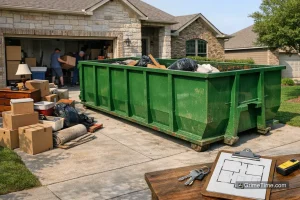
A roll-off dumpster is a large open-top waste container delivered by truck, placed at your job site, loaded over a rental period, and then hauled away for disposal when you are finished. Unlike regular curbside trash service, a roll-off dumpster rental is designed for temporary high-volume waste from projects that create too much debris for weekly pickup.
That simple definition matters because many people try to manage major cleanup or construction debris with too many small trips, overloaded pickup beds, or stacks of bagged waste left around a property. In many cases, a dumpster is less about convenience and more about keeping the worksite safer, cleaner, and easier to manage.
When a Roll-Off Dumpster Is the Better Choice
A roll-off dumpster rental Austin customers often need makes sense when:
- You are producing more debris than normal trash service will accept.
- You want one central place for materials instead of several piles around a site.
- You need to keep a remodel, demo, roofing, or cleanout project moving without repeated dump runs.
- You are managing labor crews and want to reduce downtime.
- You need a temporary waste solution for a defined project period.
For example, a homeowner in South Austin cleaning out a garage, spare room, and old patio furniture may fill a container much faster than expected. A contractor in Pflugerville doing a kitchen and flooring remodel may need a dumpster onsite from day one to keep demolition debris from clogging work areas. A property manager in San Marcos handling a tenant turnover may need a fast solution that supports both speed and cleanup control.
When It May Not Be Necessary
Not every job requires a roll-off dumpster. If the project is very small, such as a few boxes, one broken chair, or a single appliance, hauling it another way may be enough. But once you move into bulk disposal, heavy debris, or projects with multiple debris types, a dumpster becomes easier to justify.
That is especially true in Austin-area neighborhoods where driveway space, HOA rules, narrow streets, and project timing all matter. A dumpster can streamline the job if it is properly sized and properly placed.
Common Austin-Area Projects That Need a Dumpster
Many people first search for a dumpster because they are already halfway into a project and realizing the debris volume is bigger than expected. Below are common local situations where a roll-off dumpster rental is often the practical answer.
Home Cleanouts and Decluttering
One of the most common reasons for a residential dumpster is a home cleanout. This can include:
- Garage cleanouts
- Attic or shed clearing
- Estate cleanouts
- Move-in or move-out cleanups
- Downsizing before listing a house
In neighborhoods across Austin, Round Rock, Georgetown, and Kyle, cleanouts often create more mixed waste than people expect. Old shelving, broken furniture, carpet rolls, cardboard, toys, yard clutter, and bagged junk take up space quickly. If you are researching dumpster sizes for home cleanouts, volume matters just as much as weight.
For projects centered on household cleanup, Grime Time’s residential roll-off dumpster rental page is a useful next stop.
Remodeling Projects
Bathroom remodels, kitchen tear-outs, flooring replacements, drywall removal, deck removal, fence replacement, and whole-home renovation work are all common reasons to rent a dumpster. In Austin and South Austin especially, remodeling jobs often happen on tight lots with limited room for debris staging. A container placed correctly can keep materials contained and reduce repeated loading and hauling.
Typical remodel debris includes:
- Cabinets
- Countertops
- Drywall
- Wood framing
- Tile
- Flooring
- Fixtures
- Packaging from new materials
Heavy materials like tile, dirt, concrete, and shingles can change what size and weight allowance make sense, so the “bigger is always better” assumption does not always hold up.
Roofing Jobs
Roof replacement projects in Buda, Hutto, Elgin, and Round Rock often benefit from a dumpster placed near the house for shingle disposal. Roofing debris is dense, messy, and time-sensitive. Crews need a predictable drop zone so work can continue safely and cleanup can happen as the roof comes off.
Roofing jobs also highlight why placement matters. If the container is too far from the structure, labor time increases. If it is too close to blocked access points or soft ground, delivery and pickup become harder.
Construction and Contractor Projects
New construction, commercial build-outs, site work, framing, demolition, and multi-phase renovation projects often need ongoing construction dumpster support. Contractors and project managers usually care about different details than homeowners: delivery windows, swap-outs, debris types, weight management, and keeping crews productive.
For these jobs, Grime Time’s construction roll-off dumpster rental page can help narrow down service needs.
On active jobs in Austin, Georgetown, or San Marcos, dumpsters are often used for:
- Demolition debris
- Framing scrap
- Drywall and trim waste
- Packaging and pallet breakdown
- Roofing tear-off material
- General site cleanup
Yard, Storm, and Exterior Cleanup
Large landscape overhauls, fence replacement, brush clearing, deck removal, and storm cleanup can all justify a dumpster. Even when debris seems light, bulky brush, lumber, fencing, and outdoor furniture can add up quickly. In Dripping Springs and more rural-edge service areas, site access and driveway conditions may matter even more than usual, especially after rain.
Property Turnovers and Rental Cleanup
Property managers and landlords in Austin, Pflugerville, Hutto, and San Marcos often need dumpsters after evictions, abandoned property situations, or heavy move-out damage. These projects can involve mixed waste, furniture, mattresses, flooring, and damaged fixtures. A dumpster simplifies cleanup sequencing because crews can sort and load while they work instead of storing everything in temporary piles.
How to Choose the Right Dumpster Size for the Job
The most common sizing mistake is choosing by guesswork. The second most common is choosing only by price. A practical dumpster recommendation depends on what the debris is, how much of it there is, how heavy it will be, and how your site will be loaded.
If you want a broader overview of container categories and use cases, this big trash container overview adds helpful context.

Think in Volume First, Then Weight
A home cleanout full of bulky but lighter materials is different from a concrete tear-out or a roofing job. A container may look large enough for a heavy material project, but weight limits can matter before the container is physically full.
Ask yourself:
- Will the debris be mostly bulky household junk, or dense material like dirt, tile, shingles, or concrete?
- Will the project happen all at once, or in phases?
- Do you want one container for everything, or a smaller container with scheduled hauls?
- Is space limited in the driveway or jobsite?
Realistic Use Cases by Project Type
Exact sizing should come from the rental provider, but these common use cases help with planning:
Small to Mid-Size Home Cleanouts
For garage cleanouts, attic debris, a few rooms of junk removal, or light decluttering before a move, many customers need a smaller or mid-size roll-off. This is often enough when the debris is mostly furniture, boxes, household items, shelving, and general non-hazardous trash.
In neighborhoods with tighter driveways in South Austin or central Austin, size selection is not only about capacity. It is also about what fits the site without creating access issues.
Bathroom, Flooring, and Single-Room Remodels
A bathroom tear-out or single-room flooring replacement may fit a smaller container, but tile, mortar, tubs, vanities, and drywall can become heavier than expected. For these jobs, asking about debris type is just as important as asking about room count.
Kitchen Remodels and Multi-Room Renovations
Kitchen remodels produce a mix of bulky and heavy debris: cabinets, counters, flooring, drywall, sinks, appliances if accepted separately, and packaging from new products. Multi-room remodels often justify moving up a size to avoid overfilling or the need for a second container too soon.
Whole-House Cleanouts or Estate Cleanouts
These jobs often produce more volume than homeowners estimate. Bedrooms, garages, closets, patio storage, and old furniture add up quickly. For estate cleanouts in Georgetown, Kyle, or Round Rock, it can help to walk the property and identify what is definitely going, what may still be donated, and what is restricted from dumpster disposal.
Roofing and Dense Debris Projects
For roofing, masonry, dirt, concrete, and similar materials, the right choice may be a container matched to weight and hauling practicality rather than maximum cubic volume. Heavy debris should never be assumed to work in the same way as light household junk.
How to Avoid Size Mistakes
- Do not estimate based on floor area alone. Debris type matters.
- Do not assume a “cleanout” is light if it includes shelving, old fencing, or wet materials.
- Do not plan to load above the top edge. Hauling safety requires level loading.
- Do not ignore access limits. A perfect size on paper still has to fit the placement area.
What to Tell the Rental Company for a Better Recommendation
If you want a useful size recommendation, have these details ready:
- Project type
- Main debris materials
- Property location
- Whether the dumpster will go in a driveway, lot, alley, or street
- Desired delivery date
- Expected rental length
- Whether you may need a second haul or swap-out
That gives the provider enough detail to give practical size selection guidance instead of a rough guess.
What Can and Cannot Go Into a Roll-Off Dumpster
One of the biggest causes of rental problems is assuming all waste can go into one container. It cannot. What can go in a roll-off dumpster depends on the material, local disposal rules, landfill acceptance policies, and environmental restrictions.
In general, common construction and cleanup debris is often acceptable, while hazardous, flammable, toxic, or specially regulated items are restricted or prohibited.
Commonly Accepted Materials
For many Austin-area projects, these are the types of materials often placed in a roll-off dumpster:
- Household junk
- Furniture
- Wood
- Drywall
- Yard debris in some cases
- Roofing shingles
- Cabinets
- Flooring
- Non-hazardous remodeling debris
- General construction waste
That said, “accepted” does not mean every mixed load is treated the same. Dirt, concrete, brick, and roofing materials may involve different loading expectations because of weight.
Commonly Prohibited or Restricted Items
Customers asking what can go in a roll-off dumpster should pay special attention here. Many providers and disposal facilities restrict items such as:
- Paints, stains, and solvents
- Motor oil, fuel, and automotive fluids
- Pesticides and chemicals
- Batteries
- Tires
- Asbestos-containing materials
- Propane tanks and pressurized containers
- Medical waste
- Certain electronics
- Appliances containing refrigerants unless specially handled
Some items may be accepted only with prior approval, added fees, or separate handling. Mattresses, box springs, TVs, refrigerators, and certain e-waste categories may fall into that bucket depending on current disposal options.
Why Restrictions Matter
Disposal restrictions are not arbitrary. They usually exist because of landfill handling rules, fire risk, environmental concerns, or separate recycling and hazardous waste requirements. The Texas Commission on Environmental Quality provides state-level guidance on municipal solid waste and management responsibilities, and the City of Austin publishes local disposal and recycling information that residents can use to confirm handling rules for certain materials.
For local reference, readers can check City of Austin Austin Recycles resources and public guidance pages for household hazardous waste, recycling, and disposal rules. State-level information is also available through the Texas Commission on Environmental Quality. Those sources are useful when a project involves uncertain materials rather than standard cleanup debris.
Best Practice: Ask Before Loading the Questionable Item
If you are unsure about an item, do not bury it in the middle of the load. Ask first. That is especially important for:
- Paint cans with liquid still inside
- Televisions and monitors
- Batteries and chargers
- Fridges, freezers, and AC units
- Chemical containers
- Treated wood in large quantities
- Concrete or dirt mixed into general debris loads
A quick question before delivery is much easier than dealing with a rejected pickup or added disposal issue later.
Placement, Access, and Permit Considerations in Austin
Choosing the right dumpster is only part of the job. It also has to be placed where the truck can deliver it safely and where you can use it without creating access problems. In Austin, South Austin, and nearby cities, placement can be affected by driveway slope, neighborhood street width, parked cars, overhead wires, gates, and municipal or HOA rules.
Best Places to Put a Roll-Off Dumpster
Most customers prefer placing a dumpster on private property when possible. Common options include:
- Driveways
- Construction lots
- Jobsite staging areas
- Private paved side access
Private placement is often simpler because it can reduce permit questions and make pickup easier. But even on private property, the surface should be stable and accessible to a delivery truck.

Basic Access Requirements
Before delivery, think through the truck approach and the loading experience:
- Is there enough room for the truck to enter, position, and exit?
- Are there cars, trailers, or equipment blocking the path?
- Are there low tree branches, utility lines, or carports overhead?
- Will the container block garage access, sidewalks, or work zones?
- Can crews safely carry or wheel debris to the container?
For older central Austin properties or tighter South Austin residential streets, this matters more than many first-time renters expect. A dumpster that technically fits may still be impractical if truck clearance is poor.
Do I Need a Dumpster Permit in Austin?
This is one of the most common local questions: do I need a dumpster permit in Austin? The practical answer is that you may need approval if the dumpster will be placed in the public right-of-way, such as on a street, and rules can depend on the exact location and duration. Requirements may also differ by municipality outside Austin.
If the dumpster will sit entirely on private property, a permit may be less likely, but that does not automatically remove other restrictions such as HOA rules or site-specific concerns. When the placement involves a public street, curb lane, or other right-of-way area, it is wise to verify with the city before scheduling.
The City of Austin right-of-way and permit guidance pages are the right source to confirm current rules for street placement, traffic impacts, or temporary use of public space. Readers in Buda, Georgetown, Hutto, Kyle, Dripping Springs, Elgin, Pflugerville, San Marcos, and Round Rock should also confirm local municipal requirements if the dumpster will not be placed on private property.
HOA and Neighborhood Considerations
Even if a city permit is not required, neighborhood rules may still apply. Some HOAs care about:
- How long a dumpster can remain onsite
- Where it can be placed
- Whether it can remain visible from the street
- Whether weekend placement is allowed
If you are in a planned community in Round Rock, Georgetown, or parts of Kyle and Pflugerville, checking those rules in advance can prevent delays.
Surface Protection and Site Planning
Many homeowners worry about driveway damage. While a properly handled delivery can reduce risk, it is still smart to discuss the surface type and exact placement in advance, especially if the driveway is newer, narrow, or already cracked. The best setup is one that balances truck access, loading convenience, and surface protection.
What Affects Dumpster Rental Pricing and Rental Timing
Dumpster rental pricing Austin customers see can vary based on several practical factors. There is rarely one simple flat answer that applies to every project because location, debris type, size, weight, and rental length all influence the quote.
Main Factors That Affect Dumpster Rental Pricing
- Dumpster size
- Rental period length
- Type of debris
- Weight of the load
- Location within the service area
- Special handling or restricted items
- Need for extra hauls, swap-outs, or extended time
That is why accurate project details matter. A light garage cleanout in South Austin is not quoted the same way as a heavy roofing project in Georgetown or a construction demo in San Marcos.
How Debris Type Changes Cost
Heavy materials can change pricing because hauling and disposal costs are different from lighter mixed debris. Roofing shingles, tile, dirt, concrete, brick, and plaster can all affect the recommendation and the final price structure. If your load will include dense material, mention it upfront instead of treating it like general junk.
How Rental Length Affects Planning
Some customers need a dumpster for a focused weekend cleanout. Others need it for a week or longer to support an active remodel or build. The key is to match the rental period to the actual work schedule.
Underestimating time can create stress if the container needs to be picked up before the project is done. Overestimating may not always be necessary if the project is fast-moving and debris will be loaded quickly.
For contractors, timing is often tied to demolition start dates, framing schedules, roofing tear-off windows, and inspections. For homeowners, timing often follows move dates, family availability, and when labor help is onsite.
How Far in Advance Should You Book?
If your project has a fixed start date, book as early as practical. This is especially true during busy construction and cleanup periods, before weekends, before major moves, or after storms. Austin-area demand can fluctuate, and waiting until the last minute can reduce flexibility on delivery timing or container selection.
As a general planning rule:
- For scheduled remodels or construction work, book once your project calendar is reasonably firm.
- For weekend home cleanouts, do not wait until the day before if you need a specific delivery window.
- For storm or urgent property cleanup, call as soon as the scope is clear.
If you are comparing timing against cost, remember that poor scheduling can be more expensive than the dumpster itself. Delayed demolition crews, extra labor hours, and repeated dump runs all add cost indirectly.
Questions to Ask When Comparing Quotes
When reviewing a quote for construction dumpster rental Austin or residential use, ask:
- What rental period is included?
- What debris is allowed?
- How is weight handled?
- What happens if I need more time?
- What happens if I need a second haul or swap-out?
- Are there placement constraints based on my location?
Clear answers upfront make it easier to compare providers in a useful way rather than only chasing the lowest initial number.
How the Rental Process Works From Delivery to Pickup
For first-time renters, the process is usually simpler than expected when the project details are clear. Here is what a normal rental flow looks like.
1. Describe the Project
The first step is explaining what you are doing. The more specific you are, the better the recommendation will be. Mention:
- Type of project
- Main debris materials
- Address or city
- Desired placement area
- Preferred delivery date
- Expected rental duration
This is where size selection guidance is most helpful. The goal is not just to reserve any container, but to match the container to the debris and site.
2. Confirm Placement and Access
Before delivery, make sure the placement area is clear. Move cars, trailers, and equipment. Check gate widths and overhead clearance. If using a driveway, identify the exact position that gives you the best balance between loading convenience and property access.
3. Delivery Day
On delivery day, the truck brings the container and places it in the agreed location. If the site is tight or has last-minute obstacles, placement may need to be adjusted. Good communication helps avoid surprises here.

4. Load the Dumpster Safely
As you load:
- Keep debris level with the top edge.
- Do not overload one end with dense material.
- Break down bulky items when possible.
- Keep prohibited items out.
- Use care with sharp materials and loose debris.
If your project produces mixed materials over several days, designate one person to monitor what goes in. That can prevent a crew member or helper from tossing in restricted items by mistake.
5. Call for Pickup When the Job Is Done
Once the container is loaded and the project is finished, the dumpster is picked up and hauled away. If your project runs longer than expected or needs another haul, communicate that as early as possible.
6. Swap-Outs for Larger or Ongoing Jobs
On construction or larger cleanout projects, one full dumpster may not be the end of the story. If your site is moving quickly, you may need a swap-out, where a full container is removed and replaced with an empty one. This is common on demolition phases, roofing jobs, and larger remodels.
Helpful Austin Resource Notes for Disposal and Permits
Because disposal and right-of-way rules can change, it is smart to verify local requirements when a project involves unusual materials or public street placement. The following source types are especially useful:
- City of Austin Austin Recycles guidance for household hazardous waste, recycling, and public disposal information
- City of Austin right-of-way or permit pages for street placement questions
- Texas Commission on Environmental Quality guidance for broader waste handling and environmental compliance issues
These sources support questions like what items are restricted, where certain materials should go instead, and whether a permit may be needed if the container cannot stay on private property.
FAQ: Roll-Off Dumpster Rental in Austin
What size roll-off dumpster do I need for a home cleanout or remodel in Austin?
The right size depends on the amount and type of debris, not just the room count. A light garage cleanout may need a smaller container than a kitchen remodel with cabinets, tile, and drywall. Whole-home cleanouts, estate cleanouts, and multi-room renovations usually need more capacity than people first expect. Heavy debris such as shingles, tile, or concrete also changes the recommendation. The best approach is to describe the project, debris types, and placement space so you can get a practical recommendation instead of guessing.
Do I need a permit to place a roll-off dumpster on the street in Austin?
You may need approval if the dumpster will be placed in the public right-of-way, including certain street placements. Requirements can depend on the exact location and local rules. If the dumpster will be on private property, a permit may be less likely, but HOA or neighborhood restrictions may still apply. Check current City of Austin right-of-way guidance for projects inside Austin, and confirm local rules with the city if your project is in Buda, Georgetown, Hutto, Dripping Springs, Kyle, Elgin, Pflugerville, San Marcos, or Round Rock.
What items are not allowed in a roll-off dumpster rental?
Commonly prohibited or restricted items often include paints, solvents, chemicals, batteries, tires, propane tanks, hazardous waste, asbestos-containing materials, medical waste, and some electronics or appliances. Some materials may require separate handling or prior approval. If you are unsure about a specific item, ask before loading it.
How much does roll-off dumpster rental usually cost in Austin?
Dumpster rental pricing in Austin typically depends on container size, rental period, debris type, weight, location, and whether you need special handling or additional hauls. A light residential cleanout is different from a heavy construction or roofing load. The most useful quote comes from giving clear project details instead of asking for a generic price range with no context.
How far in advance should I book a dumpster for a construction or cleanup project?
Book as soon as your project schedule is reasonably firm, especially for remodels, roofing jobs, move-out cleanups, and weekend projects. During busy periods, earlier booking gives you more flexibility on delivery dates and sizing. For urgent cleanups, call as soon as you know the basic scope and location.
Can I put yard waste in a roll-off dumpster?
Yard waste is often manageable in a roll-off dumpster, but it depends on the type and whether the load includes other materials. Large stumps, dirt, rock, and mixed landscape debris can affect weight and disposal handling. Explain exactly what the yard debris includes before booking.
Can a dumpster go in my driveway?
In many cases, yes. Driveways are a common placement option because they avoid many street-placement issues. The site still needs enough room and a suitable surface for delivery and pickup. If the driveway is steep, narrow, fragile, or heavily cracked, mention that in advance.
What happens if I fill the dumpster faster than expected?
If you finish early or fill the container before the project is complete, ask about pickup and swap-out options. This is common on demolition-heavy projects and larger cleanouts. Planning for that possibility is part of a good rental discussion at the beginning.
Common Rental Mistakes to Avoid
Underestimating the Debris
Many customers focus on what they can see first and forget about hidden storage, under-deck material, broken fencing, or demo waste that appears once work starts. Walk the entire project before deciding on a size.
Ignoring Weight
Heavy debris changes the right container choice. Do not treat shingles, tile, plaster, or concrete the same way you would treat light furniture or cardboard.
Waiting Too Long to Ask About Restricted Items
If your cleanup includes paint, electronics, appliances, or questionable materials, ask before loading. That one step can save time and prevent disposal problems.
Choosing Placement for Convenience Alone
The closest spot is not always the best spot. A container should be easy to load, but it also needs safe truck access and enough surrounding clearance.
Booking Without a Realistic Timeline
If your contractor start date is not firm or your cleanout helpers are only available on one weekend, communicate that. Dumpster timing works best when it reflects the real work schedule.
Why This Resource Matters for Austin-Area Projects
A useful roll-off dumpster rental guide should do more than define the service. It should help readers make practical decisions before they spend money or create avoidable delays. In the Austin area, those decisions often come down to three things:
- Choosing the right size for the real debris volume and weight
- Understanding what can and cannot go in the container
- Planning placement, timing, and local rules before delivery day
That applies whether you are handling a home cleanout in South Austin, a remodel in Round Rock, a roofing project in Buda, a contractor job in Georgetown, or a property turnover in San Marcos.
Conclusion
Roll-off dumpster rental is most useful when it removes uncertainty from a project instead of adding to it. If you know the type of debris, the likely volume, where the container can go, and whether any items need special handling, you are already most of the way to a smooth rental.
Grime Time Dumpster Rentals serves Austin and nearby communities including South Austin, Buda, Georgetown, Hutto, Dripping Springs, Kyle, Elgin, Pflugerville, San Marcos, and Round Rock with a practical focus on size selection, disposal guidance, and efficient scheduling.
If you want a direct answer on the right dumpster size, expected rental length, or whether your placement plan makes sense for your property, what project are you working on in the Austin area? Call Grime Time Dumpster Rentals at 512-387-5802 and describe the debris, timeline, and location so you can get a practical recommendation before you book.