Why Smart Contractors Need a Simple Dumpster Rental Guide
A dumpster rental guide can save you hundreds of dollars and countless headaches. Whether you’re managing a kitchen remodel, roofing job, or major construction site, understanding the rental process is crucial for keeping projects on schedule and within budget.
Quick Dumpster Rental Process:
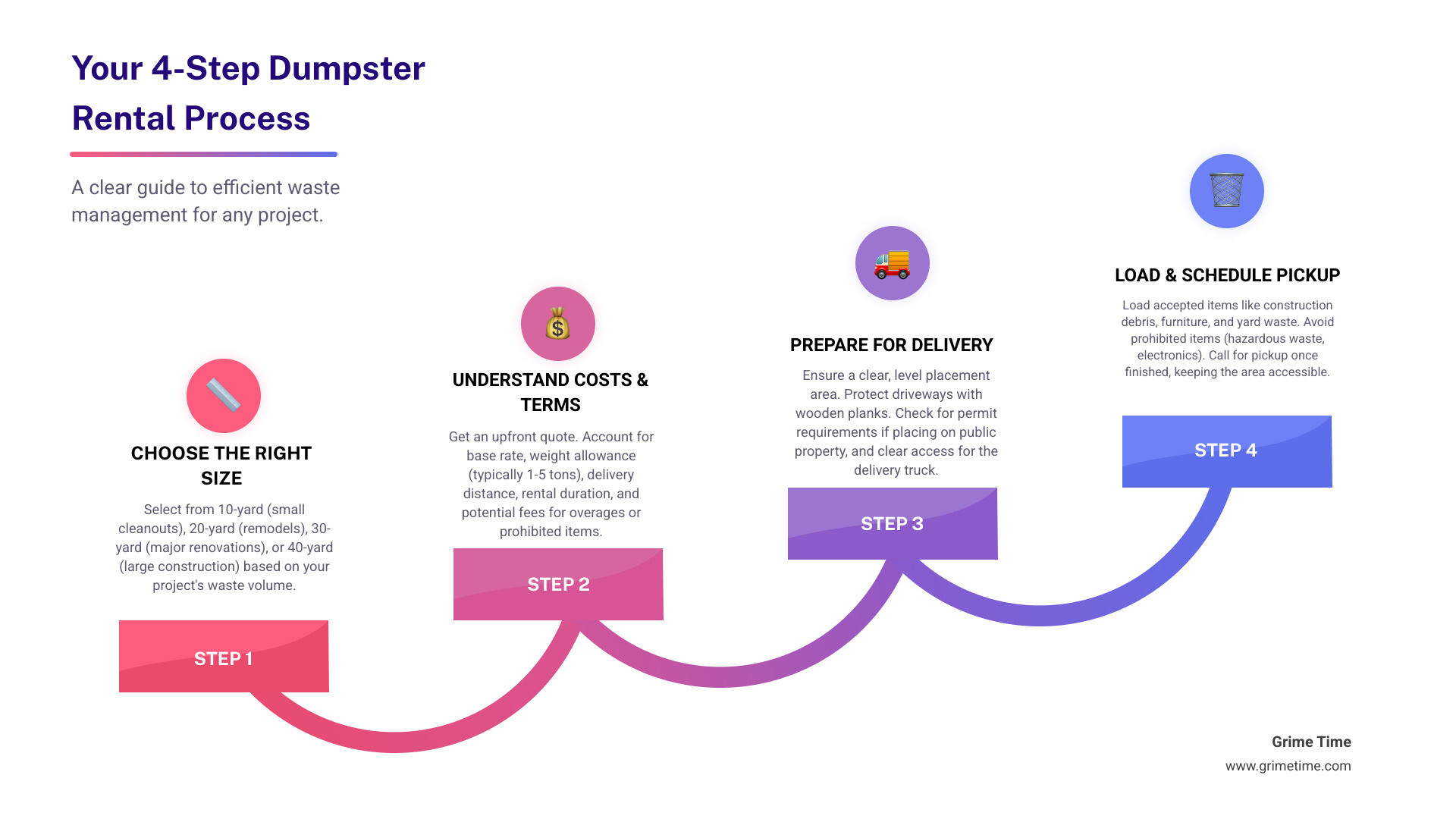
- Choose the right size – 10-yard for small cleanouts, 20-yard for remodels, 30-yard for major renovations, 40-yard for large construction
- Get an upfront quote – Average cost ranges from $390-$1,590 depending on size and location
- Schedule delivery – Standard rental periods are 7-10 days with extensions available
- Load properly – Keep debris below the fill line and avoid prohibited items
- Call for pickup – Contact when finished or by the end of your rental period
Dumpster rental can be frustrating. As one industry expert notes, “dumpster rental pricing can be as complicated as your cable, utility, or phone bill” – with hidden fees that can add $100-$300 to your final bill. That’s why a clear guide matters.
Common cost factors include dumpster size, weight limits (typically 1-5 tons included), delivery distance, and rental duration. Prohibited items like hazardous waste or electronics can trigger penalty fees. With a growing number of haulers in markets like Austin, choosing a provider with transparent pricing is more important than ever for busy contractors.
Basic Dumpster rental guide glossary:
Choosing Your Perfect Dumpster: Size and Type Matters
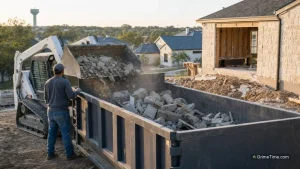
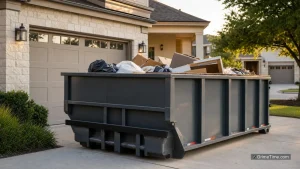
Choosing the right dumpster is like picking the right tool for the job—it makes all the difference. At Grime Time, we specialize in roll-off dumpsters, the rectangular, open-top containers perfect for construction sites and home projects alike. These workhorses are designed for easy loading and efficient waste removal, simplifying your cleanup.
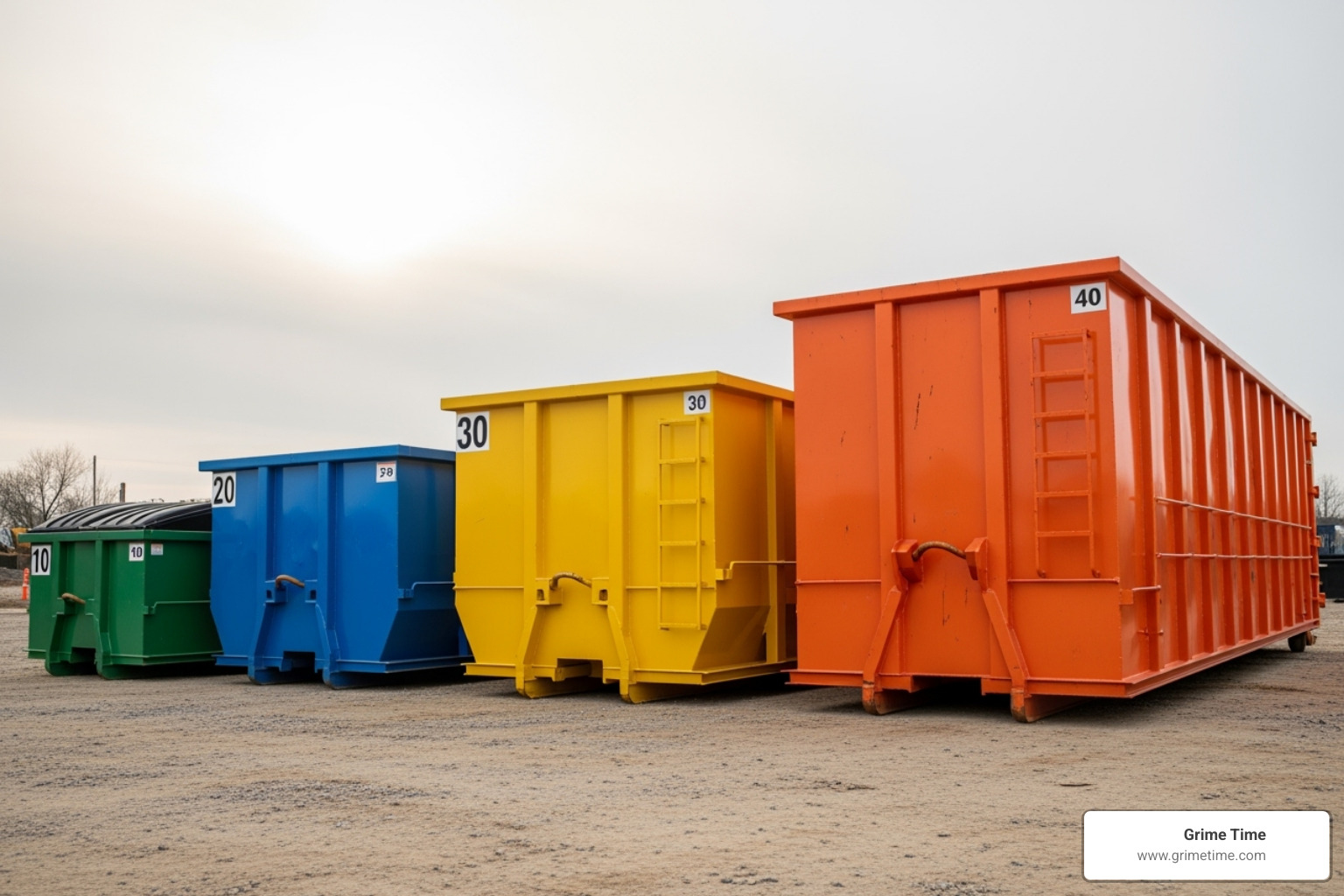
Dumpster sizes are measured in cubic yards, a standard unit of volume (3 ft. x 3 ft. x 3 ft.). The key to a successful rental is matching your project’s scale to the right container size. Going too small means paying for a second dumpster, while going too big means paying for unused space. Our dumpster rental guide helps you find that perfect fit.
How to Select the Right Dumpster Size
“What size dumpster do I need?” is the most common question we hear. The answer depends on your project type and the amount of debris you expect.
-
10-Yard Dumpster: The compact champion, perfect for small cleanouts (basement, garage, attic) and heavy materials like concrete, dirt, or roofing shingles. It can hold shingles from a typical 1,500 sq. ft. roof. We often recommend smaller bins for heavy materials due to truck weight limits.
-
20-Yard Dumpster: Ideal for remodel territory, such as kitchen renovations, bathroom makeovers, or large flooring removals. It can handle debris from a 300-400 sq. ft. deck removal and holds about two pickup truck loads of waste.
-
30-Yard Dumpster: Your best friend for major renovations like home additions, new construction, or whole-home window replacements. This size is also great for large estate cleanouts.
-
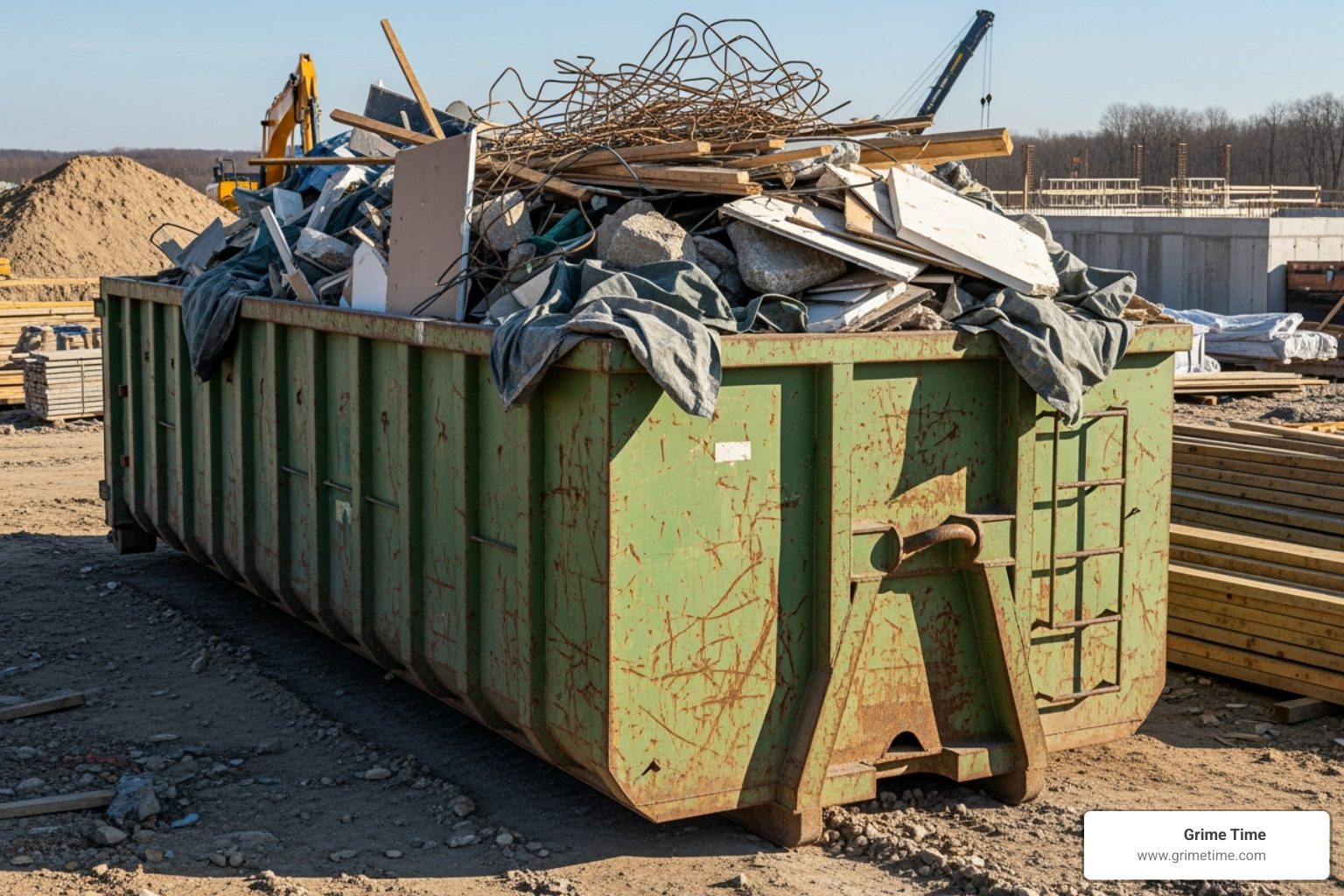
40-Yard Dumpster: The heavyweight champion, designed for large-scale projects like major commercial remodels, big construction jobs, and extensive roofing tear-offs.
Friendly advice from our dumpster rental guide: when in doubt, go bigger. Overestimating your needs saves you the cost and hassle of needing a second trip or paying overage fees.
A Beginner’s Dumpster Rental Guide to Grime Time’s Dumpster Types
Grime Time keeps it simple with versatile roll-off dumpsters. A key feature is the swinging rear door, a game-changer for easy loading. Instead of heaving heavy items over the side, you can open the door and walk them right in. This saves your back and speeds up the project.
Our construction dumpsters are tough enough for job site debris but are also residential-friendly for home cleanouts. We take care to protect your property, even working within tight spaces when needed. Our goal across Austin and Central Texas is to provide seamless, stress-free waste disposal for any project size.
Decoding Dumpster Rental Costs and Terms
Understanding dumpster rental costs upfront saves money and stress. At Grime Time, we believe in transparent pricing with no hidden fees. Our dumpster rental guide breaks down what you’re paying for so you can budget confidently.
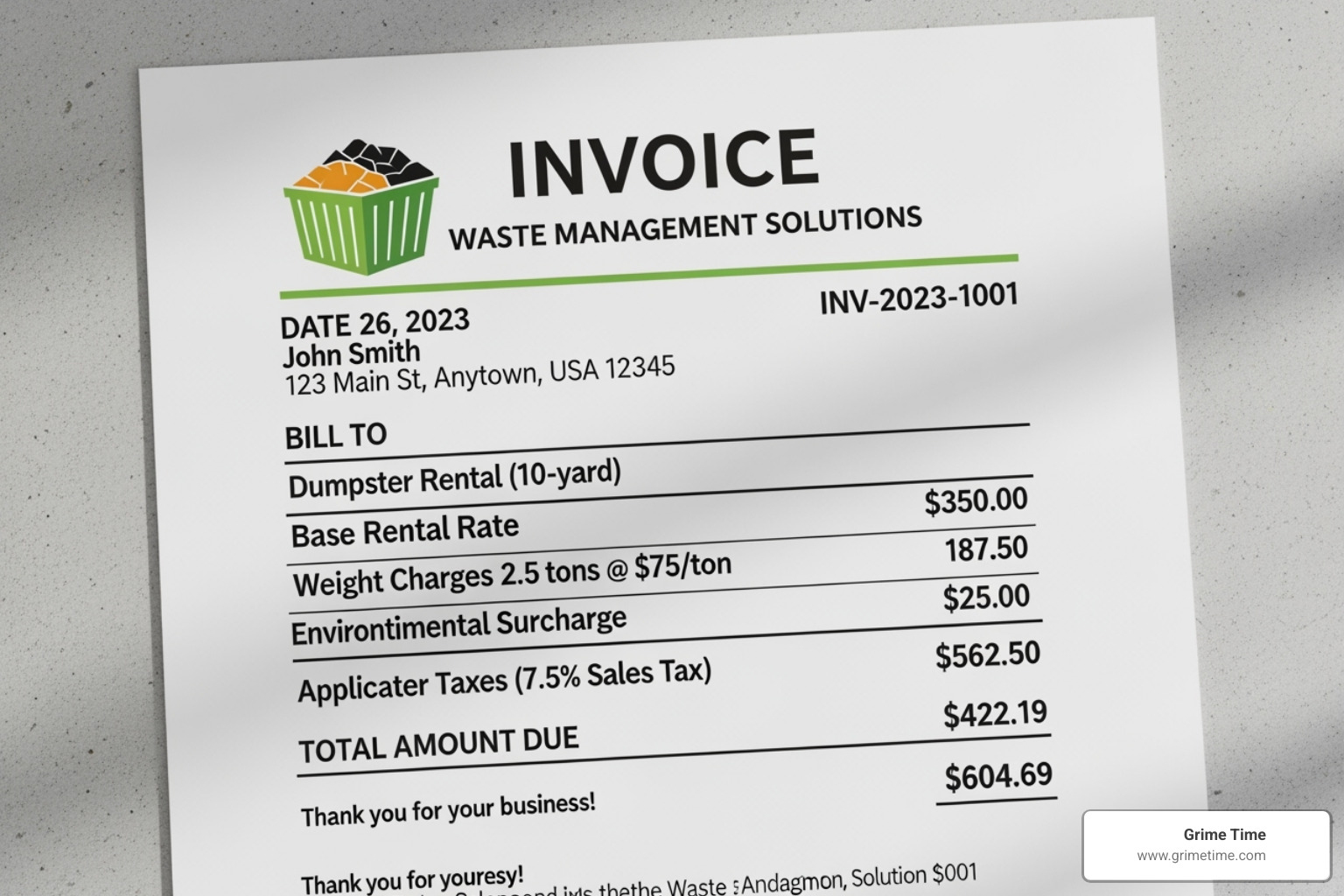
While the national average is around $450, quotes can range from $390 to $1,590 depending on your needs. This reflects the various factors in waste disposal. With Grime Time, your quote clearly lists all charges, including delivery, tonnage allowances, and fees, so there are no surprises.
Key Factors That Influence Your Final Price
Several elements determine your final cost. The base rental rate covers the container and standard service, but other factors affect the total.
- Dumpster Size: A 10-yard dumpster averages $395, a 20-yard is $475, a 30-yard is $575, and a 40-yard is $650. Choosing a size too small can cost more in the long run.
- Weight of Debris: Each rental includes a tonnage allowance (usually 1-4 tons). Exceeding this limit incurs overage fees.
- Landfill Fees: Disposal fees ($35-$100 per ton) are built into your upfront quote.
- Rental Period: A standard 7 to 10-day period is included. Extensions are available for an additional fee.
- Delivery Distance: We serve Austin and Central Texas, but long hauls to remote locations may have travel fees.
- Debris Type: Heavy materials like concrete can quickly reach weight limits, while lighter debris is more forgiving.
How to Avoid Common Fees and Overcharges
Most extra fees are preventable with a little planning. Here’s how to avoid them:
- Stay Under the Weight Limit: Avoid overage charges (up to $145/ton) by knowing your tonnage allowance. Heavy debris like concrete adds up fast.
- Keep the Area Clear: Prevent trip fees ($95-$145) by ensuring the truck has clear access for delivery and pickup. Don’t block the driveway or overfill the bin.
- Avoid Prohibited Items: Tossing forbidden materials can result in penalties ($25-$100). We’ll cover what’s allowed later in this guide.
- Plan Your Timeline: Daily rental extensions cost about $15/day. While reasonable, they can add up on long projects.
Proper loading is key. Distribute weight evenly, never fill past the top rail, and break down bulky items to maximize space. Clear communication and responsible loading ensure a smooth, cost-effective rental.
The Complete Dumpster Rental Guide: From Booking to Pickup
Our dumpster rental guide provides a simple roadmap for the entire process, from the first call to the final pickup. A well-planned rental simplifies your project timeline, letting you focus on the work at hand.
Step 1: Ordering Your Dumpster
Your rental journey starts with a simple conversation. We make this step as straightforward as possible.
- Get a Quote: Request a quote online or call us. We provide transparent, upfront pricing with no surprises.
- Provide Project Details: Tell us about your project—renovation, cleanout, construction—and the types of materials you’re tossing. This helps us recommend the perfect size.
- Choose a Delivery Date: Dumpsters can arrive any time on your scheduled day. Ensure the delivery spot is clear all day; you don’t need to be home if we have clear instructions.
- Confirm Placement Instructions: Be specific about where you want the dumpster. Clear instructions ensure perfect placement for easy loading.
Step 2: Preparing for Delivery and Safe Placement
A little preparation ensures a smooth delivery.
- Clear the Path: Our delivery truck needs ample room to maneuver. Remove any cars, equipment, or obstacles blocking access to your chosen spot.
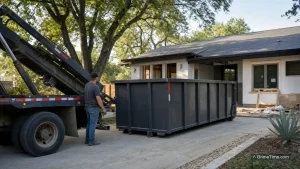
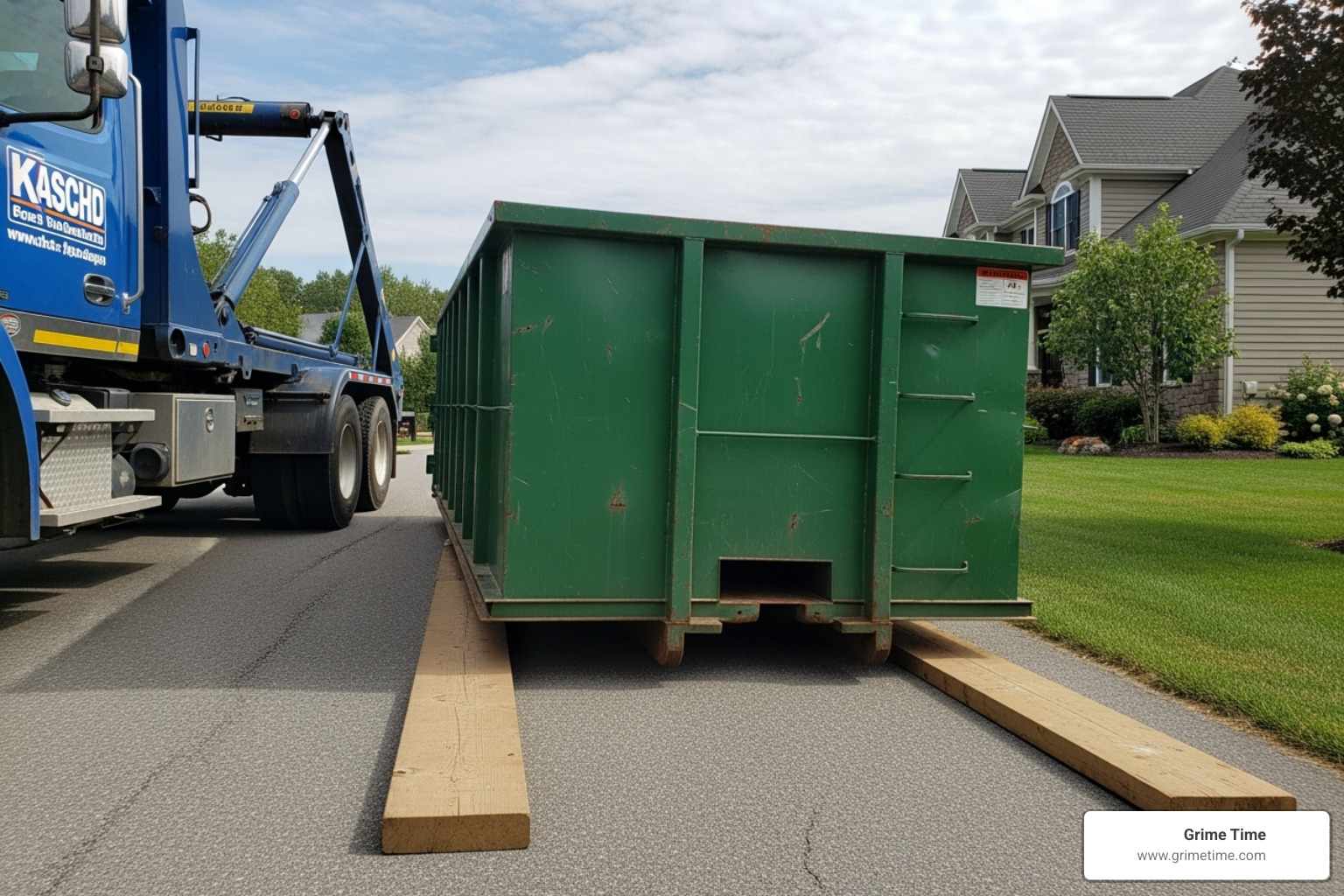
- Protect Your Driveway: Our drivers use wooden planks to protect surfaces from the dumpster’s weight. Place the bin on hard, level ground, avoiding soft soil or hot asphalt. For extra protection, you can lay down plywood.
- Check Permit Requirements: You typically don’t need a permit for placement on private property (your driveway or yard). However, placing a dumpster on a public street or sidewalk likely requires a permit from your local municipality. Check with Local code enforcement ahead of time.
Step 3: Loading Your Dumpster and Scheduling Pickup
Once the dumpster arrives, it’s time to load it efficiently.
- Load Heavy Items First: Use the swinging rear door to walk in heavy items like concrete or old appliances, creating a stable base.
- Distribute Weight Evenly: Spread debris across the dumpster floor for safe transport.
- Break Down Bulky Items: Flatten boxes and disassemble large furniture to maximize space. Never fill above the top rail, as overfilled dumpsters are a safety hazard and cannot be picked up.
- Schedule Pickup: When you’re finished, contact us to schedule removal. Calling as soon as you’re done helps avoid extension fees.
- Keep the Area Accessible: Ensure the truck has clear access for pickup, just as you did for delivery.
Following these steps transforms your waste disposal into a smooth, predictable process.
What Goes In? A Guide to Accepted and Prohibited Waste
Knowing what can and can’t go in your dumpster is a critical part of any dumpster rental guide. Following waste management guidelines helps you avoid penalties, ensures safety, and supports eco-friendly disposal. Proper sorting allows recyclable materials to be processed correctly and hazardous items to be handled safely.
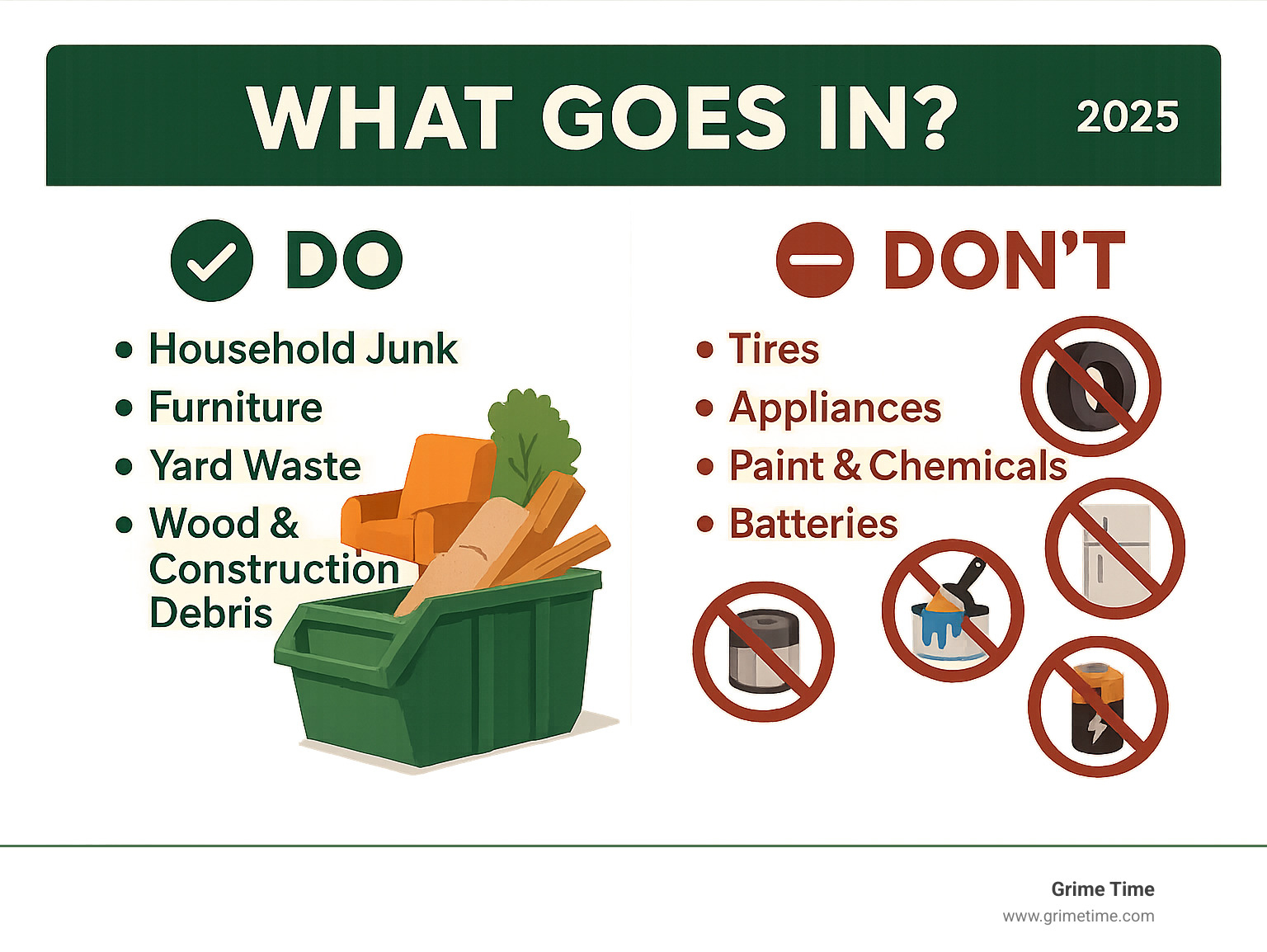
What You Can Put in Your Rental Dumpster
Our dumpsters are designed for General waste and can handle most project debris.
- Household Junk: Old sofas, outdated furniture, clothing, and miscellaneous items from garage or attic cleanouts.
- Construction Scraps: Wood, drywall, plaster, tiles, and non-hazardous insulation from renovation projects.
- Yard Waste: Branches, leaves, grass clippings, and other organic debris from landscaping.
- Roofing Shingles: Asphalt shingles are generally accepted. A 10-yard dumpster can often hold the shingles from a typical 1,500 sq. ft. residential roof.
Items Strictly Prohibited from Dumpsters
These restrictions are in place for safety, environmental, and legal reasons. Placing prohibited items in a dumpster can result in penalty fees ($25-$100) and removal hassles.
- Hazardous waste: Paints, solvents, motor oil, antifreeze, pesticides, and household chemicals.
- Flammable Materials: Gasoline, propane tanks, aerosols, and explosives.
- Electronics and Appliances: TVs, computers, monitors, and appliances containing refrigerants like Freon (refrigerators, AC units) require special recycling.
- Batteries and Tires: Car batteries, household batteries, and tires must be disposed of separately due to the chemicals and materials they contain.
- Asbestos: Materials containing asbestos require professional assessment and removal due to serious health risks.
- Medical Waste: Any biohazardous materials, sharps, or medical equipment are strictly forbidden.
When in doubt, just ask! A quick call can save you time, money, and headaches.
Frequently Asked Questions about Renting a Dumpster
Our dumpster rental guide wouldn’t be complete without answering the questions we hear most often. Here are the key details for a smooth rental experience.
How long can I keep my dumpster rental?
Standard rental periods are typically 7-10 days, which is ample time for most projects. If your project runs long, extensions are often available for a daily fee of around $15 plus taxes. Just give us a call to arrange it. Conversely, if you finish early, early pickup can be scheduled as soon as you’re done. There’s no need to wait until the end of your rental period.
Will a roll-off dumpster damage my driveway?
It’s a valid concern, as dumpsters are heavy. A full 20-yard dumpster can weigh several tons. To prevent damage, Grime Time uses protective measures like wooden planks to distribute the weight and create a barrier between the steel wheels and your pavement.
For best results, place the dumpster on a hard, level surface. Avoid soft ground or hot asphalt, which are more vulnerable to damage. For extra peace of mind, especially on newer driveways, you can lay down plywood sheets before delivery. Our experienced drivers are skilled at safe placement to protect your property.
What happens if I need another dumpster?
It’s common for projects to generate more debris than expected. If you fill your dumpster before the project is done, you can schedule an “empty-and-return” service. This means Grime Time picks up the full bin and drops off an empty one, often in the same trip, so your project doesn’t miss a beat. For massive jobs, we can arrange multiple deliveries or a regular pickup schedule. Just let us know what you need.
Conclusion
This dumpster rental guide has covered everything you need for a stress-free rental: choosing the right size, understanding costs, avoiding fees, and knowing what to throw away. Waste disposal should be the easiest part of your project, and a reliable plan makes everything flow smoother.
At Grime Time, we make dumpster rental simple. We’ve built our reputation on transparent pricing with no hidden fees. Our upfront quotes include delivery, pickup, weight allowances, and all disposal fees, so you know exactly what to expect.
Serving Austin and Central Texas for years, our team understands the needs of local contractors and homeowners in communities from Georgetown to San Marcos. We’re not just a dumpster delivery service; we’re your partner in making sure your project stays on track.
Ready to get started? Let us handle the debris while you focus on bringing your vision to life.