Dumpster Rental Pricing in Austin: Does Driveway Delivery Cost More?
For most residential projects, having a roll-off dumpster delivered to your driveway does not automatically mean a different base rental price. The container, delivery, pickup, included rental period, and included disposal allowance are usually the main parts of a quote. However, the specific driveway, access route, debris type, rental timeline, and placement plan can affect the final cost.
If you are comparing dumpster rentals in Austin, TX for a remodel, garage cleanout, move, landscaping project, or estate cleanout, the most useful question is not simply, “What does a dumpster cost?” It is, “What container and delivery plan fit my property and debris?” Providing a few details before booking helps avoid surprises and makes sure the container can be placed where your crew can actually use it.
Quick Answer: Does Driveway Delivery Cost More in Austin?
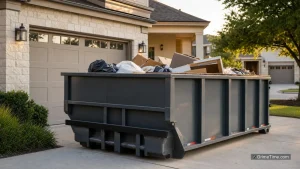
No, driveway delivery by itself does not automatically add a separate charge to an Austin dumpster rental. Driveways are a common placement location for residential roll-off dumpsters because they keep the container on private property, close to the work area, and out of the street when there is enough room for safe delivery.
That said, driveway conditions can affect the quote or the delivery plan. A straightforward, accessible concrete driveway with a clear path may be simple to serve. A steep driveway, narrow approach, low tree limbs, parked vehicles, gates, soft ground, a tight turnaround, or a surface that needs extra protection may require additional planning. In some cases, the safest practical placement may be different from the customer’s first choice.
The same applies to the material you plan to throw away. A container filled with household junk, furniture, renovation debris, yard waste, roofing material, or heavy construction debris can have different disposal considerations. The amount of material matters, but so does its weight and whether it contains items that cannot go into a standard roll-off container.
For a useful pricing conversation, think of the rental as having two parts:
- The standard rental arrangement: the selected dumpster size, normal delivery and pickup, the scheduled rental period, and the disposal allowance or terms stated in your quote.
- Project-specific factors: extra weight, extended time, restricted access, a second trip, prohibited materials, a failed delivery attempt, special placement needs, or street/right-of-way requirements.
Grime Time Dumpster Rentals can help you sort through those details before delivery. That is generally more reliable than choosing a container from a generic price list without discussing the property, debris, and intended location.
What Is Usually Included in an Austin Dumpster Rental Quote?
An Austin dumpster rental quote should clearly explain what you are reserving and what circumstances could change the total. Exact terms vary by container and project, so confirm the current details for your address and rental date rather than relying on an old estimate or a price someone else received for a different job.
For a typical residential dumpster rental in Austin, a quote commonly addresses the following items:
- Dumpster size: The container size recommended for the project and whether it is appropriate for the type of debris you expect.
- Delivery and pickup: Transporting the roll-off to your property and removing it after you schedule pickup or at the end of the agreed rental period.
- Rental period: The number of days or timeframe included in the rental arrangement.
- Disposal terms: The included weight allowance or disposal terms, plus how overages are handled if the load exceeds what is included.
- Service area: Confirmation that your Austin-area address is within the normal service area and that delivery logistics are workable.
- Placement plan: Where the driver should place the dumpster and whether the requested location is safely accessible.
It is worth asking the provider to state these items plainly. A low initial number is not helpful if it does not explain weight, timing, prohibited materials, or what happens when a driveway cannot be accessed as expected.
Size Selection Is Part of Pricing Accuracy
Choosing the right roll-off size is one of the most practical ways to keep a project on track. A dumpster that is too small can lead to an additional haul or force you to leave debris behind. A container that is much larger than needed may not be the best fit for a compact driveway, narrow jobsite, or limited cleanup scope.
When estimating size, consider both volume and material density. Light but bulky materials, such as boxes, cabinets, furniture, brush, and general household clutter, can fill a container quickly. Dense materials, including dirt, brick, concrete, rock, tile, roofing, or heavy demolition debris, may weigh much more than they look. A mixed cleanout also needs a realistic estimate: an attic full of bags may take less space than an entire garage with shelving, furniture, appliances, and old building supplies.
If you are unsure how container sizes relate to common projects, review this guide to big trash container sizes and uses. Then discuss your actual debris with the rental team before booking. It is especially important to mention heavy materials early because they may need separate loading guidance or a different disposal plan.
Base Pricing Is Not the Same as Every Possible Charge
Clear expectations begin with separating the base rental quote from circumstances that may create additional charges. The base quote is the agreed rental service for the stated size, timeframe, location, and disposal terms. Additional costs are typically tied to a change in those conditions, not simply to the fact that a dumpster sits on a driveway.
Before booking, ask how the provider handles:
- Weight beyond the included disposal allowance
- Extra rental days if the project runs longer than planned
- Loads containing prohibited or restricted materials
- Overfilled containers that cannot be safely transported
- Dry runs or inaccessible delivery and pickup locations
- Requests for a swap-out or an additional container
- Street placement, permits, cones, or traffic-control requirements when applicable
This is not about expecting problems. It is about matching the quote to the job before a truck arrives. Homeowners, contractors, and property managers all benefit from knowing what is included and what needs prior approval.
Factors That Can Change the Price for Driveway Placement
Driveway dumpster rental in Austin is usually efficient when delivery access is clear and the container can remain on private property. The following details may affect the total quote, delivery options, or scheduling needs.

1. Delivery Address and Route Access
Your address matters because delivery crews need to reach the property safely with a truck and roll-off container. Central Austin neighborhoods, South Austin streets, hill country lots near Dripping Springs, newer developments in Hutto, and rural-edge properties around Elgin can present different route and access conditions.
Important details include:
- Whether the street is wide enough for the delivery truck to approach and maneuver
- Whether parked cars, construction vehicles, or moving trucks will block access
- Whether overhead utility lines, tree limbs, carports, gates, or low clearances affect the drop area
- Whether the driver has room to line up with the driveway and leave safely
- Whether your neighborhood has a gated entry, restricted access time, HOA rules, or active road work
Distance matters operationally as well. The driver needs a safe, direct route from the public road to the placement point. A dumpster cannot always be set behind a house, around a sharp corner, or deep inside a property simply because there is open space there. Share the actual proposed location, not only the street address.
2. Container Size and Expected Debris
Container size is a main part of Austin dumpster rental pricing because larger containers serve more material but require more delivery space. The recommended size should fit the debris volume, project pace, and available placement area.
A small bathroom remodel, a garage cleanup, and a whole-home renovation are not interchangeable projects. Nor are clean wood scraps, household junk, roofing shingles, and concrete. Be specific about what you expect to load so the quote reflects the right service rather than an assumption.
For roll-off options and project planning, see Grime Time’s Austin roll-off dumpster rental services. If affordability is a priority, it is still best to compare complete rental terms rather than making a decision based on container size alone. These affordable dumpster rental options in Austin can help you start the conversation with the right project details.
3. Rental Length and Project Timing
Residential work often takes longer than expected. A cleanup may uncover more material than planned, a contractor may be delayed, or a renovation may move through demolition in stages. If the dumpster needs to stay longer than the included rental period, an extension may affect the cost.
Tell the rental company whether you are doing a one-weekend cleanout, a multi-day remodel, a phased renovation, or ongoing property turnover work. If you need the dumpster by a particular day, mention that as well. Delivery availability can depend on route scheduling and demand, especially during busy construction periods or after storms when cleanup projects increase across the Austin area.
For a contractor or project manager, it also helps to identify the loading schedule. A dumpster delivered before demolition begins may sit mostly empty for several days. A container delivered after the crew has prepared the site may be used more efficiently. The correct timing can reduce the need for extensions and keep the driveway or jobsite less congested.
4. Disposal Weight and Overage Risk
Weight is one of the most common reasons a final charge can differ from a base quote. Every project produces debris differently. A container that appears only partially full can still be very heavy if it contains masonry, soil, tile, concrete, wet yard debris, or other dense material.
When requesting a quote, do not describe a heavy load as simply “trash.” Instead, say what it is: broken concrete from a patio, old shingles from a roof tear-off, dirt from excavation, drywall and lumber from a remodel, or mixed household items from an estate cleanout. That level of detail allows the provider to explain the right container, loading limits, and disposal expectations.
Do not intentionally mix in items you know are restricted. A roll-off dumpster is not a catch-all disposal option for chemicals, fuel, paint, batteries, certain electronics, pressurized cylinders, or other hazardous materials. Austin households can review Austin Resource Recovery’s household hazardous waste guidance for current local disposal information. Confirm the specific materials with your dumpster provider before loading anything questionable.
5. Prohibited Materials and Contaminated Loads
Prohibited materials can create delays, rejection at a disposal facility, special handling needs, or added charges. Even an otherwise ordinary cleanout can become complicated if a container contains paint cans with liquid paint, chemicals, automotive fluids, propane cylinders, batteries, or other regulated waste.
Ask for the current acceptable-material list when you reserve the dumpster. Keep restricted items separated from the start. If you find an unexpected item during a cleanout, set it aside and ask how to handle it rather than tossing it into the container. This protects your project timeline and helps support responsible disposal practices.
Driveway Access, Surface Protection, and Safe Container Placement
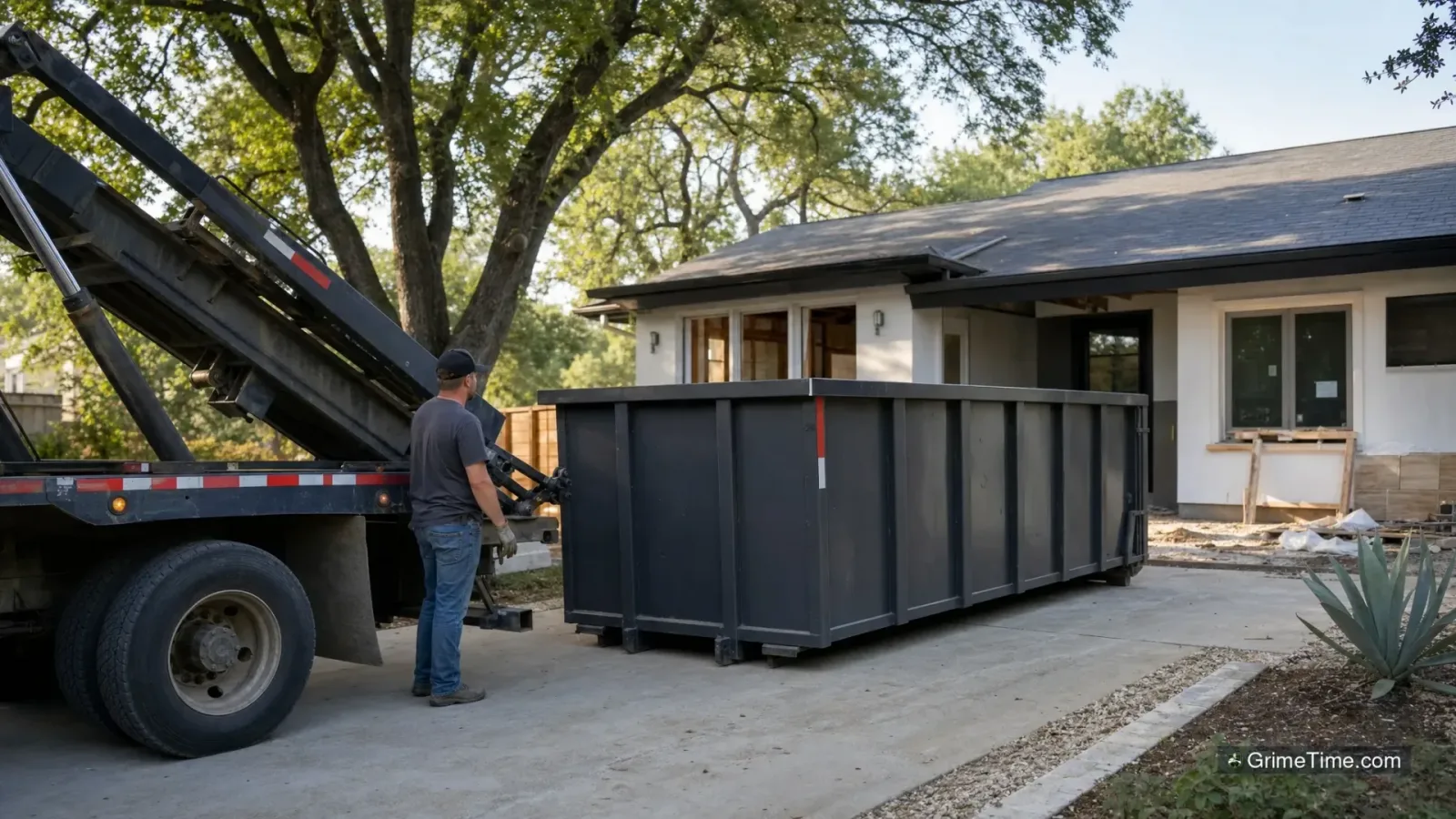
A roll-off dumpster is substantial equipment. The driver needs sufficient room to position it, and the surface needs to be appropriate for the planned load and placement. Good driveway planning is not only about avoiding potential costs; it also helps protect your property and makes pickup easier when the job is finished.
Can a Roll-Off Dumpster Damage a Concrete or Asphalt Driveway?
A properly planned roll-off dumpster delivery can be placed carefully, but no provider can promise that every surface will be unaffected. Risk depends on the driveway’s age, condition, material, slope, underlying support, drainage, existing cracks, weather, container size, and the total weight of the loaded dumpster.
Concrete and asphalt can be vulnerable when a surface is already cracked, thin, soft, deteriorating, recently installed, or poorly supported underneath. Asphalt can be especially sensitive during very hot weather. Decorative pavers, stamped concrete, brick, and narrow driveway edges also deserve extra attention. In Austin, prolonged heat, heavy rain, and sloped terrain can each influence ground and surface conditions.

Tell Grime Time about any concerns before delivery. Mention:
- Freshly poured concrete or recently sealed asphalt
- Visible cracks, broken edges, settling, or drainage problems
- Steep grades or transitions from street to driveway
- Pavers, decorative surfaces, or areas with limited structural support
- Soft ground beside the driveway where the truck may need to travel
- A preference for boards or other approved protective measures under contact points, if appropriate for the delivery plan
Surface protection can be helpful, but it is not a substitute for sound access and realistic loading. Protective boards may distribute contact pressure and reduce direct metal-to-surface contact in some situations. They should be discussed in advance so the driver and customer agree on the setup. Do not place loose materials in the driveway without confirming they are suitable and will not create a safety hazard during delivery.
Choose the Placement Point Before the Truck Arrives
The best location is typically the closest safe, accessible point to the work area that does not block necessary vehicle movement, garage access, exits, gates, or utility equipment. A driveway location often works well because it keeps the container on private property and makes loading easier for a homeowner or crew.
Before delivery, walk the route from the street to the intended placement point. Look up as well as around. The truck and container require overhead clearance, and the driver needs room to raise and lower the roll-off safely. Move vehicles, trailers, basketball goals, portable storage items, and other obstructions before the scheduled window.
Also consider how the dumpster will be loaded. Place it where doors, gates, or walkways remain usable. Avoid blocking fire access, turning your driveway into an unsafe blind spot, or forcing workers to carry heavy debris across a road. If you are using a walk-in style container door, leave adequate space for it to open and for people to load safely.
A Practical Pre-Delivery Checklist
Use this checklist before requesting or confirming a driveway dumpster rental:
- Confirm the full delivery address, including gate codes, unit information, or specific entrance instructions.
- Identify the desired placement location: driveway, side area, private parking area, or another approved private-property space.
- Measure or estimate the available length, width, and approach area; share photos if the provider requests them.
- Check for parked cars, trailers, construction materials, low branches, wires, gates, and overhead structures.
- Tell the provider if the driveway is steep, narrow, cracked, new, decorative, asphalt, or otherwise sensitive.
- Plan to move vehicles before delivery and again before pickup.
- Estimate the debris type and amount, separating heavy debris from ordinary household junk where needed.
- Set aside hazardous or restricted materials for proper disposal rather than adding them to the container.
- Make sure the dumpster will not block garage access, deliveries, emergency access, or a neighbor’s necessary driveway path.
- Ask about the included rental period, weight terms, fill limits, and the process for scheduling pickup or an extension.
For many Austin homeowners, a few minutes spent on this list prevents the most common delivery-day issues.
When Street Placement or an Austin Permit May Matter
Keeping a dumpster in your driveway is generally simpler than placing it in a public street, parking lane, sidewalk area, alley, or other public right-of-way. However, property layouts do not always make driveway placement possible. Older central Austin lots, compact streets, active remodels, and properties with limited off-street parking may require a different plan.
If any part of the container will occupy public space, do not assume it is allowed without checking. City rules, right-of-way conditions, neighborhood restrictions, traffic safety needs, and permit requirements can apply. The City of Austin’s Right-of-Way Permits information is a useful place to verify current requirements for work or obstructions in public right-of-way areas.
Requirements can change, and the correct process depends on the exact location and placement plan. Ask these questions before scheduling street placement:
- Is the proposed location entirely on private property?
- Would the dumpster occupy a traffic lane, parking lane, sidewalk, alley, bike lane, or curb area?
- Does your neighborhood, HOA, apartment complex, or property manager have its own approval requirements?
- Would the placement interfere with sight lines, pedestrian access, bus stops, hydrants, driveways, or utility access?
- Who is responsible for obtaining any required permit or authorization?
- Are cones, markings, or other safety measures required for the permitted placement?
Do I Need a Permit if the Dumpster Stays in My Driveway in Austin?
A dumpster placed entirely on your private driveway may not involve the same public right-of-way permitting issues as a container placed in the street. Still, you should verify the details for your property. HOA rules, lease terms, property-management policies, local restrictions, and unusual site conditions can affect what is allowed.
The key distinction is whether the container remains on private property and does not obstruct public space. If there is any uncertainty about the property line, curb area, sidewalk, or street, confirm with the appropriate local authority before delivery. It is better to resolve this in advance than to move a loaded dumpster after placement.
How to Get an Accurate Dumpster Delivery Price Before You Book
The fastest path to an accurate quote is to provide a clear project summary. You do not need perfect measurements or an exact debris weight, but the more specific you are, the easier it is to recommend the right container and placement plan.
Share These Details When You Request a Quote
- Your Austin-area address or neighborhood: This confirms service coverage and helps identify possible route or access considerations.
- Your project type: Examples include garage cleanout, kitchen renovation, bathroom demolition, landscaping cleanup, roofing work, tenant turnover, estate cleanout, or construction debris removal.
- Your estimated debris: State whether the material is household junk, furniture, wood, drywall, flooring, brush, roofing, concrete, dirt, or a mixed load.
- Your preferred dumpster size, if known: If you are unsure, describe the project rather than guessing. The rental team can help with size selection.
- Your preferred placement: Explain whether you want the dumpster on the driveway, in a private parking area, beside the house, or potentially near the street.
- Access conditions: Mention gates, steep driveways, narrow roads, low limbs, power lines, parked vehicles, new pavement, or surface concerns.
- Your delivery date and expected rental timeline: This helps align the container with your work schedule and clarify whether an extension may be needed.
- Any special site rules: Include HOA requirements, apartment or commercial-property approvals, gate codes, limited access hours, or jobsite contacts.
A photo can also be useful when access is complicated. A wide view from the street toward the driveway and a second view of the intended placement point can help clarify what a written description misses. Do not rely on an old online street image, because current parked vehicles, trees, construction activity, and driveway changes may be different.
Be Realistic About the Debris
People often underestimate debris during a cleanout because clutter is distributed across closets, sheds, garages, and storage areas. Remodeling customers can underestimate demolition debris because old flooring, drywall, cabinets, and trim become bulky quickly once removed. Contractors may need to account for packaging, cutoffs, and recurring jobsite waste in addition to the main demolition material.
Give an honest estimate, then note any uncertain items. For example: “Mostly garage boxes and furniture, plus some old shelving and a few bags of yard debris,” is much more useful than “miscellaneous trash.” Similarly, “tile, drywall, lumber, and old vanity cabinets from one bathroom” provides better planning information than “remodel debris.”

Never load above the container’s fill line or allow material to protrude from the top. A roll-off must be safely covered and transported. Overfilling can mean the container cannot be hauled until material is removed, delaying your cleanup and possibly creating additional service needs.
Plan for Pickup as Carefully as Delivery
Pickup access should remain clear throughout the rental. Do not park in front of the container, stack debris around it, or place materials where they prevent the driver from lining up safely. If a gate was opened for delivery, make sure it can be opened again for pickup. If an event, moving truck, contractor staging area, or road closure will affect access, communicate that before the scheduled pickup.
For construction teams and project managers, assign one person to confirm the dumpster is ready: no prohibited materials, no overflow, no blocked approach, and no equipment or vehicles in the driver’s path. This simple step helps keep the job moving.
Common Questions About Driveway Dumpster Rentals in Austin
Does a dumpster placed in my driveway cost more than one placed elsewhere?
Not automatically. Driveway placement is a normal option for many residential dumpster rentals in Austin. The base rental price is typically tied to the container size, rental period, disposal terms, and service arrangement. The total may change if access is unusually difficult, the driveway needs a different placement approach, the container must go in a public right-of-way, or other project-specific conditions apply.
The best approach is to describe the driveway and preferred location when requesting a quote. That allows Grime Time to confirm whether the plan is straightforward or whether another location would work better.
What information do I need to provide for an accurate Austin dumpster rental quote?
Provide the delivery address, project type, debris estimate, preferred delivery date, expected rental length, desired placement location, and any access or driveway concerns. Mention heavy material, gates, low-clearance areas, narrow streets, HOA rules, and whether street placement might be necessary.
If you do not know the right dumpster size, that is fine. Describe what you are removing and how much space it occupies. A practical size recommendation is more useful than selecting a container based only on a guess.
Can a roll-off dumpster damage a concrete or asphalt driveway?
There is always some risk when heavy equipment and a loaded container are placed on a driveway, particularly if the surface is cracked, newly installed, decorative, steep, hot, soft, or already deteriorating. Discuss surface conditions and protection preferences before delivery. The provider can assess whether the requested placement is appropriate and explain the available options.
Do not assume a driveway is suitable simply because a passenger vehicle uses it daily. The delivery truck and loaded roll-off create different conditions, and the right placement depends on the property.
Do I need a permit if the dumpster stays in my driveway in Austin?
A container entirely on private property may not require the same right-of-way permission as a container in the street or sidewalk area. However, requirements and restrictions can depend on the location, HOA, property manager, and exact placement. Verify the current rules if there is any chance the dumpster will extend into public space or sit near a curb, sidewalk, lane, or alley.
What charges can increase the final cost of a residential dumpster rental?
Possible additional charges can include disposal weight beyond the included allowance, rental extensions, prohibited-material handling, overloaded or unsafe containers, inaccessible delivery or pickup, extra trips, swap-outs, and costs related to approved street placement or permits when applicable. These are not automatic charges. They depend on what happens during the rental, which is why confirming the terms before booking is important.
What should not go in a residential roll-off dumpster?
Do not assume hazardous or regulated items are accepted. Materials such as chemicals, fuels, batteries, paint, electronics, pressurized cylinders, and certain appliances may require a different disposal method. Ask about the current restricted-material list before loading. For Texas-level solid-waste information, you can also review the Texas Commission on Environmental Quality solid waste resources.
How far in advance should I reserve a driveway dumpster?
Reserve as early as your schedule allows, especially if you have a firm demolition date, moving date, cleanup deadline, or contractor start date. Availability can vary with route schedules and local demand. If your timing is flexible, share the date range so the rental team can help identify a workable delivery window.
What happens if my project produces more debris than expected?
Call before the container is overfilled. Depending on the project and scheduling, you may need a pickup and replacement container, an additional rental, or guidance on how to separate materials. Planning the next step before the load becomes unsafe is faster and easier than waiting until pickup is blocked by overflow.
Get a Clear Driveway Dumpster Quote for Your Austin Project
Driveway delivery is often the most convenient choice for residential cleanouts and remodeling work, but the right quote depends on the full picture: your address area, the debris, container size, access path, driveway condition, placement preference, and timeline. Confirming those details up front is the practical way to avoid preventable delays and unexpected charges.
Do you have an Austin driveway delivery in mind? Call Grime Time Dumpster Rentals at 512-387-5802 and share your address area, project type, estimated debris, and preferred placement. We can help confirm the right roll-off size and provide a straightforward delivery quote before you book.