Austin Dumpster Rental for Fast Storm Cleanup
After a strong storm moves through Austin, cleanup decisions usually need to happen quickly. Fallen branches, broken fencing, soaked drywall, damaged roofing, and mixed outdoor debris can pile up fast. If the mess is too much for normal trash service or curbside pickup, an Austin dumpster rental is often the most practical way to keep the property safe and the cleanup organized.
This guide is built for homeowners, contractors, construction crews, remodelers, property managers, and project leads across Austin who need clear, local direction. You will find practical dumpster size guidance for real storm cleanup scenarios, a straightforward breakdown of what storm debris is usually accepted versus what is restricted, Austin-specific notes on placement and permit considerations, and realistic expectations on delivery timing and pricing factors. If you already know you need a container, you can review roll off dumpster rental Austin options or compare broader details on the Austin dumpster service page.
When a Storm Cleanup Calls for a Dumpster Right Away
Not every post-storm cleanup needs a roll-off container. A small amount of yard debris, a few bagged limbs, or minor outdoor damage may fit city collection rules or standard disposal options. But many Austin storm cleanups become larger than they look at first. Once debris is bulky, mixed, heavy, or spread across a driveway, yard, parking area, or jobsite, trying to handle it in pieces often slows everything down.
A dumpster becomes the practical choice when the cleanup needs to happen in one organized push. That is especially true after storms affect multiple Austin neighborhoods at the same time, from Central Austin and South Austin to areas near Round Rock, Pflugerville, Buda, Kyle, Hutto, Georgetown, Elgin, Dripping Springs, and San Marcos. When regional storm demand increases, dump runs take longer, curbside pickup may not match your timeline, and crews lose productive hours if they do not have a dedicated container on site.
Signs you probably need a dumpster instead of piecemeal removal
- Tree limbs and brush are too large or too much for normal cart service.
- Broken fence panels, posts, decking, or shed material are scattered across the property.
- Roofing shingles, underlayment, or sheathing came off during wind damage.
- You have a mix of outdoor storm debris and interior tear-out from water damage.
- The debris is blocking a driveway, work zone, parking lot, or access path.
- A contractor or cleanup crew needs one central place to load waste.
- You want to avoid repeated trips across Austin to dispose of debris a little at a time.
What homeowners should do right after a storm before debris removal begins
Before anyone starts loading debris, a few early steps can make the cleanup safer and make the rental process smoother.
- Check for immediate hazards. Look for downed power lines, hanging limbs, damaged electrical service, standing water near outlets, unstable fences, or broken gas equipment. If something looks unsafe, stop and address that first.
- Document the damage. Take photos before moving major debris if insurance, property management, or contractor documentation may be needed.
- Separate debris by type. Put vegetative debris in one area, building material in another, and anything questionable or hazardous in a separate pile.
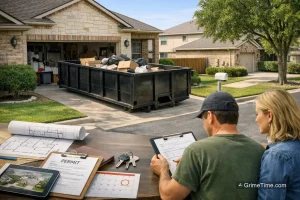
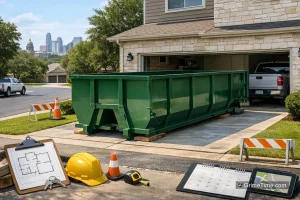
- Pick a likely placement spot. A driveway or private paved area is usually the simplest and fastest option.
- Estimate the full scope, not just the first pile. If roofers, fence installers, or remediation crews are coming, include that future debris in your planning.
That early sorting is part of smart waste management solutions in Austin. It helps avoid disposal problems, overfilling, or needing a second container too soon. It also makes it easier to decide whether you need a same-day dumpster rental Austin request, a next-day option, or a larger roll-off that can handle both storm debris and repair debris together.
What Types of Storm Debris Can Go in a Roll-Off Dumpster
A roll-off dumpster can handle many common storm-related waste streams, but it is important to separate accepted debris from restricted materials. That distinction matters for safe hauling, disposal compliance, and avoiding delays at the landfill or transfer facility.
Common storm debris that is often suitable for a dumpster
- Tree branches and cut limbs
- Brush and yard debris
- Broken fence panels and wood posts
- Damaged deck boards and outdoor wood structures
- Roofing shingles and underlayment
- Siding, trim, and exterior material damaged by wind
- Water-damaged drywall and insulation
- Carpet, padding, and soaked interior finish materials
- General non-hazardous cleanup debris from storm repairs
This is where many storm debris dumpster rental Austin requests come from: jobs with multiple debris streams that need one contained loading point. For a homeowner, that might mean branches plus fence material. For a contractor, it may mean roofing, sheathing, and wet drywall from emergency repairs. For a property manager, it might be a mixed cleanup after a storm affects common areas, enclosures, and maintenance spaces.
When a roll-off is especially practical
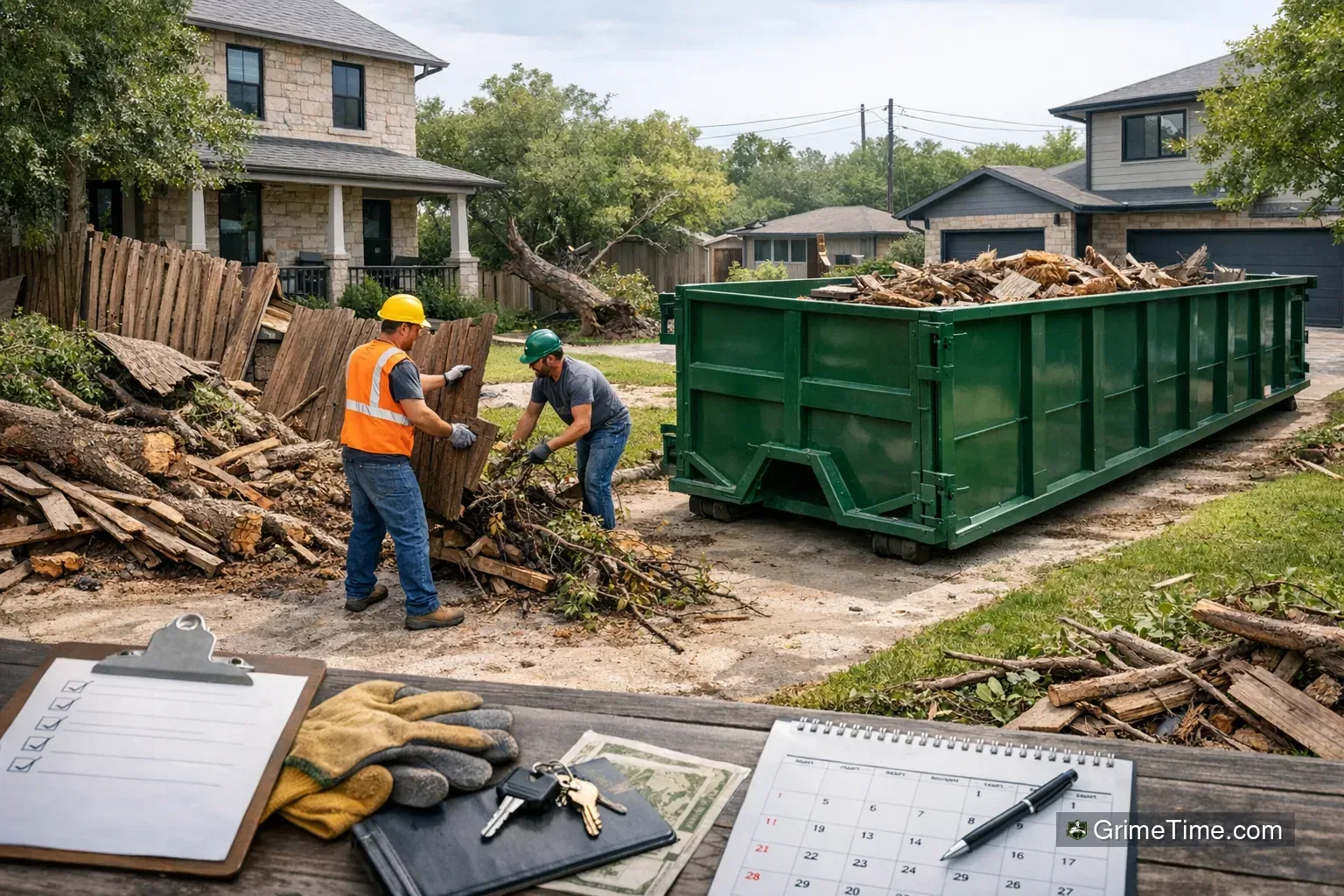
- Tree debris: Long limbs and brush take up far more room than many people expect. A tree debris dumpster rental is often more efficient than repeated cutting, bundling, and hauling trips.
- Fence replacement: Pickets, rails, hardware, and posts create awkward loads that are difficult to stack neatly for normal disposal.
- Roof tear-off after wind damage: Shingles and roofing layers become heavy quickly and are easier to contain in one place.
- Mixed storm and repair cleanup: If outdoor debris and interior tear-out are happening at the same property, a dumpster helps keep the site controlled.
Items that are commonly restricted or require separate handling
Restricted materials vary by disposal facility and debris stream, so it is important to ask before loading anything questionable. Common examples include:
- Paint, stains, and solvents
- Fuel, oil, and automotive fluids
- Pesticides and herbicides
- Batteries
- Tires
- Appliances containing refrigerants
- Electronics in some disposal streams
- Asbestos-containing material
- Medical waste
- Propane tanks and other pressurized cylinders
Separating these items matters because one restricted item can create unloading problems, added handling requirements, or a rejected load. If a storm damaged a garage, workshop, or storage building, do not assume that all contents can go into the same dumpster as branches and fencing. For local public guidance, Austin Resource Recovery and City of Austin disposal information can help clarify some city rules, and the Texas Commission on Environmental Quality offers broader waste-handling guidance.
How to Choose the Right Dumpster Size for Emergency Cleanup
One of the most important decisions in an emergency dumpster rental Austin situation is choosing the right size. Too small, and the cleanup stops halfway through. Too large, and you may take up more placement space than needed. The right fit depends on debris type, volume, density, and whether more repair waste is still coming.

If you want a broader primer before deciding, Grime Time’s big trash container size guidance is a useful reference point for understanding common container needs.
Think about debris by both volume and weight
Storm debris can be misleading. Branches and brush look light, but they load loosely and create a lot of air space. Fencing is bulky and irregular. Roofing material may look compact, but it can become heavy fast. Water-damaged drywall, flooring, and sheathing also add weight quickly.
That is why practical dumpster size guidance matters more than guessing by sight alone. A good size recommendation starts with what the debris actually is, not just how big the pile looks from the curb.
Real storm cleanup scenarios
- Mostly limbs and brush from one yard: The main concern is volume. Cut lengths and how tightly material can be loaded will affect what size makes sense.
- Fence replacement after wind damage: Several sections of fencing, gate pieces, and posts usually need more room than homeowners first expect because the material is awkward and splintered.
- Roof repair plus interior water damage: Shingles, underlayment, wet drywall, insulation, and carpet can add up quickly, especially if emergency repairs move straight into tear-out.
- Large mixed outdoor cleanup at a commercial or multi-unit property: A larger roll-off may be the more efficient choice when multiple crews are loading throughout the day.
How to estimate your debris more accurately
- Make separate piles by material type. Branches, fencing, roofing, and interior damage each use space differently.
- Think in loose-load volume, not neat stacks. Once loaded into a container, storm debris rarely packs as tightly as people imagine.
- Account for air space. Brush and limbs waste space unless they are cut down and loaded carefully.
- Add expected repair waste now. If a contractor is removing more material tomorrow, include that in your estimate.
- Mention dense materials up front. Roofing, wet debris, and heavy construction material affect both load planning and container choice.
Simple size-selection questions to ask yourself
- Is the debris mostly bulky and loose, or compact and heavy?
- Will cleanup stop once the visible pile is gone, or are repairs just beginning?
- Will one homeowner be loading slowly over several days, or will a crew load quickly in one push?
- Is there enough room on site for a larger roll-off if it prevents needing a second haul?
If you are between two options, explain the full debris mix when you request an estimate. Size guidance is one of the most useful parts of speaking with a local dumpster provider. It helps avoid ordering too small a box for branches and fencing or choosing a setup that does not match the real waste stream.
Straightforward expectations on pricing factors
People searching for cheap dumpster rental Austin pricing angle are usually trying to avoid surprises. In real storm cleanup, price is normally influenced by practical factors such as container size, debris type, rental period, delivery area, disposal requirements, and whether the load contains restricted or unusually heavy material. The clearest way to get useful pricing is to describe the debris honestly instead of asking only for the smallest container available.
Austin Disposal Rules, Restricted Items, and Permit Considerations
Storm cleanup moves faster when placement and disposal are thought through before delivery day. Austin has local considerations that matter, especially if the container may sit on a street or if you are comparing private dumpster service with city collection options.
Austin-specific disposal notes
Austin storm debris disposal rules are not always the same as regular curbside expectations. City collection programs may have their own preparation requirements, schedules, and item limits. A private roll-off dumpster gives you more control over timing, but you still need to load only approved materials and follow placement rules.
For many Austin customers, the practical takeaway is simple: do not assume that what the city may collect at the curb is handled the same way in a roll-off container. Brush, appliances, hazardous items, electronics, and renovation-related debris may each need a different disposal path depending on the situation.
Do you need a permit if the dumpster will sit on the street?
Possibly. If the container can go on a private driveway, paved lot, or other on-site surface, that is usually the easiest route. If it needs to sit on a public street, alley, or right-of-way, city approval or a permit may be required depending on the location and conditions. The City of Austin right-of-way or temporary use permit information is the right place to verify current requirements.
Placement questions that matter in Austin neighborhoods
- Can the dumpster fit fully on private property?
- Will placement block traffic, sidewalks, drainage, or access?
- Are there HOA rules that affect where a container can sit?
- Are low tree branches, utility lines, or parked vehicles in the delivery path?
- Is the surface stable enough for loading during wet conditions?
These questions come up often in older Austin neighborhoods with tighter driveways, alley access, mature trees, and limited curb space. In areas like South Austin, placement planning may matter even more because street width and neighborhood layout can make access tighter. For location-specific information, see South Austin dumpster rental coverage.
Why separating hazardous or restricted materials matters
- The disposal facility may reject the load or require problem items to be removed.
- Pickup can be delayed if the container contents do not meet disposal rules.
- Your crew may have to sort the debris twice.
- Unsafe materials create handling risks for everyone on site.
For project managers and contractors, this is more than a disposal issue. It is part of maintaining control over the site. Clean separation of debris streams supports faster loading, fewer surprises, and more reliable hauling.

What to Expect From Same-Day or Next-Day Dumpster Delivery
After severe weather, many people search for same day dumpster rental Austin because debris is blocking access, delaying repairs, or creating safety issues. Same-day service may be possible depending on timing, route availability, inventory, and site readiness. But it should never be assumed, especially after a wide-area storm event. Next-day scheduling is also common when demand is elevated.
How urgent scheduling usually works
The faster you can provide accurate job details, the easier it is to check realistic availability. Useful information includes:
- Service address in Austin or the surrounding area
- Type of debris
- Estimated amount
- Preferred placement area
- Whether the container must go on a driveway or street
- When loading needs to begin
That allows the rental team to determine whether a same-day or next-day option is realistic and what container size is most likely to fit your cleanup.
What can delay placement
- An unclear description of the debris
- No safe, ready placement area
- Street placement without checking permit requirements
- Blocked driveways or locked gates
- Low limbs, wires, or parked vehicles in the truck path
- High storm demand across Austin and nearby markets
When weather affects a wide part of Central Texas, service demand often rises not only in Austin but also in surrounding communities like Round Rock, Pflugerville, Buda, Kyle, Hutto, Georgetown, Dripping Springs, Elgin, and San Marcos. In those periods, clear communication matters even more. A site that is ready for delivery is easier to schedule than one still being figured out after dispatch.
Trust detail: realistic timing and pricing expectations
It helps to know what a provider can and cannot tell you during urgent cleanup. Delivery timing is usually shaped by route openings, current storm demand, debris type, and whether the placement area is straightforward. Pricing is usually shaped by container size, disposal needs, location, and rental terms. That is why a brief, accurate description of your job is more useful than asking for a vague emergency rate with no details.
Common Mistakes That Slow Down Storm Debris Removal
Urgency can lead to rushed decisions. A few common mistakes can turn a straightforward cleanup into a slower and more expensive process.
1. Ordering based only on speed, not debris type
Fast delivery matters, but the right fit matters too. Branches, fencing, roofing, and mixed construction debris behave differently in a container. A size that seems fine for fence sections may be too small for loose brush.
2. Mixing restricted items into the dumpster
Paint, chemicals, batteries, tires, propane cylinders, and similar materials should not be dropped into a storm debris load unless you have confirmed they are accepted for that specific disposal stream.
3. Not preparing the placement area
If the driveway is blocked, overhead clearance is poor, or vehicles are still parked in the path, delivery may be delayed or the drop location may need to change.
4. Underestimating branch volume
Branches and brush take up space quickly. Even a moderate pile can fill a container faster than expected if the material is not cut down and loaded carefully.

5. Forgetting repair debris that comes later
If a roofer, fence company, or water-damage crew is arriving after initial cleanup, think past the first pile. Many jobs in Austin combine storm cleanup with construction debris removal Austin needs, and planning for both at once can save time.
6. Overfilling the container
Material should not extend unsafely above the top edge. Overfilled containers can create pickup issues and force on-site rework before removal.
How to Book the Right Austin Dumpster Rental Fast
If you need to move quickly after a storm, the goal is not just getting any container. It is getting the right roll-off based on debris type, volume, placement conditions, and timing.
Use this simple booking checklist
- Identify the debris mix. Is it mostly limbs, fencing, roofing, or mixed cleanup?
- Estimate the amount honestly. Mention whether more debris is likely from upcoming repairs.
- Choose the placement area. Driveway or other private surface is usually simplest.
- Ask about restricted items. Especially if the property has damaged chemicals, electronics, or appliances.
- State the real timing need. Same day, next day, or soonest available.
- Mention any access issues. Tight street, low limbs, gate codes, HOA concerns, or permit questions.
FAQ: Austin Storm Cleanup Dumpster Rental Questions
Can I get a same-day dumpster rental in Austin after a storm?
Possibly, depending on route availability, inventory, current storm demand, your exact location, and whether the site is ready for delivery. Same-day service may be available in some cases, but it should not be assumed after a major weather event.
What storm debris can and cannot go into a dumpster?
Common storm debris such as branches, brush, broken fence material, roofing debris, drywall, and general non-hazardous cleanup waste can often go into a roll-off dumpster. Restricted items commonly include paint, chemicals, batteries, tires, fuel, propane tanks, and some appliances or electronics. Ask before loading anything questionable.
What size dumpster is best for tree limbs, fencing, roofing, or mixed storm debris?
It depends on both volume and weight. Tree limbs and brush need room because they load loosely. Fencing is bulky and irregular. Roofing is dense and gets heavy quickly. Mixed debris often requires more capacity than people expect. The best approach is to describe all debris types together and get size guidance based on the actual cleanup.
Do I need a permit for a dumpster in Austin if it will sit on the street?
You may. If the dumpster will be placed in the public right-of-way, check current City of Austin requirements. A private driveway or on-site placement is usually simpler when available.
What usually affects the price and delivery timeline for emergency dumpster rental in Austin?
Main factors include container size, debris type, disposal requirements, route availability, current post-storm demand, and whether the placement area is straightforward or involves access or permit issues.
Choose the Right Roll-Off Before the Cleanup Gets Harder
Storm debris gets more complicated the longer it sits. Brush spreads out, damaged fencing keeps blocking access, soaked material gets heavier, and repair debris starts mixing into the original pile. The smartest next step is to diagnose the job before booking: what type of debris do you have, how much of it is there, and how quickly does the site need to be cleared?
Grime Time Dumpster Rentals provides practical waste management solutions in Austin for homeowners, contractors, remodelers, and property managers who need a clear answer fast. If you need help figuring out whether this is a same-day or next-day situation, what can go in the container, or which roll-off fits branches, fencing, roofing, or mixed storm cleanup, call 512-387-5802 to request pricing and check availability. The best next step is to describe the debris, the volume, and the placement conditions so you can book the Austin dumpster rental that actually fits the cleanup instead of guessing and losing time.