Austin Roll Off Dumpster Rental FAQ: Where Should a Roll-Off Dumpster Go at Your Home?
If you are planning a cleanout, remodel, roofing job, landscaping project, or general debris removal, one of the first practical questions is simple: where should the dumpster go? For many Austin homeowners and project managers, placement matters just as much as size. A good spot makes delivery easier, loading safer, and pickup smoother. A bad spot can create delays, driveway damage concerns, access issues, or neighborhood problems.
This guide answers the most common placement questions for austin roll off dumpster rental service, with straightforward advice for homes in Austin and nearby areas. If you are still deciding on container size or service type, you can also review roll off dumpster rental Austin, learn more about Austin roll off dumpster service, or browse Grime Time roll-off dumpster rental services.
The Best Place to Put a Roll-Off Dumpster at an Austin Home
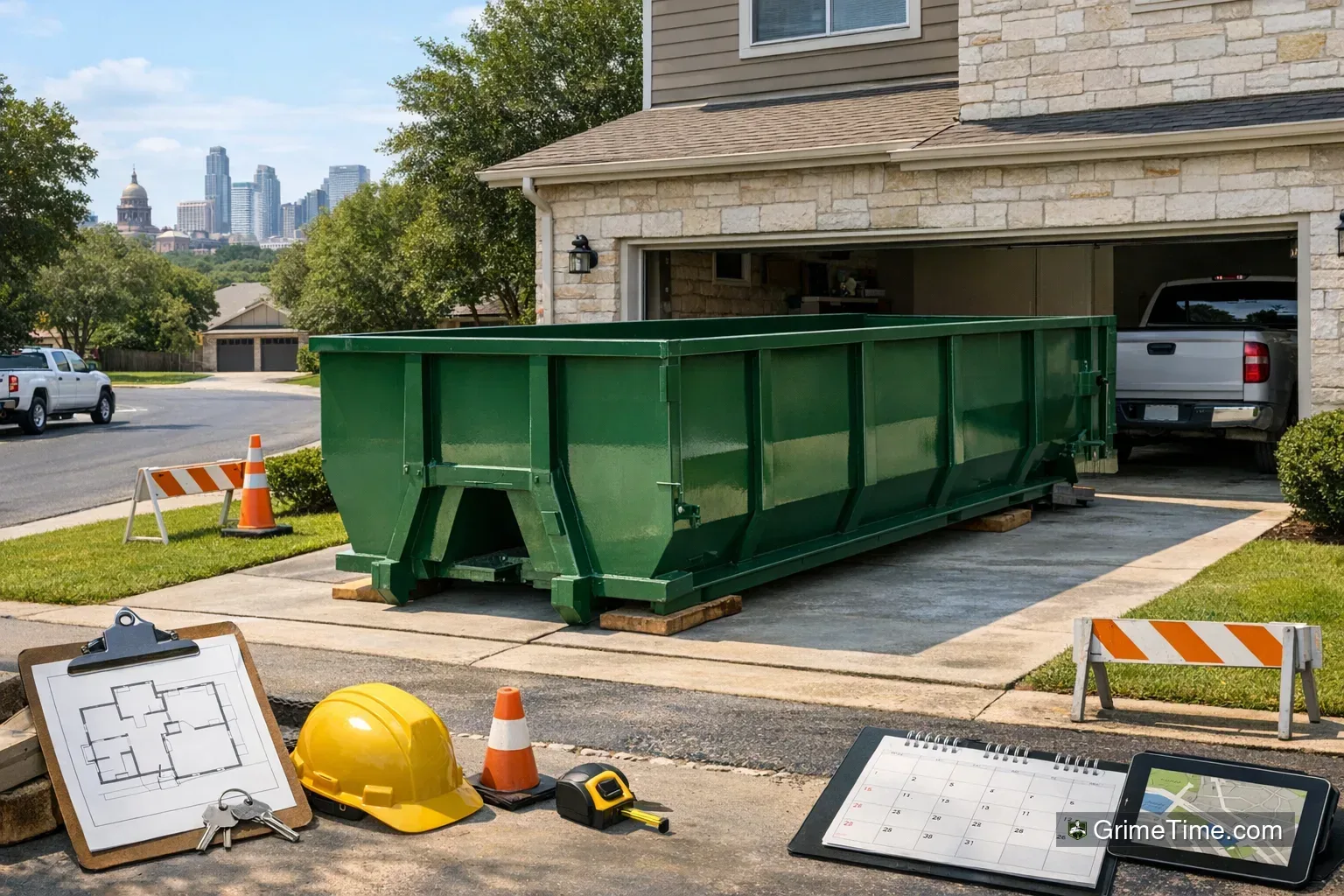
In most cases, the best place for a roll-off dumpster at a home is a flat, accessible driveway area with enough room for delivery and pickup. That is usually the simplest choice because it keeps the container on private property, avoids many street-use questions, and gives you easier access during the project.
A good placement spot should do four things:
- Give the truck enough room to approach, drop, and retrieve the dumpster safely
- Let you walk debris to the container without crossing traffic or climbing steep ground
- Reduce the chance of scraping fences, clipping tree limbs, or blocking garages and sidewalks
- Protect concrete, pavers, landscaping, and drainage flow as much as possible
For most residential roll off dumpster rental Austin projects, the ideal setup is near the main work area but not so close that it interferes with daily movement. If you are cleaning out a garage, placing the dumpster in the driveway near the garage door usually makes sense. If the project is in the backyard, side-yard access, gate width, tree coverage, and ground conditions all matter before assuming the dumpster can go farther back on the property.
Austin homes vary a lot. Some older central Austin neighborhoods have tighter lots, narrower driveways, and more mature trees. Newer subdivisions in places like Pflugerville, Hutto, Buda, Kyle, and Round Rock may have more driveway space but stricter HOA expectations. That is why the best answer is rarely just “put it anywhere flat.” The right spot is the one that works for the truck, the container, your property, and your project flow.
Driveway vs. Street Placement: Which Is Better?
Driveway placement is usually the better option
For most home projects, driveway dumpster placement is preferred. It is typically easier to arrange, easier to load, and easier to manage through the full rental period. Keeping the container on your own property also helps avoid some right-of-way concerns that can come up with street placement.
Driveway placement is often better when:
- You have enough straight, open space for the delivery truck
- You want the dumpster close to a garage, front door project area, or renovation zone
- You want to reduce the chance of neighborhood complaints about street obstruction
- You are trying to simplify pickup without moving parked vehicles around the block
Street placement can work, but it needs more checking
Sometimes the street is the only workable option. That may happen if the driveway is too steep, too short, too narrow, blocked by low branches, or made from a surface you do not want to use. It can also come up on projects in dense Austin neighborhoods where driveway access is limited or already committed to contractor vehicles.
If you are asking where to place a roll off dumpster when a driveway is not a fit, street placement may be possible, but it is not automatic. In Austin, placing a container in the public right-of-way may involve city rules or temporary use requirements depending on the location and conditions. For that reason, it is smart to confirm current requirements through official city resources such as Austin 311 or applicable City of Austin right-of-way guidance before finalizing street placement.
Street placement may be less convenient when:
- Cars tend to park heavily on your street
- The road is narrow or on a curve
- The dumpster could affect traffic flow, mail delivery, or visibility
- You are in an HOA-managed neighborhood with appearance or parking rules
So, is it better to place a roll-off dumpster in the driveway or on the street? For most homes, yes, the driveway is better if it is safe and accessible. The street is more of a second-choice option when private-property placement is not workable.
How Much Space and Clearance Is Needed for Delivery?
This is one of the biggest questions with any austin roll off dumpster rental. The dumpster itself needs space, but the truck also needs room to approach, position, and unload the container. That means you need to think beyond the footprint of the box.

Plan for ground space and approach space
The placement area should be long and wide enough for the container itself plus the truck’s approach and positioning. A straight approach is usually easier than a sharp turn, especially in neighborhoods with parked cars, tight driveways, gates, retaining walls, or decorative landscaping edges.
When thinking about dumpster clearance space, look at:
- The full length of the driveway or placement zone
- Whether the truck can enter and back in without squeezing past walls or vehicles
- Whether gates open wide enough if the location is beyond the front drive
- Whether the area stays usable for pickup after the dumpster is loaded
Do not forget overhead clearance
Overhead obstacles are one of the most common reasons a spot that looks fine at first turns out not to work. Roll-off delivery requires vertical clearance when the container is tilted and set down. Overhead wires, tree limbs, roof edges, basketball goals, carports, and low-hanging utility lines can all interfere.
This is especially important in Austin neighborhoods with mature trees. Large live oaks and low canopy branches can create delivery problems even when the driveway itself is wide enough. A spot might look open from the ground but still be too tight overhead once the truck raises the container.
Slope and surface matter too
A relatively flat area is usually best. Strong slopes, uneven surfaces, soft ground, and loose gravel can complicate placement. While it is normal to ask whether a container can go on a sloped driveway, the safer approach is to discuss that exact site condition when booking so the placement can be evaluated in practical terms.
If you are unsure how much room a roll-off dumpster truck needs at your Austin home, the best step is to describe the driveway layout, any tight turns, and any overhead obstacles before delivery day. Photos can help clarify whether the chosen spot is realistic.
Common Placement Mistakes That Cause Delays or Damage
Most delivery problems come from a few preventable issues. The good news is that they are easy to spot if you know what to check in advance.
1. Picking the closest spot instead of the most workable spot
People often choose the location that is nearest to the project debris without considering truck access. A dumpster close to the house is helpful only if the truck can actually place and retrieve it safely.
2. Ignoring low branches and overhead lines
This is a major issue for dumpster delivery placement tips in established Austin neighborhoods. Always look up, not just around. Tree limbs and utility lines can stop a delivery even when the driveway is otherwise open.
3. Leaving vehicles in the way
Cars in the driveway, guest vehicles on the street, trailers, boats, or work trucks can block the delivery path or prevent pickup later. Remember that the area has to work both when the dumpster arrives and when it leaves.
4. Placing the dumpster where it blocks doors, garages, or foot traffic
A spot may technically fit the dumpster but still create daily frustration. Think through how people will move around the property during the rental period. Avoid trapping vehicles in the garage or forcing workers to carry debris around a fence or across mud.
5. Overlooking surface protection
Can a dumpster damage your driveway or yard? It can if the location is poorly chosen or if the surface is already vulnerable. Concrete, decorative pavers, asphalt, and softer ground all deserve attention. You do not need engineering analysis, but you do need practical caution.
Helpful ways to reduce risk include:

- Using a solid, stable placement area rather than soft lawn or wet soil
- Discussing delicate surfaces before delivery
- Keeping the dumpster off decorative edging, sprinkler components, and fragile paver borders
- Making sure the truck path does not cut across landscaping or unsupported yard areas
6. Forgetting pickup access
Some people plan only for delivery day. But pickup can be harder if debris piles, contractor equipment, fencing panels, or parked vehicles accumulate around the dumpster. The container needs a clear path out, not just in.
When Permits, HOA Rules, or Local Restrictions May Apply
This article is not mainly about permits, but permit questions do come up often enough that they should be addressed clearly.
Street placement may trigger Austin dumpster permit requirements
If the dumpster will be placed on a public street, curb lane, or other public right-of-way area, there may be city requirements depending on the exact location and use. Rules can change, and the details can depend on neighborhood conditions, traffic impacts, and whether the placement affects public access.
That is why the safest answer to “Do I need a permit to place a dumpster on the street in Austin?” is: possibly, especially if the container is in the public right-of-way. Check current guidance with the City of Austin or Austin 311 before scheduling street placement. If your project is outside Austin city limits but still in the greater service area, local rules may differ in places like Georgetown, Buda, Round Rock, or San Marcos.
HOAs may have separate restrictions
Even if city rules do not block the placement, your HOA may have rules about temporary containers, street parking, project visibility, or length of time. This is common in newer subdivisions around South Austin, Kyle, Hutto, and Pflugerville. Check before delivery if your neighborhood is association-managed.
Apartment, townhouse, and shared-drive properties need extra review
If the property has shared access lanes, private roads, common parking, alley access, or managed lot restrictions, be sure to mention that when booking. These situations are not impossible, but they do need more planning than a standard single-family driveway delivery.
How Placement Affects Loading, Safety, and Pickup
The right location is not just about whether the dumpster fits. It also affects how easy and safe the container is to use every day.
Choose a spot that makes loading easier
For remodeling and cleanout work, shorter walking distance usually means faster loading. If you are clearing a garage, attic, kitchen, or yard, think about the path workers or homeowners will use repeatedly. A well-placed dumpster reduces carrying distance and limits trips across grass, steps, or uneven surfaces.
If you are wondering what fits in a roll off dumpster, remember that load type affects placement too. Bulky materials, broken drywall, flooring, lumber, yard debris, and heavy cleanout waste are easier to manage when the container is close enough for efficient loading but not so close that it blocks the work zone.
Safer loading usually means flatter, clearer access
Loading is easier when people are not carrying debris uphill, around vehicles, through gates, or over landscape borders. Placement should support normal movement patterns and reduce tripping hazards. Keep the area around the dumpster free of loose debris, cords, stacks of materials, and tools.
Pickup needs the same clear access as delivery
Before pickup, the truck needs to reach the container again. If your project expands into the driveway, if pallets or materials get stacked nearby, or if tree trimmings pile up around the dumpster, retrieval can be delayed. Good placement planning includes preserving a clear exit route through the whole rental period.
What to Do Before Your Dumpster Arrives
A little prep goes a long way. If you want delivery day to go smoothly, handle these steps in advance.
Check the placement area
- Move cars, trailers, and equipment out of the driveway and approach path
- Look for low branches, utility lines, hanging lights, and roof overhangs
- Make sure gates are unlocked and fully open if access goes beyond the front drive
- Clear loose materials, bikes, tools, and debris from the drop zone
Think through surface protection
If your driveway includes decorative concrete, pavers, or edges you are worried about, say so before delivery. The more accurate your description, the easier it is to choose a workable placement and avoid preventable damage concerns. This is especially important for homes with narrow driveways, curved entries, stamped surfaces, or landscaping tight to the slab.

Confirm any neighborhood or street-use rules
If the dumpster may need to go on the street, confirm any city or neighborhood requirements ahead of time. Do not wait until the truck is on the way to figure out whether the chosen location is allowed.
Share the right information when booking
One of the best dumpster delivery placement tips is to give a clear site description up front. Helpful details include:
- Whether you want driveway or street placement
- If the driveway is narrow, sloped, short, or shared
- Whether there are low tree limbs or overhead wires
- If there is a gate, alley, fence line, or tight turn involved
- What type of project you are doing and where the debris will come from
- Whether you are concerned about concrete, pavers, or nearby landscaping
The more complete the information, the easier it is to match your project with a workable container location and the right size. If you are still comparing options, Grime Time also offers guidance for residential roll-off dumpster rental needs across Texas service areas.
Frequently Asked Questions
Is it better to place a roll-off dumpster in the driveway or on the street?
Usually the driveway is better if it is flat, open, and accessible. It keeps the container on private property, often makes loading easier, and can reduce right-of-way issues. Street placement may work when the driveway is not a fit, but it may require additional checking.
How much room does a roll-off dumpster truck need at my Austin home?
The truck needs more than just the footprint of the dumpster. It needs approach space, turning room if the site is tight, and overhead clearance for delivery and pickup. Low branches, wires, parked cars, and narrow gates are common obstacles. If you are unsure, describe the layout before booking.
Do I need a permit to place a dumpster on the street in Austin?
You may, especially if the dumpster will sit in the public right-of-way. Check current City of Austin guidance or Austin 311 for the latest information. Requirements can depend on where and how the container will be placed.
Can a dumpster damage my driveway or yard?
Any heavy container can create risk if the surface is weak, delicate, uneven, or poorly chosen for placement. Concrete, asphalt, pavers, and soft yard areas all need practical consideration. The best approach is to use a stable spot and mention any surface concerns before delivery.
What should I move or check before dumpster delivery day?
Move vehicles, open gates, clear the drop zone, and check for overhead wires or tree limbs. Also think ahead to pickup day so the container will still have a clear path out after the project gets underway.
Not Sure Where Your Dumpster Should Go? Start With Your Site Details
Choosing the right spot for an austin roll off dumpster rental usually comes down to a few practical details: whether your driveway dumpster placement leaves enough room for the truck, how much dumpster clearance space you have overhead and in front, whether street placement may trigger Austin dumpster permit requirements, and how to avoid damage to concrete, grass, or landscaping. If you are planning a home cleanout, remodel, roofing job, or contractor project, the most useful next step is to match the container size and placement plan to your actual property layout before scheduling delivery.
When you call 512-387-5802, you can get a plain-language answer based on your setup. Tell Grime Time whether you have a short or sloped driveway, alley access, cars that need to stay in place, low branches, power lines, HOA rules, or only street-side room available. That makes it easier to confirm where to place a roll off dumpster, whether a driveway or curbside position makes more sense, how much room the truck needs to drop and pick up the container, and what fits in a roll off dumpster for your project without creating loading problems later.
If you already know this is a home project, you can also review options for residential roll-off dumpster rental in Austin before you call. If you are comparing broader service options, the Austin roll off dumpster service page and Grime Time roll-off dumpster rental services page can help you narrow down the right container for cleanup, construction, or demolition work.
Have a question about your driveway, street access, or project type? Call 512-387-5802 and describe the space you have, what you are throwing away, and any access concerns. Grime Time can help you work out a realistic placement plan, flag permit issues if the dumpster may need to go on the street, and point you to the right roll-off size before you book.