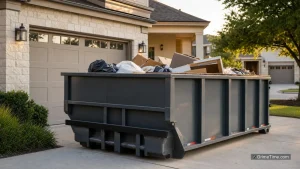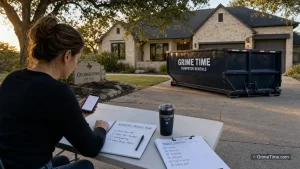
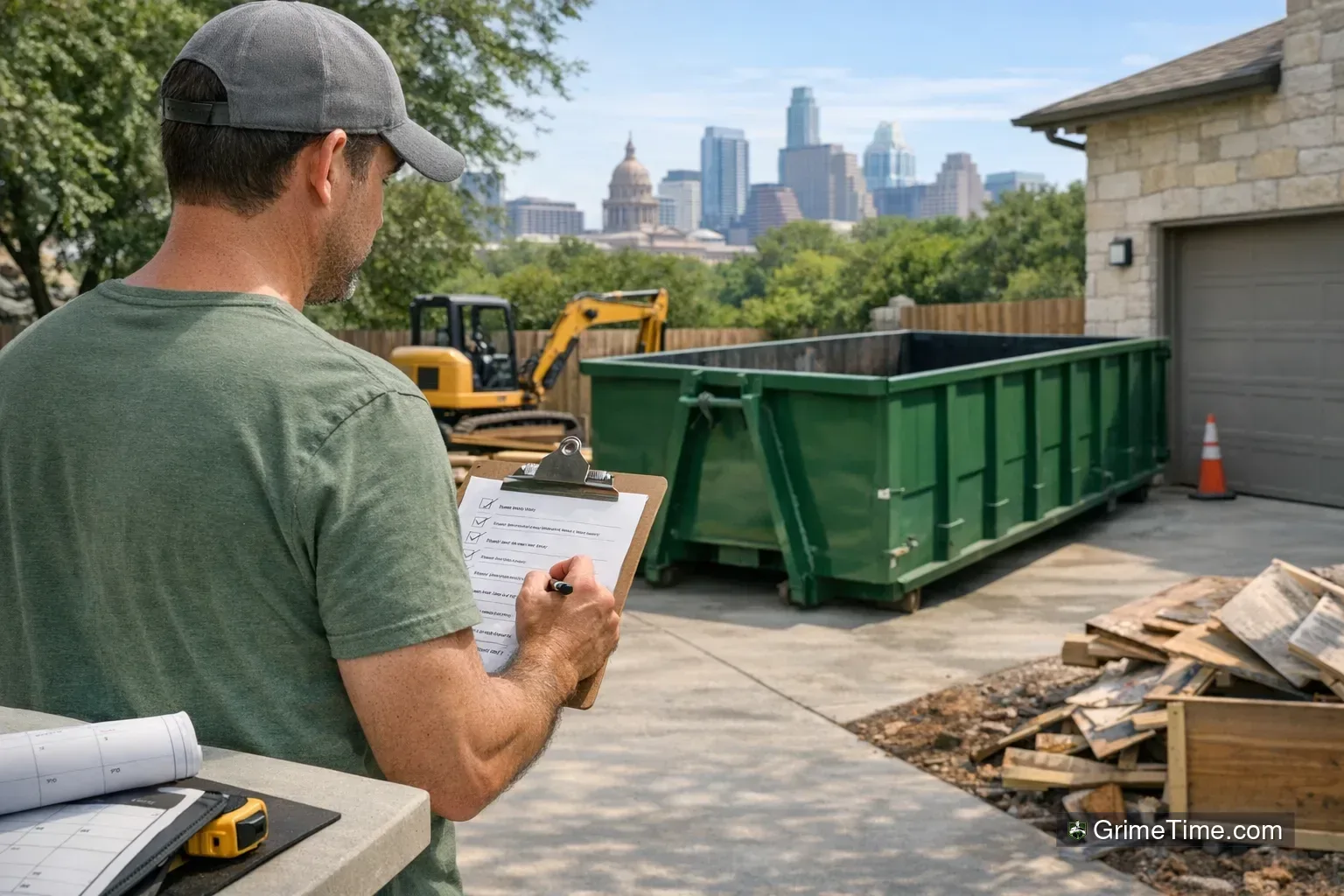
If you want a faster, more accurate Austin dumpster rental quote, the best first step is not hunting for a number before you know the job details. It is gathering the right information before you call or fill out a form. For homeowners, remodelers, contractors, property managers, and cleanup crews in Austin and nearby cities, that usually means knowing what you are throwing away, where the dumpster will sit, how long you need it, and roughly how much debris the work will create.
This guide is built to help you prepare for that next step. You will find a practical checklist, Austin-specific placement and permit considerations, simple examples for common projects, and a clear explanation of the size, weight, and material details that affect the quote. If you also want to compare roll off dumpster rental Austin options, review the full Austin dumpster service overview, or look through Austin dumpster pricing options, those pages can help alongside this article.
Why having the right info ready makes your quote more accurate
A dumpster quote depends on real project conditions. If the rental company has to guess about your debris, your loading volume, your placement plan, or your timing, the answer will usually be broader and less useful. That does not help much when you are trying to keep a remodel moving, clear out a property, or line up a delivery before a crew starts work.
For example, these three requests sound similar at first:
- “I need a dumpster for a home project in Austin.”
- “I need a roll-off for a kitchen remodel.”
- “I need a container for roofing debris.”
But the right recommendation can be very different. A garage cleanout may create bulky, lighter debris. A bathroom remodel may not create a huge pile, but the tile, drywall, and fixtures can be dense. A roofing project can get heavy quickly even when the pile does not look that large from the ground. That is why what size dumpster do I need is really a question about both volume and weight.
When you have the basic details ready, the quote process becomes more practical in a few ways:
- Better dumpster size selection: The provider can match the container to your debris type and estimated volume instead of making a rough guess.
- Clearer pricing factors: Material type, weight, rental period, delivery area, and placement conditions are easier to explain up front.
- Fewer delivery-day problems: Access details help confirm whether the truck can safely place the dumpster where you want it.
- Less back-and-forth: Photos, a short project description, and site notes answer common questions early.
- Smoother scheduling: Timing matters when you are coordinating demolition, move-outs, tenant turnover, or construction phases.
This is especially important in Austin. A driveway drop in one South Austin neighborhood may be easy. A narrow approach in Central Austin, a sloped lot in the hills, a street placement near a busy corridor, or a downtown project with limited access may need more planning. The more specific you are, the easier it is to get a useful answer instead of a vague estimate.
The basic project details you should gather first
If you want a dumpster rental quote Austin customers can actually use to make a decision, start with the minimum details below. This simple checklist works for homeowners, contractors, remodelers, and property cleanout projects.
1. Job type
Start by describing the project clearly. Instead of saying “cleanup” or “construction,” be specific:
- Garage, attic, shed, or whole-home cleanout
- Kitchen remodel
- Bathroom remodel
- Flooring removal
- Roof tear-off
- Fence or deck replacement
- Yard cleanup or storm debris removal
- Tenant turnover or eviction cleanout
- Commercial renovation
- New construction or ongoing site cleanup
Job type matters because it helps estimate both debris volume and debris density. A household cleanout and a tile demo may fill space differently and weigh very differently.
2. Debris type
Next, describe what is actually going in the dumpster. The more specific you are, the easier it is to recommend the right roll-off dumpster in Austin.
Helpful examples include:
- Drywall, studs, cabinets, laminate flooring, and trim
- Shingles, felt, and roofing underlayment
- Brush, limbs, bagged yard waste, and small branches
- Furniture, boxes, toys, clothing, and household junk
- Wood fencing, decking boards, and outdoor cleanup debris
- Concrete, brick, dirt, tile, and rock
That level of detail helps with both disposal rules and size guidance. “Construction debris” is often too broad to be useful by itself.
3. Project location
Have the exact address ready. Grime Time Dumpster Rentals serves Austin and nearby areas including South Austin, Buda, Georgetown, Hutto, Dripping Springs, Kyle, Elgin, Pflugerville, San Marcos, and Round Rock. The exact jobsite matters for route planning, service area confirmation, placement constraints, and scheduling.
In practical terms, “Austin” alone does not tell the full story. A job near downtown, a suburban driveway in Round Rock, a rural property near Dripping Springs, and a commercial site in Pflugerville can all present very different delivery conditions.
4. Placement spot
Know where you want the dumpster dropped:
- Driveway
- Private lot
- Jobsite pad
- Parking area
- Curbside or street
- Behind a gate
Also note whether the surface is flat, paved, or tight on space. If the area is narrow, blocked by parked cars, close to a retaining wall, or under tree branches or wires, mention that. Delivery trucks need room to approach, place the container, and leave safely.
5. Timing
Be ready to share:

- Your preferred delivery date
- Whether that date is flexible
- How long you expect to need the dumpster
- Whether the project is one-time or phased
If your crew is scheduled to start demo on a certain day, say that. If you are trying to finish a cleanout before a move-out inspection or before listing a home, include that too. Timing details help avoid rushed changes later.
6. Approximate debris volume
You do not need exact measurements, but you do need a realistic estimate. This is one of the biggest factors in dumpster size selection Austin customers ask about.
You can estimate by:
- Number of rooms being cleared
- Number of pickup truck loads
- Square footage of flooring or roofing being removed
- Size of a debris pile in the yard or driveway
- Scope of demolition, such as one bathroom versus a full kitchen plus adjacent rooms
7. Whether the materials are light, heavy, or mixed
This is where many quote requests fall short. Two jobs can look the same in volume but be completely different in weight. Approximate weight matters because heavier materials affect the right container recommendation and can affect pricing.
Examples:
- Lighter mixed debris: furniture, boxes, plastic, clothing, brush
- Moderate mixed remodel debris: drywall, cabinets, flooring, trim, countertops
- Heavy debris: concrete, brick, dirt, rock, tile, shingles
8. Photos if you have them
Photos are one of the easiest ways to reduce back-and-forth before booking. A photo of the debris pile, a room being demolished, the driveway, a gate, or the street placement area can answer several questions quickly.
If you are a contractor or project manager, a short text description plus a few jobsite photos often makes the quote conversation much more efficient.
Simple pre-quote checklist
- Job type
- Debris type
- Exact project address
- Placement spot
- Preferred timing
- Approximate debris volume
- Whether the load is light, heavy, or mixed
- Any access concerns
- Photos of the debris or placement area if available
How to estimate the right dumpster size for your job
The most common sizing mistake is thinking only about how much room the debris will take up. Volume matters, but weight matters just as much. That is why a dumpster that works for a garage cleanout may not be the right choice for tile demo, concrete removal, or a roof tear-off.
Start with volume
To estimate volume, think in practical project terms:
- How many rooms are involved?
- How much furniture or junk is being removed?
- How many layers of roofing are coming off?
- How much fencing, decking, drywall, or flooring is being torn out?
- Would the debris equal a few pickup loads or many?
For homeowners, a one-room cleanout is different from a full-house cleanout. For remodelers, one bathroom demo is very different from a kitchen plus flooring plus cabinets in nearby rooms. For contractors, the debris stream may change from phase to phase, so say whether the container is for demo only, ongoing site waste, or final cleanup.
Then adjust for weight
Weight is what prevents dumpster sizing from being a simple volume question. Here are straightforward Austin-area examples:
- Garage cleanout: Often bulky and space-hungry, but not always extremely heavy.
- Yard cleanup: Branches and brush may take up a lot of room, though they are usually lighter than masonry debris.
- Bathroom remodel: Small project footprint, but tile, old fixtures, and dense debris can add weight fast.
- Kitchen remodel: Cabinets and drywall add volume; countertops, flooring, and tile can add weight.
- Roofing: Shingles are a classic example of debris that gets heavy quickly.
- Concrete or dirt removal: The pile may not look huge, but the load can be extremely dense.
This is why it helps to describe both how much material you have and what that material is.
Austin-specific dumpster size selection guidance
For dumpster size selection Austin projects, the best approach is to tie the container to the job scope rather than trying to memorize size names on your own. If you are not sure, give a practical description instead:
- Small home cleanup or single-room junk removal: Often better matched by a smaller container if the debris is mainly household items and bagged trash.
- Bathroom remodel or small flooring job: May need a compact but appropriate option, especially when tile or fixtures are involved.
- Kitchen remodel, major garage cleanout, or multi-room project: Usually needs more room because the debris is mixed and bulkier.
- Roofing, masonry, or dense demolition debris: Needs weight-aware guidance, not just extra volume.
- Construction site or major cleanout: Often benefits from a larger roll-off or a plan for swap-outs if debris will build over time.
In other words, do not focus only on “big enough.” Focus on a container that fits your debris type, expected loading pattern, and site conditions.
When to ask for help instead of guessing
You should ask for guidance if any of the following apply:
- You have mixed debris from more than one type of project
- You expect heavy materials
- Your scope may grow once demo starts
- You are unsure how many truck loads the debris will equal
- You have limited placement space and need the size to fit the site as well as the debris
That is where Grime Time’s size selection guidance becomes useful. A short description and a few photos are often enough to help match debris type and volume to the right roll-off dumpster in Austin or nearby cities. For a deeper on-site explanation, see blog articles about dumpster sizes and disposal.
Placement, access, and permit details to confirm in Austin
Even the right dumpster size will not help if the truck cannot place it where you need it. Placement and access are a major part of a useful quote.

Driveways and private property are often the simplest option
For many homeowners, the simplest placement plan is a driveway or private paved area. If you can keep the container on your own property, the process is usually easier than trying to use a public street.
Before you request pricing, check:
- Whether vehicles can be moved before delivery
- Whether the area is level enough for placement
- Whether tree limbs or wires hang overhead
- Whether a gate, fence, or wall narrows access
- Whether the truck has enough room to approach and exit
Street placement may require extra planning
A common question is: Do I need a permit to place a dumpster on the street in Austin? If the container will sit in a public street, right-of-way, or another area that affects traffic, parking, sidewalks, or public access, additional approval may be required. That is why dumpster rental permit Austin questions should come up early in the process.
If you believe the dumpster needs to go on the street, mention that in your first quote request. It can also help to review City of Austin right-of-way or temporary use guidance for your location. In nearby areas such as Round Rock, Georgetown, Buda, Kyle, Hutto, or Pflugerville, local rules or neighborhood restrictions may differ, so mention any HOA, street, or access concerns right away.
Austin-area access details that affect delivery
These are the kinds of local site conditions that commonly slow down scheduling or cause delivery adjustments:
- Narrow Central Austin streets
- Older neighborhoods with limited driveway space
- Steep or sloped drive approaches
- Downtown commercial loading conditions
- Shared access lanes or alleys
- Soft ground after rain
- Busy jobsites with other equipment already staged
A simple phone photo of the drop area often solves a lot of uncertainty. If the site looks tight to you, it is worth mentioning before delivery day.
Debris rules, weight limits, and materials to mention upfront
One of the most important trust-building parts of the quote process is being direct about the debris. Material type affects size guidance, handling, and Austin dumpster rental pricing factors. It also helps avoid surprises at pickup.
Always mention heavy materials
Say clearly if the dumpster will include any of the following:
- Concrete
- Brick
- Dirt
- Rock
- Tile
- Asphalt shingles
These materials get heavy quickly. That is exactly why approximate material weight matters when recommending a container size. A load that looks half full can still be much denser than a full load of furniture, cardboard, or brush.
Be honest about mixed debris
If the dumpster will contain a mix of household junk, yard waste, remodel debris, and dense material, say so. Good examples include:
- Cabinets, drywall, tile, and packaging from a kitchen remodel
- Boxes, furniture, carpet, and broken shelving from a move-out cleanout
- Fence boards, brush, soil, and outdoor junk from a yard overhaul
Mixed loads are common. The key is simply describing them accurately.
Mention restricted or special-handling items before booking
Some materials may be prohibited or need separate handling depending on local disposal rules and facility requirements. Examples often include:
- Paints and solvents
- Chemicals
- Batteries
- Tires
- Electronics
- Appliances with regulated components
- Hazardous or industrial waste
If you are unsure, ask before the dumpster is delivered. For broader regulated material guidance, the Texas Commission on Environmental Quality can be a helpful reference, but your rental provider still needs to know what you plan to load.
Why these details affect the quote
Clear material information helps with:
- Choosing a container that fits both volume and weight
- Avoiding overfilled or overloaded pickups
- Separating materials that may need different handling
- Reducing last-minute changes after delivery
That is part of what makes a quote feel reliable rather than generic. Straight answers on materials lead to straighter answers on what to rent.
Questions to ask when requesting your dumpster quote
When you request pricing, you do not need a long script. You just need the right questions.
Good questions for homeowners and remodel customers
- Based on my project, what size dumpster do you recommend?
- Does my debris sound heavy enough to change the container recommendation?
- Is my driveway placement likely to work from the description I gave?
- If I need street placement, what should I verify about permits in Austin?
- Are any of my materials restricted or better handled separately?
- What should I do to prepare the drop area before delivery?
Good questions for contractors and project managers
- Does this debris stream sound like a one-container job or a swap-out situation?
- Should delivery happen before demo starts or the same day the crew mobilizes?
- Can the placement avoid blocking access for trades, equipment, or material staging?
- Are there any concerns with the site conditions I described?
What to include in an online quote request
If you are using the contact page for requesting a dumpster quote, a short but complete message usually works best. Include:

- Exact address
- Project type
- Debris type
- Approximate amount of debris
- Preferred placement location
- Requested delivery timing
- Any access limitations
- Any permit or material questions
That gives the company enough to respond with practical next-step help instead of having to restart the conversation with basic follow-up questions.
When to request pricing and book your delivery
If you are wondering how far in advance to ask for a quote, the practical answer is: once you know the basic scope, debris type, and timing, request pricing. You do not need every detail finalized before starting the conversation.
Request pricing early for fixed-date projects
If you already know your start date, move-out date, roofing date, or demolition date, ask early. That gives you time to confirm size, placement, site access, and any permit issues before the schedule gets tight.
This is especially helpful for:
- Planned remodels
- Roof replacements
- Rental property cleanouts
- Construction phases
- Major yard cleanup projects
- Commercial renovation work
You can still ask for help if the scope is not final
Many people wait too long because they are not sure exactly how much debris there will be. In reality, a rough but honest estimate is enough to begin.
Examples:
- “We are remodeling one kitchen and may remove flooring in the breakfast area too.”
- “We are clearing a two-car garage and part of the backyard, but we are still sorting.”
- “This is a tenant turnover with furniture, boxes, carpet, and some damaged cabinets.”
That is enough to get useful guidance. Waiting until the last minute with no details usually creates more pressure and less clarity.
Think about delivery day before you book
Before confirming service, ask yourself:
- Will the drop area be clear of vehicles?
- Have you confirmed placement with the property owner, HOA, tenant, or superintendent if needed?
- Have you separated restricted items?
- Will your crew or household be ready to load once the dumpster arrives?
These are simple steps, but they make the whole rental smoother and reduce avoidable surprises on delivery day.
FAQ: Preparing for an Austin dumpster rental quote
What information does a dumpster rental company need to give an accurate quote in Austin?
At minimum, provide the job type, debris type, exact location, placement spot, and timing. It also helps to include approximate debris volume, whether the materials are heavy or mixed, and any access limitations such as a narrow driveway, alley access, or possible street placement.
How do I estimate what dumpster size I need before I ask for pricing?
Estimate both volume and weight. Use rooms, truck loads, square footage, or pile size to describe the amount of debris, then explain what the material is. Household junk, brush, drywall, shingles, tile, and concrete do not load the same way. If you are unsure, photos and a short project description can make size selection much easier.
Do I need a permit to place a dumpster on the street in Austin?
You may need approval if the dumpster will be placed on a public street, right-of-way, or another area that affects access, traffic, parking, or sidewalks. Mention street placement as early as possible and verify current local requirements for your exact location.
What materials should I mention before booking a roll-off dumpster?
Mention all major material types, especially heavy debris such as concrete, brick, dirt, tile, and shingles. Also mention any questionable items such as paint, chemicals, batteries, tires, electronics, or certain appliances so restrictions can be discussed before delivery.
How far in advance should I request a dumpster rental quote for my project?
Request pricing once you know your project scope, likely debris type, and general timing. If your project has a fixed date, ask early so there is time to sort out sizing, placement, and permit questions. If the scope is still evolving, a rough estimate is still enough to start.
A simple final checklist before you call or submit a form
- Exact Austin-area address
- Project type
- Main debris types
- Whether any materials are especially heavy
- Approximate amount of debris
- Preferred drop location
- Any access or street-placement concerns
- Preferred delivery date and rental timing
- Photos if available
If you have those details ready, you are in a strong position to request pricing without wasting time on guesswork. And if you are still unsure about the debris type, the likely volume, or which roll-off will fit your site, that is a good reason to ask for guidance rather than forcing a guess.
When you are ready, call Grime Time Dumpster Rentals at 512-387-5802 for a direct answer, or use the contact page for requesting a dumpster quote. If you share your job type, debris, location, placement plan, and timing, Grime Time can help match the debris type and volume to the right roll-off dumpster in Austin, South Austin, Buda, Georgetown, Hutto, Dripping Springs, Kyle, Elgin, Pflugerville, San Marcos, Round Rock, and nearby service areas. If you already know your project details, that is the right time to request pricing.