
Grime Time Dumpster Rentals
Choosing a roll-off dumpster should not feel complicated, but for many Austin-area projects, it does. Homeowners worry about ordering the wrong size. Contractors need predictable delivery and pickup. Property managers want clear rules on placement, timing, and what can actually go in the container. This guide is built to answer those practical questions in plain language.
Grime Time Dumpster Rentals provides roll-off dumpster rental service for Austin, South Austin, Buda, Georgetown, Hutto, Dripping Springs, Kyle, Elgin, Pflugerville, San Marcos, and Round Rock. The goal here is simple: help you understand how a dumpster rental works, how to choose the right container without overpaying, what affects scheduling and pricing, and what to know before you book.
If you already know your project area and want local options, see these Austin roll off dumpster rental options. If you are still comparing sizes, job types, pricing variables, or service coverage, this article will walk you through the decision in a way that fits real Austin-area jobs rather than a generic national checklist.
What a roll-off dumpster rental is and who it is best for
A roll-off dumpster is a large open-top waste container delivered by truck, set on your property or approved placement area, and picked up when your debris is ready to haul away. It is called “roll-off” because the container rolls off the delivery truck onto the site. For most customers, it is the simplest way to keep a cleanup, renovation, or construction project moving without making repeated disposal runs.
For Austin-area readers, this service usually makes sense when a regular trash cart is too small, city bulk pickup timing does not fit the project, or the debris is heavy, messy, or continuous over several days. A roll-off dumpster rental is often the most practical choice when the job involves:
- More debris than curbside collection can handle
- Demolition or remodeling waste
- Bulky materials like drywall, lumber, flooring, cabinets, fencing, or furniture
- Yard or property cleanup on a larger scale
- Tight project schedules that require one centralized debris area
- Construction phases where crews need predictable debris removal
Who usually benefits most from a dumpster rental
Homeowners: If you are clearing a garage in Georgetown, updating a kitchen in South Austin, replacing flooring in Round Rock, or handling an estate cleanout in Kyle, a dumpster keeps debris in one place and cuts down on repeated trips to a disposal site. It also helps you work at your own pace instead of trying to fit a project around limited curbside collection rules.
Contractors and remodelers: On renovation and construction jobs in Austin, Hutto, Pflugerville, or Buda, a roll-off container gives crews a reliable place for debris as the work moves. That improves site organization, reduces loose debris piles, and makes cleanup part of the workflow instead of an afterthought.
Roofing and exterior crews: Shingle tear-offs, siding replacement, fence removal, deck demolition, and window replacement can generate heavy, dirty waste quickly. A construction dumpster rental often fits better than trying to stack debris for later hauling or relying on pickup trucks and trailers.
Property managers and cleanout teams: Turnovers, eviction cleanouts, storm cleanup, and deferred maintenance projects often create a mix of bulky materials and general junk. A roll-off makes the process more controlled and easier to schedule, especially when multiple vendors or time-sensitive move-out deadlines are involved.
Commercial project managers: Retail build-outs, office renovations, restaurant updates, and light commercial improvements in places like San Marcos or Dripping Springs often need debris handling that is predictable and easy to coordinate with subcontractors, tenants, and access limitations.
The key point is that a roll-off dumpster rental is not just for major construction. It is also a strong fit for one-time residential projects, cleanup phases, and jobs where having debris pile up slows everything down.
Why local service matters for a dumpster rental
Dumpster rental is a practical service, so local knowledge matters. An Austin infill remodel has different placement issues than a larger-lot cleanup in Elgin. A driveway in South Austin may be tight and lined with parked cars. A contractor in Georgetown may need a container coordinated around trade traffic. A property in Dripping Springs may have more room but also ground-condition or route-planning concerns.
That is why local relevance is not just a marketing detail. It affects what size works, where the container can go, how far ahead to book, and whether public placement could trigger permit questions. A provider familiar with Austin, South Austin, Buda, Georgetown, Hutto, Dripping Springs, Kyle, Elgin, Pflugerville, San Marcos, and Round Rock is better positioned to give useful next-step guidance instead of generic assumptions.
Common Austin-area projects that need a dumpster
The right dumpster depends heavily on the kind of job you are doing. In the Austin area, certain project types come up again and again, and each creates different loading patterns, debris weight, rental timing needs, and placement concerns.
Home cleanouts and decluttering
Garage cleanouts, attic cleanouts, moving prep, downsizing, inherited property cleanouts, and pre-sale cleanups are common across Austin, Georgetown, and Round Rock. These jobs usually create a mix of cardboard, household junk, broken furniture, shelving, old toys, small appliances, and general trash.
For these projects, residential roll-off dumpster rental is often the easiest way to work over several days instead of rushing a one-day haul-off. It is especially helpful when you do not yet know exactly how much clutter will come out of storage rooms, sheds, back patios, or garages.
Kitchen, bathroom, and flooring remodels
Remodeling jobs in South Austin, Buda, and Pflugerville often involve dense materials that take up space faster than people expect. Cabinets are awkward. Tile is heavy. Drywall adds volume. Countertops may need special planning depending on material type and weight.
A bathroom remodel may generate less volume than a full kitchen renovation, but debris still adds up quickly once demolition starts. Flooring replacement across several rooms can also surprise homeowners because old carpet, padding, laminate, tile, and underlayment fill a container unevenly.
These jobs also tend to create debris in waves. Demolition creates one type of load. Packaging and cutoffs from new materials create another. That is one reason dumpster size selection guidance is more useful when it accounts for the full project, not just the first demolition day.
Roof replacement
Roofing jobs in Austin and nearby cities are one of the clearest cases for a roll-off dumpster. Tear-off materials are heavy, dirty, and continuous during the workday. Crews need the container close enough to load efficiently but placed safely for truck access and pickup.
This is also a project where weight matters as much as volume. Even if the dumpster looks like it still has room, roofing debris can reach weight limits fast. A practical quote for roofing should take into account the roof size, number of layers, and whether decking or additional structural materials may be removed.
Construction and contractor use
New builds, additions, framing, siding work, tenant improvements, and demolition phases often require construction roll-off dumpster rental. On construction sites, the dumpster acts as part of the workflow. Instead of creating loose debris piles, crews can keep the site more organized and reduce handling time.
Contractors in Austin, Hutto, Kyle, and San Marcos often need planning around delivery windows, pickup coordination, and swap-outs if the project will fill multiple containers over time. Commercial crews may also need a container placed where it does not interfere with material staging, inspection access, or tenant movement.
Commercial cleanups and property work
Office cleanouts, retail updates, warehouse junk removal, and property maintenance projects may need commercial roll-off dumpster rental. These jobs can involve mixed waste streams, access restrictions, tenant schedules, and loading areas that need more coordination than a residential driveway placement.
For example, a business in central Austin may need loading timed around parking. A retail strip in Round Rock may require landlord approval. A commercial property in San Marcos may need the container placed where deliveries can still reach the back of the building.
Yard and exterior cleanup projects
Storm debris, brush clearing, landscape removal, fencing projects, shed tear-downs, and deck demolition can all justify a dumpster rental. In places like Dripping Springs and Elgin, larger lots may create more distance between the cleanup area and where the container can be safely placed, so logistics matter.
The practical test is simple: if your project will create enough material that pickup truck loads, trailers, or curb piles will become a hassle, a roll-off dumpster rental Austin property owners can rely on is usually worth pricing out early. You can compare likely costs and planning considerations through Grime Time’s dumpster pricing and planning resources.
How to choose the right dumpster size without overpaying
One of the biggest mistakes in dumpster rental is choosing by guesswork. Too small, and you may need another haul or an extra container. Too large, and you may pay for capacity you never use. Good dumpster size selection guidance starts with the material type, not just the project name.
Start with the debris type
Ask these questions first:

- Is the debris bulky, like furniture, cabinets, fencing, or brush?
- Is it dense and heavy, like dirt, concrete, brick, tile, or shingles?
- Is it light but high-volume, like packaging, drywall scraps, insulation, or boxes?
- Will waste be generated all at once or over several stages?
- Will the container hold one material stream or a mixed load?
Bulky debris needs volume. Heavy debris needs careful attention to weight. Mixed cleanup projects need a size that balances both.
Think in terms of project scope, not just room count
People often say “small remodel” or “medium cleanout,” but those labels are not very useful. A small bathroom with a lot of tile can produce heavy debris. A garage cleanout with several bulky furniture pieces can fill space quickly. A kitchen remodel may involve only one room but still create cabinets, countertops, drywall, flooring, and packaging waste.
The better way to estimate is to describe:
- What is being removed
- How much square footage is involved
- Whether the materials are heavy, bulky, or mixed
- Whether the waste comes all at once or over time
That gives you a much more accurate recommendation than using vague project labels alone.
General size guidance by project type
Exact container sizes can vary by provider inventory, but the following planning approach is useful for most Austin-area jobs:
- Small cleanouts or single-room projects: Often fit a smaller roll-off, especially if the debris is mostly household junk or limited demolition material.
- Mid-size remodels: Kitchen remodels, multi-room flooring, or moderate cleanouts often need a mid-range container.
- Large remodels, roofing, and active construction: Usually call for larger containers or a plan for scheduled swap-outs.
- Heavy material jobs: Concrete, dirt, brick, tile, and shingles may need a specific container size or loading limit even if the debris does not look high in volume.
If you are unsure, describe the project in terms of materials and scope rather than saying only “small” or “medium.” For example, “removing 1,200 square feet of tile and baseboards” is much more useful than “doing a remodel.”
Examples for Austin-area jobs
South Austin garage cleanout: Old shelving, boxes, one worn sofa, broken yard tools, and general clutter may fit a smaller or mid-size container depending on how much furniture is involved.
Buda bathroom and laundry room remodel: Tile, drywall, vanity, fixtures, and subfloor debris may need more room than expected because tile is dense and broken demolition pieces load irregularly.
Round Rock roof tear-off: Weight becomes the main issue. A larger container is not always the answer if the debris is extremely heavy; the correct plan may be a container suited to roofing loads or multiple hauls.
Georgetown whole-home cleanout before sale: Furniture, mattresses, household trash, garage contents, and miscellaneous bulky items often justify moving up a size to avoid overflow problems.
Pflugerville contractor remodel: If framing scraps, drywall, flooring, and packaging will accumulate over multiple phases, a larger container or recurring pickup schedule may be the most efficient option.
Dripping Springs deck removal: Long boards and railing sections can create a lot of volume, even before you add posts, hardware, and any concrete footings. This is a good example of why awkward shapes matter.
Elgin rural property cleanup: Brush, fencing, old outbuilding debris, and miscellaneous property junk may require a larger container than the house square footage alone would suggest.
Common sizing mistakes to avoid
- Underestimating bulky items: Couches, cabinets, and mattresses waste space because they do not stack neatly.
- Ignoring weight: Concrete, dirt, brick, shingles, and tile can hit limits before the container looks full.
- Filling above the top rail: Overloaded dumpsters may not be safe or legal to haul.
- Ordering too small to save money: A second haul can cost more than choosing correctly at the start.
- Not considering project phases: Demolition, framing, and finish-out waste build differently over time.
- Assuming all materials can be mixed freely: Some heavy or restricted items may need a separate plan.
How to get size guidance that is actually useful
The best dumpster size selection guidance comes from a short but specific conversation. Be ready to share:
- Your project type
- The main materials going into the dumpster
- Whether debris is heavy, bulky, or mixed
- Your city and placement plan
- Whether the project is one-time or ongoing
- Any timing constraints for delivery or pickup
That is usually enough information for a more accurate recommendation than picking a size from a generic chart alone. If you are between options, practical local guidance is often the difference between a smooth rental and an avoidable extra haul.
What affects pricing, rental length, and scheduling
When people ask about dumpster rental pricing Austin, they often want one number. In practice, pricing depends on several variables, and understanding them helps you compare quotes more clearly and avoid surprises.
Main factors that affect price
- Dumpster size: Larger containers usually cost more than smaller ones.
- Debris type: Heavy materials can change disposal cost and hauling requirements.
- Rental period: Standard rental windows vary, and longer use may affect total cost.
- Location: Delivery distance and service area can affect pricing in cities outside central Austin.
- Pickup frequency: One-time use differs from recurring service or swap-outs.
- Restricted items or extra handling: Certain materials may require special disposal arrangements.
- Weight overages: Loads that exceed included limits may affect final cost.
This is why a simple “How much is a dumpster?” question often needs follow-up. A garage cleanout in South Austin is different from a roofing project in Hutto or a construction job in San Marcos.
What realistic pricing expectations look like
A trustworthy quote should explain what is included rather than relying on a vague starting price. For example, readers should expect clarity around container size, rental period, basic weight allowance if applicable, pickup terms, and how extra charges could occur. That does not mean every job has the same price. It means the quote should be understandable enough that you can compare it to your project without guessing.
This matters because the cheapest-looking option on the surface may not be the best fit if it is too small, too short on rental time, or not intended for the debris you actually have. On the other hand, paying for a larger container than the job requires is also avoidable when the project is described clearly upfront.
Rental length: what to expect
Most roll-off rentals are scheduled around a base rental period, then adjusted if your project finishes early or needs more time. The practical thing is to line up the rental length with the part of the job that creates the most debris.
For example:
- A cleanout may need a few focused days plus one buffer day.
- A kitchen remodel may need the container during demolition and early rebuild stages.
- A contractor job may need recurring hauls instead of one long rental.
- A roofing project may need a short, concentrated rental timed tightly to crew activity.
Ordering too early can leave the container sitting unused. Ordering too late can slow the project while debris stacks up. Good scheduling is less about booking the maximum time and more about matching delivery to the active waste phase.
Scheduling realities in Austin and nearby cities
Project timing in Austin is affected by weather, contractor schedules, traffic, neighborhood access, and seasonal demand. During busy remodeling periods or after storms, lead times can tighten. If you know your project date, it is smart to ask about availability before demolition day.
This matters even more in outlying service areas like Dripping Springs, Elgin, or Georgetown, where route planning and delivery windows may be more specific than in central Austin. It also matters for dense neighborhoods in South Austin or central Austin where access can be tighter and placement may need more attention.
How to compare quotes usefully
When reviewing pricing, make sure you understand:
- What size container is included
- How long the rental lasts
- Whether weight or tonnage limits apply
- What happens if the dumpster is overloaded
- What extra days, extra weight, or special-item handling may cost
- Whether delivery area affects the quote
- Whether the quote fits mixed debris, heavy debris, or a specialty load
That approach gives you a more realistic comparison than focusing on the first number you see. For current planning help, size ideas, and local quote context, Grime Time’s dumpster pricing and planning resources are a useful next stop.
Why timing affects cost even when the container size stays the same
Two customers can rent the same container size and still have different overall costs because their projects are different. One may load a straightforward cleanout and finish within the base period. Another may need extra days because a remodel is delayed, or may exceed weight because dense tile and mortar were removed. The practical takeaway is that accurate project details usually produce better pricing guidance than asking for a flat number with no context.
Where to place a dumpster and when permits may matter
Placement is one of the most overlooked parts of a roll-off dumpster rental Austin customers arrange. A container can be the right size and price but still create problems if the truck cannot deliver it safely or if local placement rules are ignored.
Best placement options
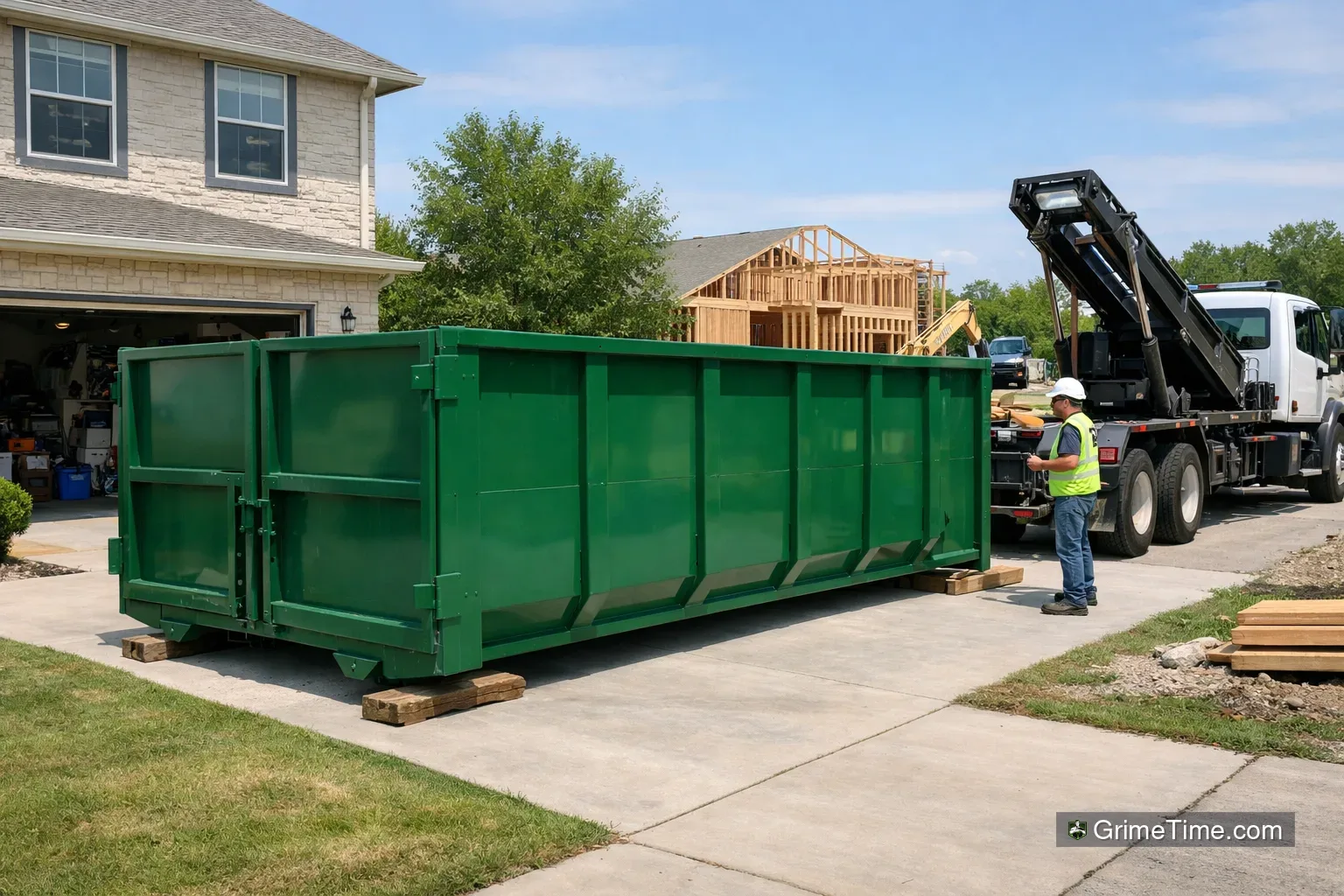
Driveway placement: This is often the simplest option for residential jobs because it keeps the container on private property and usually reduces permit questions. The area should be clear, reasonably level, and large enough for both the container and truck access.
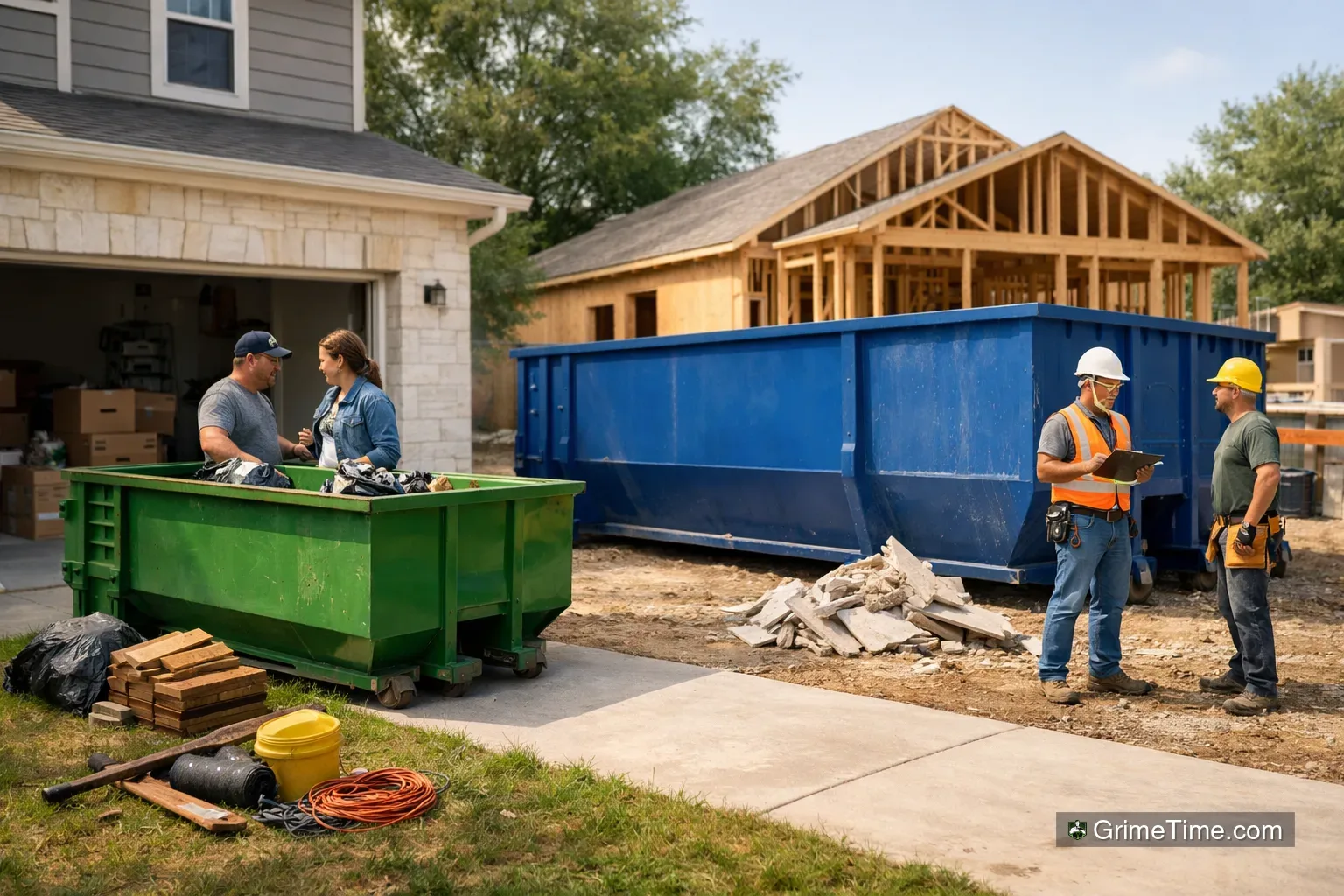
Jobsite placement: For construction jobs, the best spot is often near the active work area but far enough from equipment movement, access gates, and material deliveries to avoid creating a bottleneck.
Parking lot or service area placement: Commercial sites may use a designated loading area, rear lot, or service drive if access is clear and property management approval is in place.
Basic access rules to think through
- Can the delivery truck enter and exit without backing into unsafe conditions?
- Is there enough vertical clearance for tree limbs, wires, or overhangs?
- Will parked cars block drop-off or pickup?
- Can the dumpster doors open fully if the container includes rear access doors?
- Will loading traffic create a hazard for pedestrians, neighbors, or workers?
- Is the ground stable enough for the planned placement area?
Austin neighborhoods, tighter infill lots, and sloped driveways can all affect what placement is realistic. The same is true in older parts of Georgetown, dense residential streets in South Austin, or commercial corridors with limited rear access.
Practical placement examples by city
Austin and South Austin: Narrow streets, parked vehicles, and tighter driveways can make delivery more sensitive to exact placement. If you are planning street placement, verify local rules before the truck is on the way.
Buda and Kyle: Residential neighborhoods often allow easier driveway placement, but HOA restrictions may still matter.
Round Rock and Georgetown: Roofing and remodel jobs often have enough driveway space, but corner lots, sidewalks, and traffic visibility should still be considered.
Dripping Springs and Elgin: Larger properties can be easier for placement, but approach conditions, gates, and softer ground may matter more than curbside access.
Pflugerville, Hutto, and San Marcos: Mixed residential and commercial growth areas can have a wide range of site conditions, so describing the exact drop zone usually helps avoid delays.
When permits may matter
If the dumpster will be placed on a public street, alley, sidewalk-adjacent area, or other public right-of-way, permit requirements may apply. In Austin, right-of-way use and temporary street occupancy issues are typically governed through city processes rather than assumed by default. If a reader is specifically asking about Austin dumpster permit rules, the safest guidance is this: verify the rule for the exact placement location before delivery.
For Austin placements involving public space, consult City of Austin right-of-way or transportation guidance for current requirements. Rules can change based on traffic control, neighborhood type, duration, and whether the container affects parking or access. Source: City of Austin right-of-way and permitting resources.
Outside Austin, permit expectations can vary by municipality. Buda, Kyle, Round Rock, Pflugerville, Hutto, Georgetown, San Marcos, Dripping Springs, and Elgin may have different rules or practical enforcement patterns depending on whether the dumpster sits on private property or public space. It is always better to check than assume.
HOA and private property restrictions
Even if a city permit is not required, a homeowners association, apartment complex, commercial center, or private property manager may still have placement rules. Common issues include:
- No street placement inside the community
- Time limits on temporary containers
- Restrictions near mailboxes, hydrants, or shared drive aisles
- Requirement to protect pavement surfaces
- Rules about blocking garages, dumpsters enclosures, or fire lanes
Asking these questions upfront can prevent a delivery delay or forced relocation later. That is part of what makes a provider more reliable in practice: not just dropping a container, but helping you think through where it can realistically go.
What can and cannot go in a roll-off dumpster
One of the most important parts of renting efficiently is knowing what can go in a roll-off dumpster and what cannot. Disposal rules are not just company preference; some items are restricted because of landfill regulations, environmental handling requirements, fire risk, or safety concerns during transport.
Common items usually accepted
For many general-purpose residential and construction loads, accepted materials often include:
- Wood and lumber
- Drywall and sheetrock
- Flooring materials
- Cabinets and doors
- Furniture and household junk
- Yard debris, depending on local disposal arrangements
- Roofing materials, depending on weight and load plan
- Construction debris from remodeling and demolition
Acceptance still depends on the specific mix of material, local disposal rules, and whether heavy debris needs a special loading plan.
Items that are commonly prohibited or restricted
These are the types of materials that are often not allowed in standard roll-off dumpsters or require special handling:
- Paint, stains, solvents, and chemicals
- Motor oil, fuel, and automotive fluids
- Pesticides and hazardous household chemicals
- Asbestos-containing materials
- Medical waste and biohazards
- Batteries
- Propane tanks and pressurized containers
- Tires
- Electronics, depending on disposal rules
- Appliances containing refrigerants, unless properly handled
These restrictions are broadly consistent with waste handling guidance from regulators such as the Texas Commission on Environmental Quality and with local household hazardous waste programs. Source: Texas Commission on Environmental Quality waste guidance and local municipal waste department resources.
Special note on heavy materials
Concrete, brick, dirt, rock, and large amounts of tile often require special planning. They may be allowed only in certain container sizes or only when loaded in a way that keeps the haul safe and within weight limits. Never assume a general cleanout dumpster should also take a full load of masonry debris.
Why “just one item” can become a problem
A common mistake is tossing in a few restricted items at the end of a project because they seem minor. One paint can, one car battery, or one propane cylinder can still create a disposal issue. If you are unsure about a single item, ask before loading it.
How to load the dumpster correctly
- Place flat items on the bottom first when possible.
- Break down bulky materials to use space more efficiently.
- Distribute heavy debris evenly.
- Keep prohibited items out of the container.
- Do not load material above the top rim.
This is better for safety, hauling compliance, and keeping your project on schedule. It also helps avoid the last-minute problem of a dumpster that cannot be hauled because the load is uneven or overfilled.
How local disposal context affects what is allowed
Different disposal facilities and local programs may handle certain materials differently, especially electronics, mattresses, yard debris, appliances, or loads with mixed construction waste. That is why “allowed” and “not allowed” should be treated as practical guidance that still needs confirmation when your load includes unusual items. Official rules and facility requirements can change, which is another reason to verify uncertain materials instead of guessing.
How to rent efficiently from delivery to pickup
Renting a dumpster goes more smoothly when you plan the sequence instead of treating delivery day as the first decision point. The most efficient rentals are simple because the basics are handled in advance.
Step 1: Define the job clearly
Before calling, write down:
- The project type
- Your city and jobsite address area
- The main debris materials
- Your ideal delivery date
- Where you want the dumpster placed
- Whether the debris is heavy, bulky, or mixed
This makes it easier to get a practical recommendation and reduces back-and-forth.
Step 2: Book around the debris phase
Do not schedule the dumpster for the first day of planning if demolition starts a week later. Align delivery with when waste will actually begin piling up. For contractors, this may mean having the container arrive the day before demo starts. For homeowners, it may mean waiting until the cleanout area is staged and ready.
Step 3: Prepare the placement area
Move vehicles, unlock gates if needed, and clear the drop zone. Mark the preferred location if the site has multiple possible placement spots. On remodels, tell subcontractors where the dumpster will sit so they do not block it with materials.
Step 4: Load with a plan
Start with flatter and heavier materials at the base, then add lighter and bulkier items. Break down boxes and remove empty air space where possible. If the project involves both clean debris and prohibited items, separate them from the start rather than sorting at the end.
Step 5: Watch the fill level and timeline
If you see early that the container is filling faster than expected, ask about next-step options before it becomes urgent. On active construction jobs, this may mean scheduling pickup or swap-out before the crew loses disposal space. On residential jobs, it may simply mean wrapping up loading sooner than planned.
Step 6: Make pickup easy
Before pickup day, ensure the truck can access the dumpster, the load is level with the top, and no prohibited items were added late in the project. If cars, fencing, gates, or stacked materials block the route, pickup delays are more likely.
Why this process matters
Most dumpster frustrations come from preventable issues:
- The wrong size for the debris type
- No plan for weight-heavy materials
- Street placement without checking permit rules
- Prohibited items tossed in at the last minute
- Booking too late for the project schedule
- Not clearing access for delivery or pickup
A little planning avoids most of them. That is also one of the clearest trust signals a reader should look for in a provider: straightforward answers about what to expect from delivery to pickup, not just a promise that the rental is simple.
Austin-area planning examples by project type
Because this page is meant to be a practical resource, it helps to see how the decision changes from one local project to another.
Example: residential cleanout in Austin or South Austin
If you are cleaning out a house before listing it for sale, your main concerns are usually size, driveway placement, and how long the sorting process will take. In this case, volume often matters more than weight, unless you are also removing old tile, shed contents, or heavy garage materials. A residential roll-off can keep the project moving without repeated donation center and landfill trips.
Example: bathroom and kitchen remodel in Buda or Kyle
These jobs create dense debris in a short span: tile, drywall, cabinets, fixtures, and packaging from the rebuild phase. You will want a size that handles demolition comfortably without paying for a much larger container than the site can use. Placement also matters if trades need driveway access during the project.
Example: contractor debris in Pflugerville or Hutto
For ongoing jobs, the container is part of the site plan. Ask about delivery timing, haul schedule, and whether one larger container or multiple pickups will work better. If the site is active with framers, electricians, plumbers, and suppliers, make sure the dumpster does not interfere with access or staging.
Example: roofing in Round Rock or Georgetown
Weight is the first issue. Shingles and underlayment can add up fast, so the right recommendation should account for roof size, number of layers, and whether wood decking replacement is expected. This is a case where “bigger” is not always the only variable.
Example: rural or edge-of-market cleanup in Dripping Springs or Elgin
On larger properties, access and travel distance can affect planning more than in-town jobs. The drop area may be easy to identify, but truck approach, ground conditions, and distance from the cleanup zone should be considered in advance.
Example: light commercial renovation in San Marcos
A retail or office refresh may create a moderate amount of debris but involve stricter access windows than a house project. If neighboring tenants share parking or loading space, the best placement is often the one that balances convenience with minimal disruption to normal operations.
Frequently asked questions about roll-off dumpster rental in Austin
What size roll-off dumpster do I need for a remodel, roofing job, or cleanout in Austin?
The answer depends more on debris type than on the project label alone. A cleanout with furniture and boxes needs enough volume for bulky items. A remodel may need room for awkward debris like cabinets and drywall. A roofing job may be limited more by weight than visible space. The most accurate way to size a dumpster is to describe the materials, square footage, and scope of work. If you are deciding between two sizes, asking for project-based guidance is usually better than guessing from a chart.
How much does a roll-off dumpster rental cost in Austin and nearby cities?
Pricing depends on the container size, debris type, rental period, location, and whether the material is especially heavy or needs special handling. Austin, South Austin, Buda, Georgetown, Hutto, Dripping Springs, Kyle, Elgin, Pflugerville, San Marcos, and Round Rock jobs may also differ based on route and service logistics. For realistic planning, compare quotes based on included rental time, weight limits, and any added charges for overloading or extended use, not just the base number.
Do I need a permit to place a dumpster on the street or in front of my property?
If the dumpster is on private property such as a driveway, permit issues are often simpler, though HOA rules may still apply. If the dumpster will sit on a street or public right-of-way, permit requirements may apply depending on the city and exact location. In Austin, check City of Austin right-of-way or street occupancy guidance before delivery. For nearby cities like Round Rock, Kyle, Georgetown, or San Marcos, confirm with the local municipality if public placement is planned.
What items are not allowed in a roll-off dumpster rental?
Hazardous chemicals, paint, fuels, solvents, batteries, tires, propane tanks, asbestos-containing materials, medical waste, and certain electronics or refrigerant appliances are commonly restricted. Rules can vary by disposal facility and local waste program, so if an item seems questionable, ask before loading it. This is especially important for cleanup projects where miscellaneous garage or shed materials may be mixed into the debris.
How far in advance should I book a dumpster for a construction or cleanout project?
For the smoothest scheduling, book as soon as you know your demolition or cleanup date range. A few days of lead time is often better than waiting until the project starts, especially during busy seasons, after storms, or when your site is outside central Austin. Contractors coordinating crews should confirm delivery before the waste-producing phase begins, not after debris starts piling up.
Can I put concrete, dirt, brick, or roofing shingles in a roll-off dumpster?
Often yes, but these materials need special attention because they are very heavy. They may require a particular container size, loading limit, or separate disposal plan. Always mention these materials when requesting pricing or size guidance so the recommendation matches the load safely.
What happens if I fill the dumpster above the top?
A dumpster generally should not be loaded above the top rail. Overfilled containers can create safety and transport issues and may not be haulable as loaded. If you think your debris will exceed the container, it is better to plan for a larger size or an additional haul before pickup is due.
Can a dumpster damage my driveway or property surface?
Placement conditions matter. Driveway placement is common, but the surface should be reasonably sound and clear. If you have concerns about decorative concrete, newer pavement, steep slopes, or soft ground, mention that before delivery so the placement plan can be discussed in advance.
What if I am not sure whether my address is in the service area?
Service coverage is relevant across Austin and nearby cities, especially on the edges of the metro area. If your project is in Austin, South Austin, Buda, Georgetown, Hutto, Dripping Springs, Kyle, Elgin, Pflugerville, San Marcos, or Round Rock, local routing is part of planning. If you are near those areas and not sure how your location is handled, ask directly before finalizing size and scheduling.
Sources and reference points for local rules and disposal context
For regulatory or local-rule questions, use official sources whenever possible. The following source types are the right place to verify details that can change over time:
- City of Austin right-of-way and permit guidance: useful for street placement, right-of-way use, and temporary occupancy questions.
- Texas Commission on Environmental Quality: useful for general waste handling context and hazardous or prohibited material guidance.
- Local municipal solid waste or recycling departments: helpful for city-specific disposal expectations, bulky waste context, and local restrictions in Austin-area service cities.
- Industry best-practice guidance for waste handling: useful for safe loading, separation of materials, and transport-ready container use.
This article is meant to provide practical planning guidance, but city permit requirements and disposal rules should always be confirmed against current official sources when your placement or material list falls into a gray area.
Why this guide works as a planning resource
The reason people look for a roll-off dumpster rental guide is not just to find a phone number. They want to avoid making a costly or time-wasting mistake. For Austin-area homeowners and contractors, the most common mistakes are predictable: choosing a size without describing the debris, assuming a street placement is automatically allowed, and loading materials that should have been handled separately.
A good resource should help you answer four questions:
- What container type fits the project?
- What size is likely to work without overpaying?
- What rules affect placement and disposal?
- What should I line up before delivery day?
That is the practical value of a local partner resource guide. It helps the reader move from “I think I need a dumpster” to “I know what to ask, what to avoid, and what to book.”
Trust signals that matter in dumpster rental
Readers do not need hype. They need plain-language answers, realistic expectations, and service information that matches the project. This guide is built around the trust details that actually matter:
- Plain-language dumpster size guidance: choosing based on debris type, project scope, and weight concerns instead of guessing.
- Austin-area examples for residential and construction jobs: real use cases across Austin, South Austin, Buda, Georgetown, Hutto, Dripping Springs, Kyle, Elgin, Pflugerville, San Marcos, and Round Rock.
- Clear explanation of prohibited items and placement issues: especially for heavy materials, street placement, and restricted waste.
- Realistic expectations on pricing, timing, and pickup: what affects cost, why scheduling matters, and what can delay service.
- Service-area relevance across Austin and nearby cities: because local routing, access, and municipal differences are part of a useful recommendation.
Those are the details that make a provider easier to work with and make an article more useful enough to cite as a reference page.
Conclusion
Whether you are planning a residential cleanout in Austin, a remodel in Buda, a roofing job in Round Rock, a contractor project in Georgetown, or a property cleanup in Pflugerville, the right roll-off dumpster rental comes down to a few clear decisions: match the container to the debris, check placement before delivery, understand prohibited items, and schedule the rental around the active waste phase of the job.
Grime Time Dumpster Rentals serves Austin, South Austin, Buda, Georgetown, Hutto, Dripping Springs, Kyle, Elgin, Pflugerville, San Marcos, and Round Rock with practical roll-off dumpster rental support. If you are unsure about size, placement, pricing, or whether your address falls within the best local service route for your project, call 512-387-5802 to get a direct answer and choose the right roll-off container for your Austin-area job.